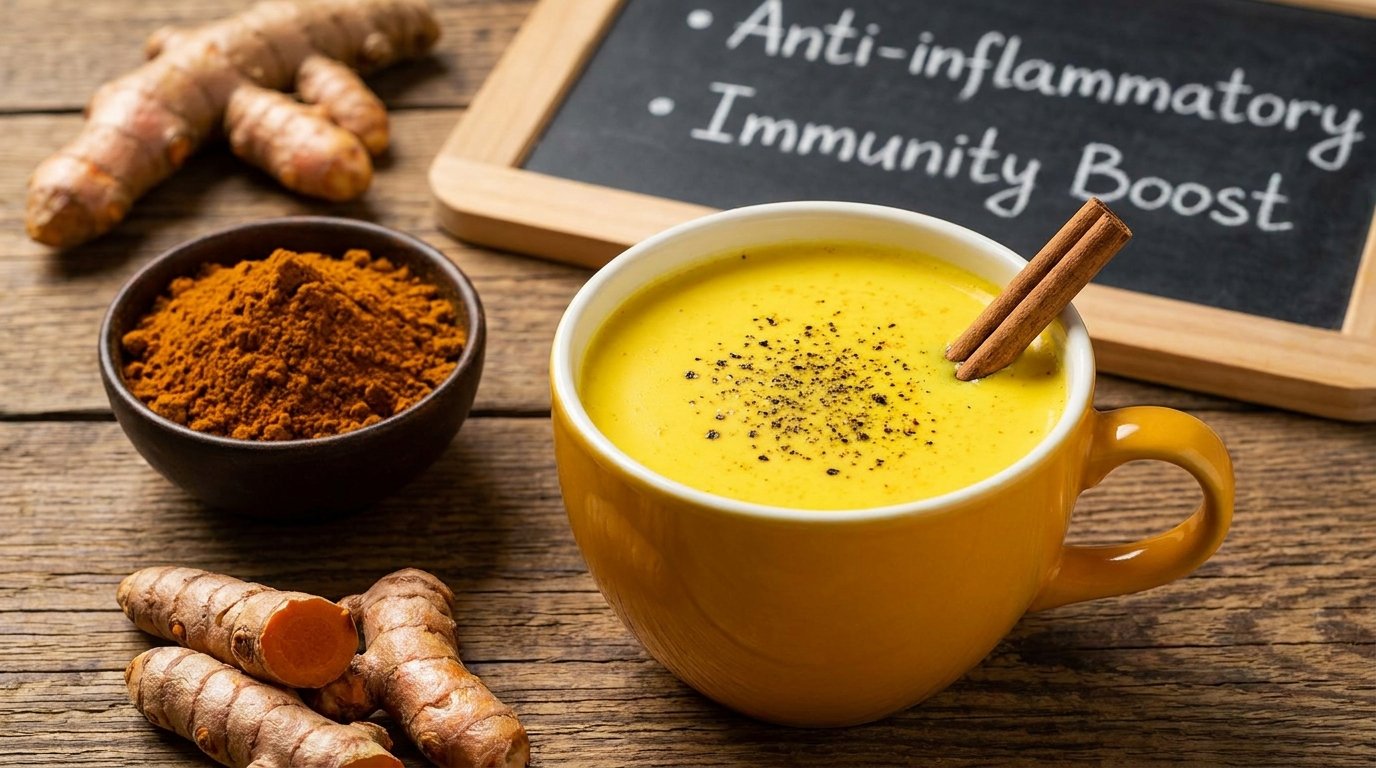
What Is Turmeric Milk, Really?
Long before "golden milk" appeared on wellness-cafe menus, kitchens across India were already making a version of it called haldi doodh — turmeric stirred into warm milk, usually with a pinch of black pepper and a spoon of ghee, handed to anyone with a cold, an ache, or just a long day behind them. It was never marketed as a superfood. It was simply what families reached for.
At its core, turmeric milk is three things working together: turmeric for its curcumin content, milk as both the carrier and a source of fat, and a handful of supporting players — black pepper, a sweetener, sometimes cinnamon or ginger — that change how much of that curcumin the body can actually access. Strip any one of those away and you still have a pleasant warm drink, but you've changed what it's capable of doing.
The modern "golden milk" trend dressed this up with oat-milk lattes, vanilla, and Instagram-friendly mugs, but the underlying chemistry hasn't changed. What has changed is how much attention people now pay to one detail that traditional haldi doodh always got right by accident: pairing turmeric with fat and pepper in the same cup, rather than drinking turmeric in plain water and expecting the same result.
Not all turmeric is equal once it's in your cup. Standard commercial turmeric typically contains around 1.5–2.5% curcumin, while the Lakadong variety grown in Meghalaya's Jaintia Hills has been independently lab-tested at 7–12% — three to four times higher. The recipe stays identical either way, but the actual amount of curcumin landing in your glass can differ by a wide margin depending purely on which jar of turmeric you reached for.

The deeper and more amber the turmeric powder, the more curcumin it's likely carrying into your milk — a useful visual cue when you're judging quality before you even open a lab report.
How Turmeric Milk Triggers Curcumin Absorption
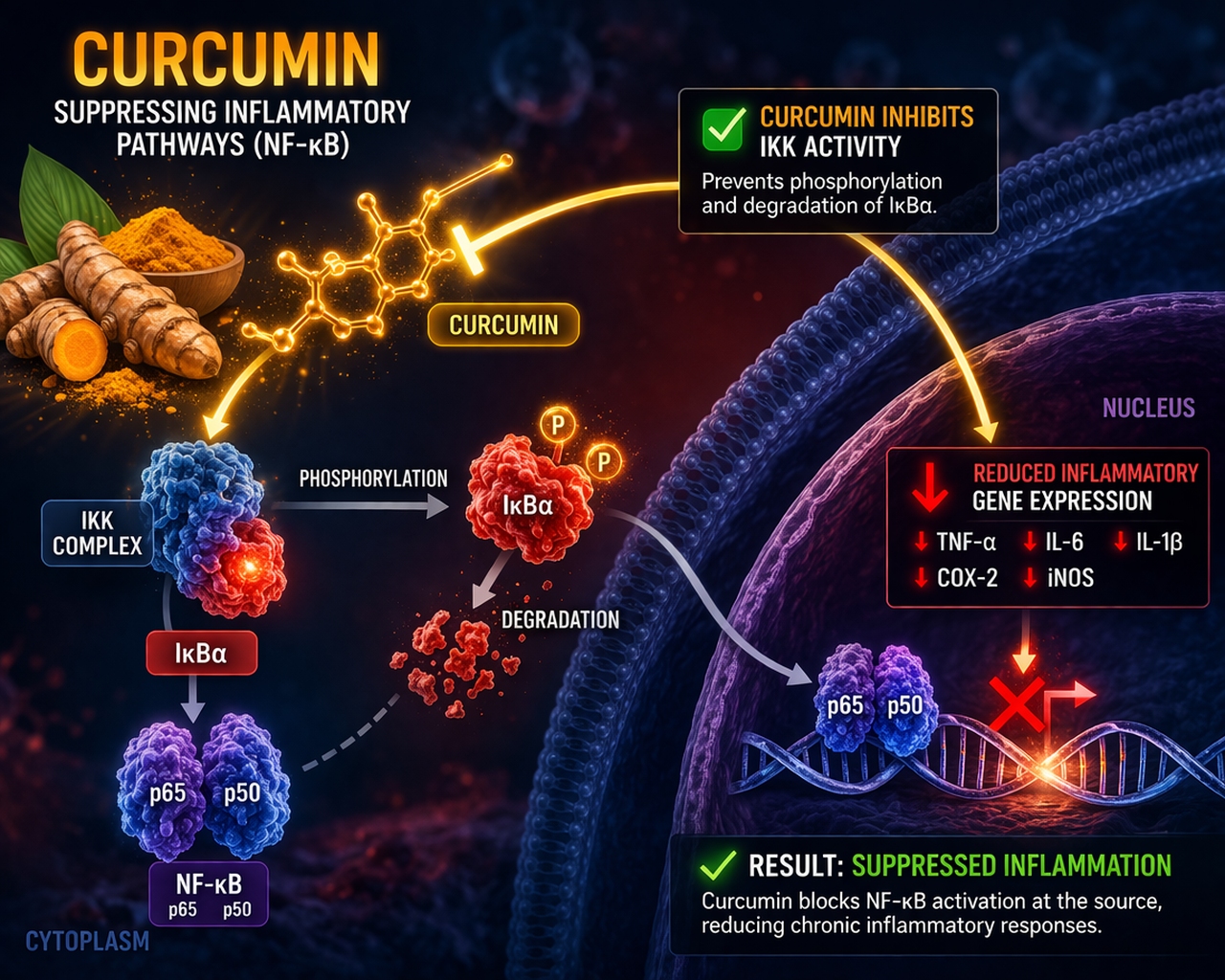
Curcumin on its own is notoriously hard for the body to use. Taken in water, most of it is broken down and cleared by the liver before it ever reaches general circulation — research has repeatedly flagged this as curcumin's biggest practical limitation. Turmeric milk isn't a folk remedy that ignores this problem; it happens to solve it through ordinary kitchen chemistry.
Two things change the outcome. First, curcumin is fat-soluble, meaning it dissolves into the fat in milk (or ghee, or coconut oil) rather than into water, and travels through the body via that fat instead of being processed and discarded immediately. Second, piperine — the compound responsible for black pepper's sharpness — temporarily slows down the liver enzyme that breaks curcumin apart, giving more of it time to actually circulate. Studies on this specific pairing have reported meaningfully higher curcumin levels in the bloodstream when piperine is present compared to curcumin taken alone.
| Preparation Method | Black Pepper Added | Fat Source Present | Curcumin Delivered (Relative) |
|---|---|---|---|
| Turmeric stirred into plain water | No | No | Low |
| Turmeric stirred into milk only | No | Yes (dairy fat) | Low–Moderate |
| Turmeric + Milk + Black Pepper + Fat | Yes | Yes | Significantly Higher |
| Standardised curcumin extract/capsule | Often added | Often added | Engineered High (different category) |
The row to pay attention to here is the third one. It's not a marketing flourish — it's the actual combination that research on curcumin bioavailability keeps pointing back to. Capsule-based curcumin extracts sit in a different category entirely, since they're engineered at the manufacturing stage rather than assembled in a cup.
The vivid orange interior of a fresh Lakadong rhizome — this is where the curcumin concentration that ends up in your cup actually originates.
Elevation, rainfall, and mineral-rich soil in the Jaintia Hills produce a turmeric with naturally higher curcumin than commodity varieties grown elsewhere.
Bioavailability research on curcumin is genuinely promising but still evolving, and most human studies use measured extracts rather than a home-brewed cup. Turmeric milk made the traditional way is reasonably presumed to improve absorption compared to turmeric in water — but it isn't a precisely dosed clinical intervention, and individual results will vary by metabolism, the turmeric used, and how consistently it's consumed.
Benefits People Most Commonly Report
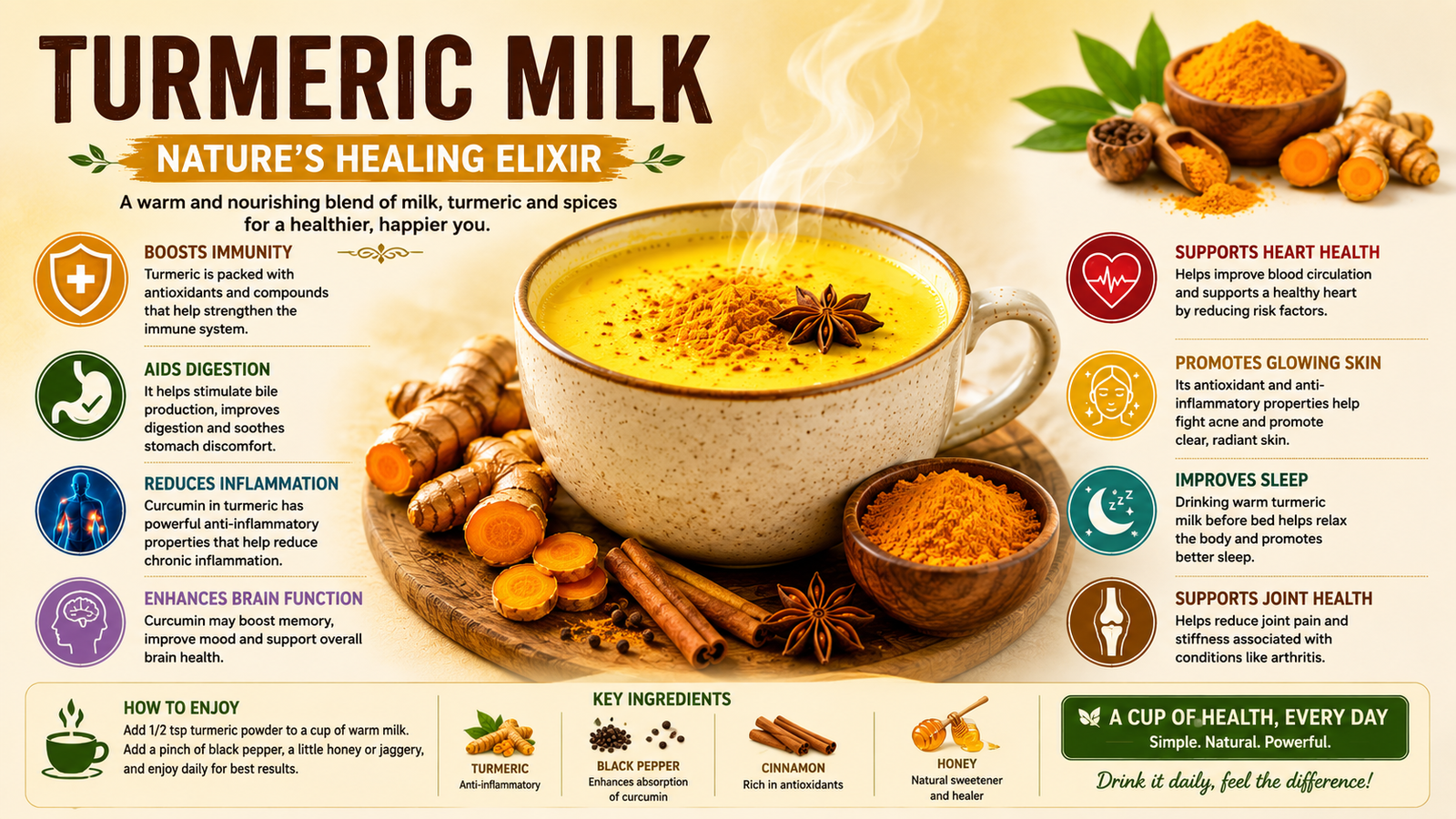
Ask ten different households why they keep a jar of turmeric on hand for milk, and you'll get ten slightly different answers — but they tend to cluster around the same handful of reasons. These are the most frequently cited, traditionally recognised uses of turmeric milk, drawn from both long-standing household practice and the general research base around curcumin.
A warm, slightly spiced drink before bed is its own kind of signal to the body that the day is ending. Combined with curcumin's documented effect on inflammatory pathways — some of which are loosely tied to sleep quality — it's the single most common reason people keep turmeric milk in their evening routine.
- Works as much as a ritual as a remedy
- Best made 30–60 minutes before bed
- Caffeine-free, unlike most evening hot drinks
Curcumin's anti-inflammatory action is the most researched property of turmeric, and a daily cup is a common, low-effort way people incorporate it after exercise, long days on their feet, or general joint stiffness — particularly when paired with black pepper to make the dose count.
- Most useful as a consistent daily habit, not a one-off
- Pairs naturally with a post-workout wind-down
Haldi doodh has been a go-to during cold and flu season in Indian households for generations, often with extra black pepper, ginger, or a touch of honey. It isn't a substitute for medical care, but it remains one of the most widely reached-for home remedies during seasonal changes.
- Traditionally taken at the first sign of a sore throat
- Honey and ginger are common additions in this use case
Turmeric has a long history as a digestive bitter in Ayurvedic practice, used to support bile secretion and settle the stomach after a heavy meal. A small cup of turmeric milk after dinner is a common way this traditional use shows up in daily life.
- Often taken after rich or oily meals
- Ginger is a frequent pairing for this specific use
Alongside its long topical history in South Asian skincare, turmeric is also taken internally with the belief that its antioxidant activity supports skin appearance over time. The evidence here is more traditional than clinical, but it remains a commonly cited reason for daily use.
- Best evaluated over weeks of consistent use, not days
- Complements (rather than replaces) topical turmeric masks
There's a reason turmeric milk so often shows up at the end of the day rather than the start of it: the act of preparing and slowly drinking something warm has a grounding effect of its own, separate from anything curcumin is doing chemically — and many people simply find the ritual itself calming.
- Often combined with ashwagandha or nutmeg by some households
- The ritual matters as much as the ingredient list
Everything above reflects traditional use and general research interest in curcumin — not clinical claims about diagnosing, treating, curing, or preventing any disease. Turmeric milk is a food and beverage, not a medicine. If you're managing a diagnosed condition, take prescription medication (particularly blood thinners), or are pregnant, speak with a doctor before turning it into a daily supplement-level habit.
Make Golden Milk With Turmeric That Actually Works
A recipe is only as strong as the turmeric inside it. Lakadong Gold's organic, NABL-tested 7–12% curcumin turmeric powder is stone-ground specifically for daily use in milk, tea, and cooking.
What Belongs in a Proper Cup of Turmeric Milk
Most golden milk recipes online list a dozen optional add-ins — vanilla, nutmeg, maple syrup, ashwagandha — and bury the three ingredients that actually determine whether the drink does what it's supposed to do. Strip it back to fundamentals and there are only three non-negotiables.
This is where curcumin comes from, and it's also where most golden milk recipes quietly fall short. A turmeric at 1.5–2.5% curcumin requires far more powder to deliver a meaningful dose than a high-curcumin variety like Lakadong, where 7–12% curcumin means a quarter teaspoon does the work of a full tablespoon of standard turmeric.
Look for a stated curcumin %Piperine, the compound that gives black pepper its bite, is what slows the liver's breakdown of curcumin long enough for more of it to circulate. A single small pinch is enough — this isn't an ingredient to skip for taste preferences, since leaving it out is the single most common reason turmeric milk "doesn't seem to do anything."
Non-negotiable, even a small pinchCurcumin needs fat to dissolve into before the body can transport it effectively. Whole dairy milk, full-fat coconut milk, or a small spoon of ghee or coconut oil stirred into a leaner milk all accomplish the same job — without it, much of the curcumin simply passes through unused.
Whole milk, ghee, or coconut oilTurmeric Quality: Why the Curcumin % Still Matters in a Glass of Milk
It's tempting to assume any turmeric will do once it's dissolved into a flavourful, spiced cup — but the math doesn't change just because the turmeric is in milk. Ten grams of a 10% curcumin turmeric still contains roughly four times the curcumin of the same weight of a 2.5% commodity turmeric, regardless of what it's mixed into. If the goal is more than just the flavour and ritual, the curcumin percentage of the turmeric you start with is doing most of the heavy lifting.
How to Make Turmeric Milk at Home
This is the traditional ratio scaled for a single cup — five minutes from stovetop to sipping, with no specialty ingredients beyond turmeric, pepper, and whatever milk is already in your fridge.
Getting Turmeric Milk Right — and the Mistakes That Waste It
Turmeric milk is forgiving as a recipe — there's no precise science to ruin if a measurement is slightly off — but a handful of common habits quietly cancel out most of the benefit before the cup even reaches the table.
- Always pairing turmeric with a pinch of black pepper, every single cup
- Warming the milk gently rather than letting it scorch or boil hard
- Using a high-curcumin turmeric so a small quantity still delivers a real dose
- Adding a fat source if the milk you're using is naturally lean
- Making it a consistent evening habit rather than an occasional one-off
- Sweetening off the heat to protect both flavour and raw honey's enzymes
- Leaving out black pepper entirely because it "doesn't sound like it belongs"
- Boiling the milk hard until it scalds or develops a skin
- Using a stale, low-curcumin supermarket turmeric and expecting a strong result
- Treating one cup as a cure for a specific symptom rather than a daily habit
- Oversweetening until it's effectively dessert rather than a wellness drink
- Reheating the same leftover cup multiple times instead of making it fresh
Who Should Be Cautious with Turmeric Milk
Turmeric milk in ordinary culinary amounts is well tolerated by most people, but it isn't risk-free for everyone, and a few specific situations are worth knowing about before turning it into a nightly habit.
If you have a history of gallstones or bile duct issues, turmeric's effect on bile flow can be worth discussing with a doctor first. People with a history of kidney stones should be aware turmeric contains oxalates, which in concentrated, supplement-level amounts may be relevant to stone formation. Anyone on blood-thinning medication should check for interactions, since curcumin has mild blood-thinning properties of its own. Pregnant women can generally enjoy culinary amounts but should avoid supplement-level curcumin intake without medical guidance. If you're prone to acid reflux, turmeric's slight pungency can occasionally aggravate symptoms for some individuals — if that's you, start with a smaller amount and see how your body responds.
None of this means turmeric milk is dangerous for most healthy adults — it's a food, taken at food-level quantities, with a long track record of everyday household use. The caution above applies specifically to people in higher-risk categories, or to anyone considering supplement-level doses well beyond a daily cup.
FAQs — Turmeric Milk Benefits
Turmeric milk delivers curcumin — the compound in turmeric most associated with anti-inflammatory and antioxidant activity — in a form the body can actually use. The milk fat helps dissolve it, and black pepper slows down how quickly the liver clears it from the bloodstream. It's traditionally used as a general wellness drink rather than a treatment for any specific condition.
They're the same core idea with different branding. Haldi doodh is the traditional Indian preparation — turmeric, warm milk, black pepper, and often a spoon of ghee. Golden milk is the more recent cafe-style version, sometimes made with cinnamon, ginger, vanilla, or a plant-milk base. Both rely on the same turmeric–pepper–fat combination to work.
Warm milk itself has a long-standing reputation as a calming bedtime ritual, and curcumin's effect on inflammatory pathways is sometimes loosely linked to sleep quality in early research. The evidence specific to turmeric milk improving sleep is mostly traditional rather than clinically proven, so it's best treated as a relaxing wind-down habit rather than a guaranteed remedy for insomnia.
Most healthy adults can drink it nightly at culinary amounts — around a quarter to half teaspoon of turmeric per cup. People on blood-thinning medication, with a history of gallstones or kidney stones, or who are pregnant should check with a doctor first. There's no benefit to drinking more than one cup a day, especially with a high-curcumin turmeric, since the dose is already concentrated.
What matters more than dairy versus plant milk is whether there's enough fat present, since curcumin is fat-soluble. Whole dairy milk or full-fat coconut milk work well as they are. Very lean milks like skim dairy or watery almond milk benefit from an added half teaspoon of ghee or coconut oil to keep absorption consistent.
Small amounts of turmeric milk are commonly given to children in many Indian households, especially during a cold, but the quantities should be smaller than an adult portion — a light pinch of turmeric rather than a full quarter teaspoon — and black pepper is often reduced or left out for taste. Check with a paediatrician for infants or children with any existing health condition.
A dry mix of turmeric, black pepper, and cinnamon kept in an airtight jar away from light and moisture stays good for two to three weeks. Once it's mixed into milk and heated, it's best had fresh — turmeric milk isn't meant to sit in the fridge for more than a day, and repeated reheating affects both the flavour and some of the active compounds.
Turmeric Milk, Done Properly
Turmeric milk works the same way it always has: not through any single magic ingredient, but through a small, deliberate combination of turmeric, fat, and black pepper that turns a pleasant warm drink into something the body can actually make use of. None of it requires special equipment, rare ingredients, or more than five minutes at the stove.
The two variables most worth getting right are the turmeric itself — a higher curcumin content means a smaller quantity does more — and the habit of including black pepper every single time, without exception. Everything else, from the type of milk to the choice of sweetener, is genuinely flexible and can be adjusted to taste.
- 🧪Start with a high-curcumin turmeric — A 7–12% curcumin variety like Lakadong means a quarter teaspoon does the work of a full tablespoon of standard turmeric.
- 🌶️Never skip the black pepper — Even a small pinch meaningfully changes how much curcumin your body can actually absorb.
- 🥛Make sure there's fat in the cup — Whole milk, full-fat coconut milk, or a small spoon of ghee all do the job.
- 🔥Warm gently, don't boil hard — Protects flavour and avoids scorching the milk.
- 🌙Make it a routine, not a one-off — Consistency over weeks matters more than any single cup.
- 🩺Check with a doctor if it applies to you — Particularly for blood thinners, gallstones, kidney stones, or pregnancy at supplement-level amounts.
NPOP & USDA NOP certified organic · GI-registered, direct from Jaintia Hills farming cooperatives · NABL-accredited COA per batch (curcumin 7–12% via HPLC) · Stone-ground & sun-dried · Zero additives, fillers, or synthetic colour agents · Resealable eco-packaging from 100g to 1kg · WhatsApp support within 2 hours · Full certification documentation provided with every order.