What Is Organic Lakadong Turmeric Powder?
Two things make Organic Lakadong Turmeric Powder genuinely unusual in a market full of spice claims. The first is where it comes from — the Jaintia Hills district of Meghalaya, in India's far northeast, where the combination of altitude, high rainfall, and naturally mineral-rich acidic soil produces a turmeric rhizome with a curcumin concentration that labs consistently measure between 7% and 12%. No other documented turmeric variety comes close to this figure.
The second is how it's grown. Farming in the Jaintia Hills has historically relied on knowledge passed down through generations of tribal communities — no synthetic fertilisers, no heavy pesticide inputs, no factory farming. For most of Lakadong's history, the turmeric was already grown cleanly — not because of any outside certification, but because that's how these hills have been farmed for hundreds of years.
Organic certification formalises what the land and its people have always done. It means a third-party certifying body — operating under India's NPOP standard, the USDA National Organic Program, or EU Organic rules — has audited the farms, inspected the processing facility, reviewed input records, and issued a certificate confirming no prohibited synthetic substances entered the growing or handling process. The certificate gives an external guarantee to what was previously just inherited practice.
When both facts are genuine and documented — the 7–12% curcumin content and the third-party organic certification — you have something that's rare even within the world of premium spices: a verified-potent, verified-clean ingredient with a traceable origin from one of the most mineral-rich farming territories on the Indian subcontinent.
The higher the curcumin content, the more concentrated everything in the spice becomes — including anything that shouldn't be there. A turmeric at 10% curcumin concentrates synthetic residues at the same rate it concentrates the curcumin itself. With a high-potency daily ingredient, the farming method isn't a bonus — it's proportionally more important than it would be with a weaker, lower-dose spice.
Organic Lakadong Turmeric Powder has a distinctively deep amber-orange tone — noticeably darker and richer than standard turmeric, a direct visual indicator of higher curcumin concentration.
Organic vs Conventional Lakadong — What the Difference Actually Is
"Organic" is a process certification, not a content test. It tells you how the turmeric was grown and handled — not what curcumin percentage it reached. Knowing this distinction is the most useful thing you can learn before shopping for organic high-curcumin turmeric, because it explains exactly which document proves which claim.
| Turmeric Type | Curcumin % | Organic Certified | Third-Party Audit | COA Available |
|---|---|---|---|---|
| Organic Lakadong (Jaintia Hills) | 7–12% | ✓ NPOP / USDA NOP | Yes | Yes — NABL lab |
| Conventional Lakadong (Jaintia Hills) | 7–12% | No certificate | No | Yes (if reputable seller) |
| Regular Organic Turmeric (Other variety) | 1.5–3.5% | ✓ Various standards | Yes | Varies |
| Standard Commercial Turmeric | 1.5–2.5% | No | No | Rarely |
The key takeaway from this table: organic certification and curcumin content are independent variables. A conventional Lakadong from a well-managed cooperative may still have genuine 7–12% curcumin and clean, traditional growing practices — just without third-party audit documentation. Meanwhile, a certified organic turmeric from a different variety will still only contain 1.5–3.5% curcumin. The product that delivers on both claims, with both documents to back it, is the one worth looking for.
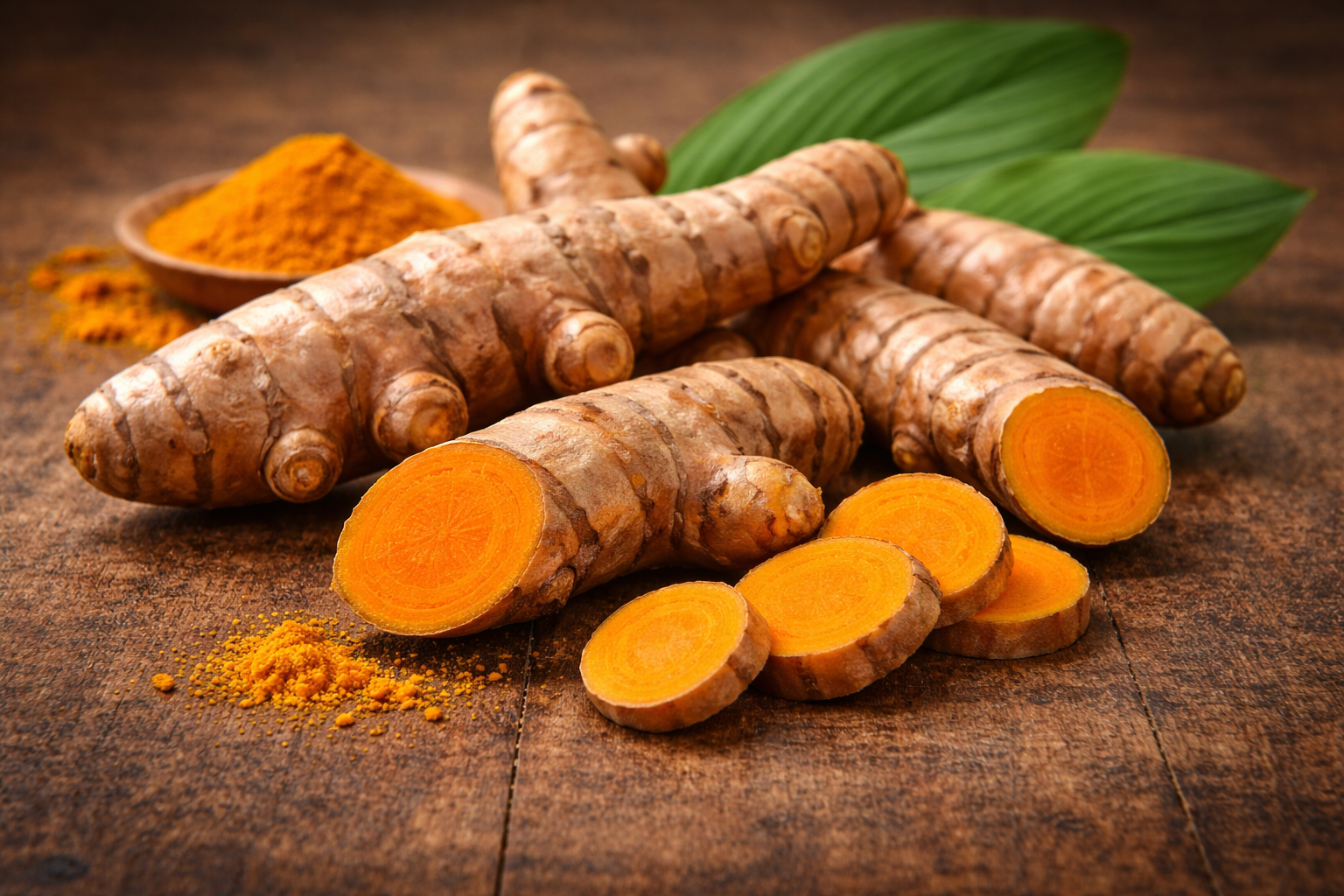
The vivid burnt-orange interior of a freshly cut Lakadong rhizome — the raw source of its remarkable curcumin content before drying and stone-grinding.
Lakadong's curcumin is a product of its environment — the Jaintia Hills' elevation, mist, heavy rainfall, and mineral soil create conditions no other growing region has been able to replicate.
What "High Curcumin" Actually Means
When a seller says their Lakadong turmeric has "7–12% curcumin," there's more packed into that number than it first appears. Understanding what's being measured — and how — is the difference between reading a lab report correctly and taking a marketing claim at face value.
Curcumin is one of three closely related yellow pigment compounds found in turmeric rhizomes, alongside demethoxycurcumin and bisdemethoxycurcumin. Together, these three are called curcuminoids. Most commercially available lab reports for turmeric measure total curcuminoids rather than isolated curcumin alone — but both figures are commonly called "curcumin" in product descriptions, which creates real confusion.
The industry standard for measurement is HPLC — High Performance Liquid Chromatography — a method that separates compounds in a solution and measures their concentrations individually. A NABL-accredited laboratory in India using HPLC is the benchmark that matters. Any curcumin claim not backed by an HPLC-method COA from an accredited lab is a declaration, not evidence.
A lab report stating "curcumin content: 9.2%" is meaningless without two additional pieces of information: the testing method used (look for HPLC) and the lab's NABL accreditation number. These details confirm the figure was generated using internationally recognised methodology under quality-controlled lab conditions — not just an internal colour test or unverified third-party claim. Always ask for the full COA, not just the summary figure.
Benefits of Organic High Curcumin Lakadong Turmeric
Choosing the organic version of an already high-curcumin turmeric gives you two distinct advantages: what's in it at higher concentration than any other variety, and what isn't in it — synthetic pesticide residues, artificial colour agents, or unverified processing inputs. These are the most commonly cited reasons people specifically seek out organic high-curcumin Lakadong.
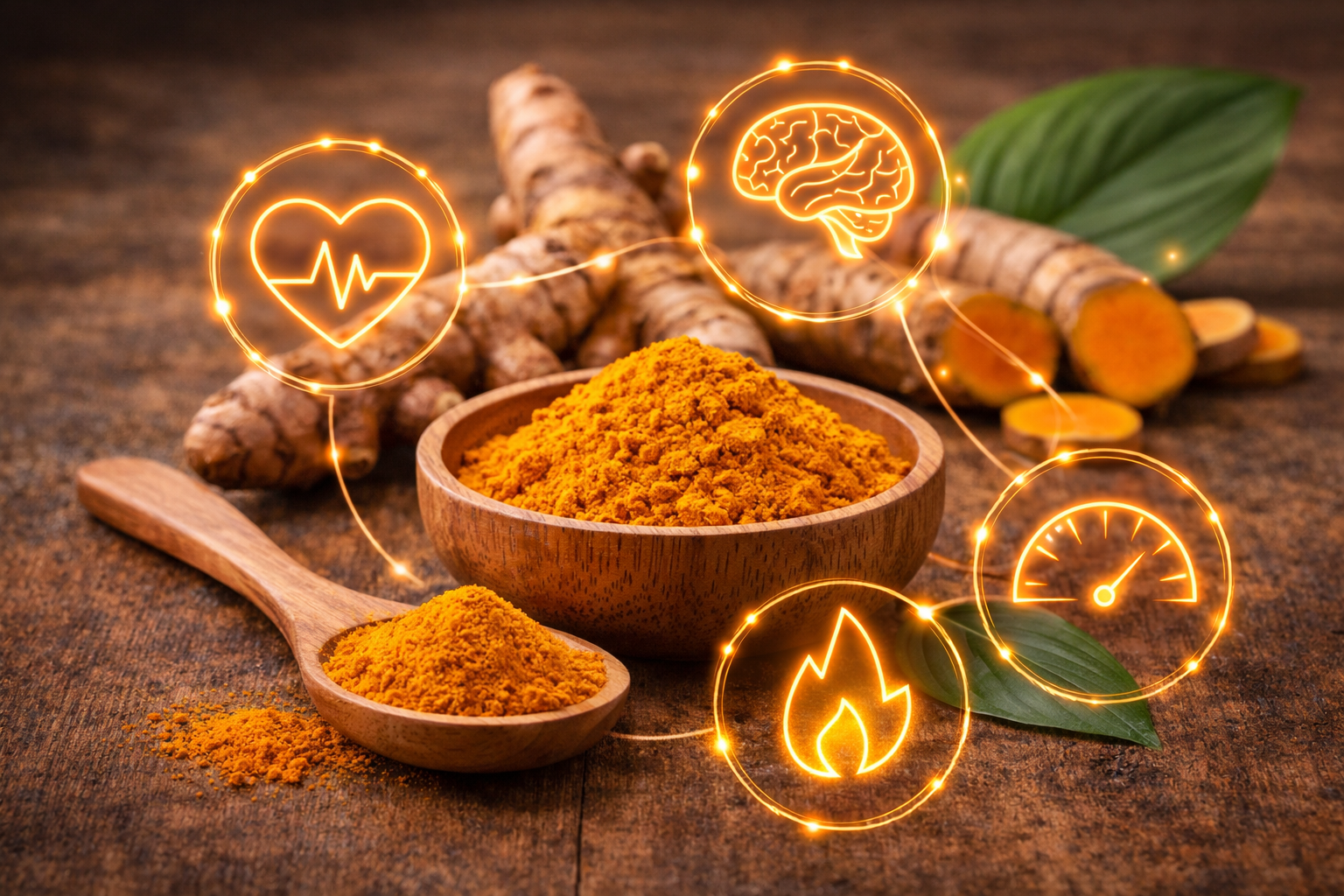
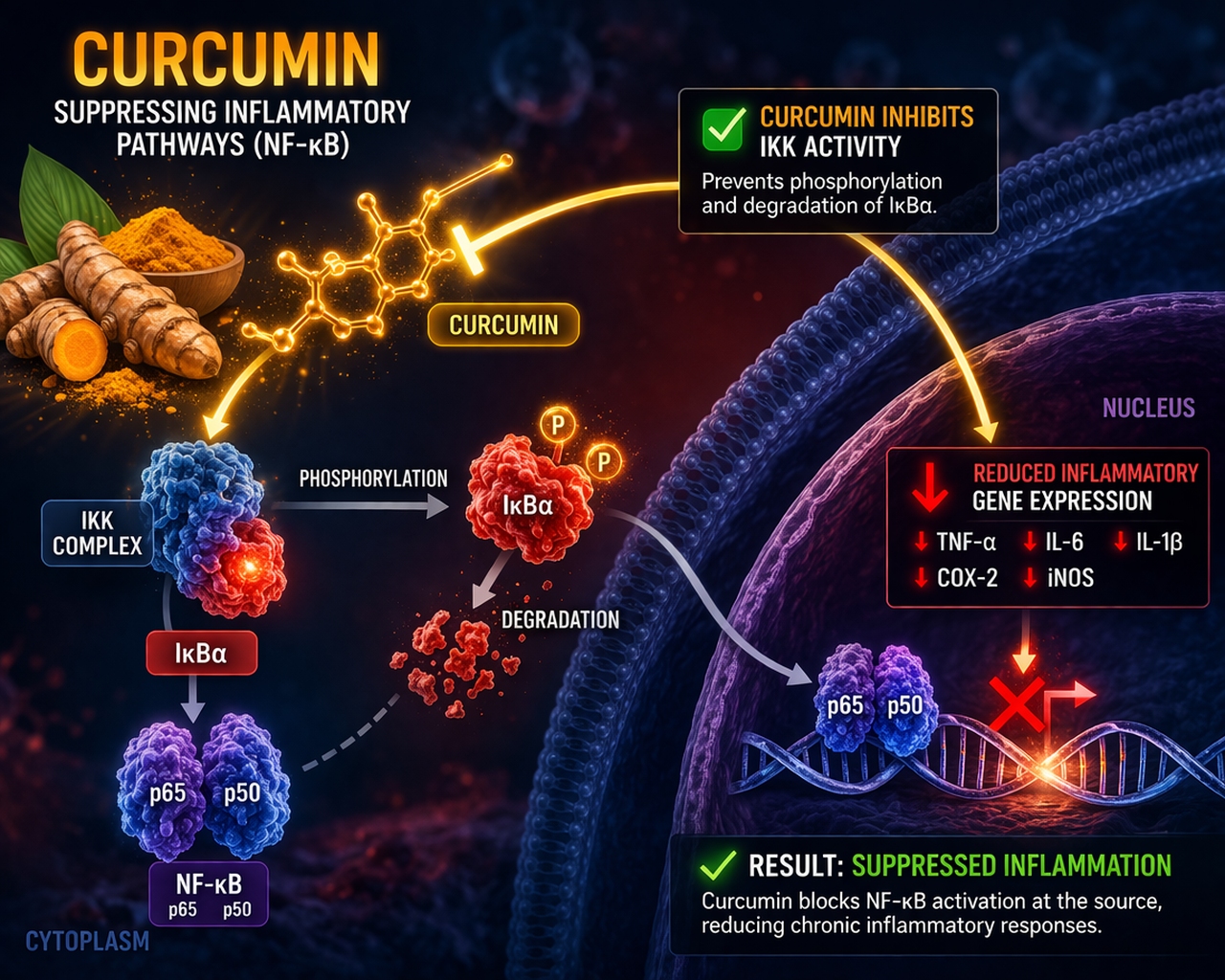
Curcumin's most researched property is its ability to inhibit inflammatory pathways in the body. At 7–12%, Lakadong delivers more curcumin in a smaller daily quantity than any other dietary turmeric — relevant for people managing joint stiffness, inflammation, or general inflammatory load.
- Less powder needed to reach the same curcumin intake
- Organic certification means the dose is clean
- Most effective when paired with black pepper daily
Curcumin is a well-documented antioxidant, helping the body manage oxidative stress. In its organic form, the antioxidant benefit arrives without synthetic residues that might undermine the purpose of adding a health-supporting spice to your daily routine.
- No synthetic pesticide residues confirmed by third-party audit
- Particularly relevant for daily long-term consumption
Regular curcumin intake has been associated in research with supporting healthy cholesterol balance and vascular function. The higher the curcumin per gram, the less you need to consume to potentially benefit — which makes Lakadong more practical as a daily dietary habit than low-curcumin alternatives.
- Best results come from consistent low-dose daily use
- Combine with fat and black pepper for better absorption
Turmeric has centuries of use in Ayurvedic and Northeast Indian traditional medicine as a digestive bitter — supporting bile secretion, reducing bloating, and calming the gut after heavy or rich meals. Organic sourcing makes it more appropriate for people with sensitive digestive systems who avoid synthetic inputs in their food.
- Used in warm water tonics and digestive teas
- Add to dals and soups as a flavour and functional ingredient
Turmeric has a long, unbroken tradition in South Asian skincare — mixed into face masks with yoghurt, honey, or besan for its anti-inflammatory and brightening reputation. The organic version is particularly preferred for direct skin contact, with no synthetic residues present in the ingredient.
- No synthetic chemicals entering through skin contact
- Higher curcumin = stronger colour, so patch test first
Set aside wellness claims entirely: Organic Lakadong Turmeric Powder is simply a superior cooking spice. Earthier, more pungent, and with a deeper colour payoff than any standard turmeric, it improves the richness and complexity of curries, dals, rice dishes, and golden milk — in noticeably smaller quantities.
- Use roughly 1/4 the amount of standard turmeric per recipe
- Organic verification means ingredient transparency in your food
The benefits described above reflect the most commonly reported and traditionally recognised uses of turmeric and curcumin. Organic Lakadong Turmeric Powder is a food ingredient and spice — it is not a drug, and it is not intended to diagnose, treat, cure, or prevent any disease. If you take prescription medication (especially blood thinners), are pregnant, or have any existing medical condition, talk to a doctor before adding any supplement-level turmeric dose to your routine.
Buy Genuine Organic Lakadong Turmeric Powder
NPOP & USDA certified organic · NABL lab-tested 7–12% curcumin · GI Tag No. 741 · Stone-ground & sun-dried · Zero additives, fillers, or synthetic colour
Organic Certifications Explained
The word "organic" appears on a lot of turmeric packaging. In some countries, it is legally regulated and requires verified certification. In others, it's essentially unregulated marketing language. Knowing which certification standard to look for — and what each one actually requires — is the most practical due-diligence step you can take when buying organic Lakadong turmeric powder.
The National Programme for Organic Production is India's government-administered organic certification, required for all domestic organic claims. NPOP-certified Lakadong turmeric has been audited by an APEDA-accredited certifying body at the farm and processing level. Under India-EU equivalency, NPOP is accepted for EU organic sales.
Required for India & EU marketsThe USDA National Organic Program requires certified organic products sold in the United States to pass through a fully certified supply chain — from farm to processor to exporter. USDA NOP certification involves detailed chain-of-custody records and annual unannounced inspections. It's the most administratively rigorous of the three standards.
Required for US organic salesEU Organic certification (EC 834/2007 and successor regulations) prohibits synthetic pesticides, GMOs, and most synthetic fertilisers. Indian NPOP is recognised as equivalent for import into EU countries for many product categories — meaning NPOP-certified Lakadong turmeric can typically be sold as organic in EU markets without an additional EU-specific audit.
Accepted via India-EU equivalencyRequest four specific documents: (1) The organic certification certificate, showing the certifying body name, accreditation license number, and expiry date. (2) A NABL-accredited COA showing batch-specific curcumin percentage via HPLC. (3) GI Tag No. 741 registration confirmation, proving Jaintia Hills origin. (4) A traceability document linking your batch to a named farm or cooperative. A seller who can provide all four is a seller worth trusting.
GI Tag No. 741 — What It Adds
The Geographical Indication Tag No. 741 from the Government of India is separate from organic certification entirely. GI protection means the name "Lakadong Turmeric" is legally reserved for turmeric grown in the Jaintia Hills — similar to how "Champagne" is legally reserved for sparkling wine from a specific region of France.
GI certification verifies origin, not organic status. Organic certification verifies farming method, not origin. And a COA verifies curcumin content, not either of the above. All three are separate documents answering different questions — and a fully documented organic Lakadong turmeric purchase should be able to produce all three on request.
How to Use Organic High Curcumin Lakadong Turmeric Daily
Using an organic high-curcumin turmeric effectively is different from reaching for a spice rack jar and shaking it in. The concentration means quantity adjustments are necessary; the curcumin's chemistry means how you take it matters as much as how much you take.
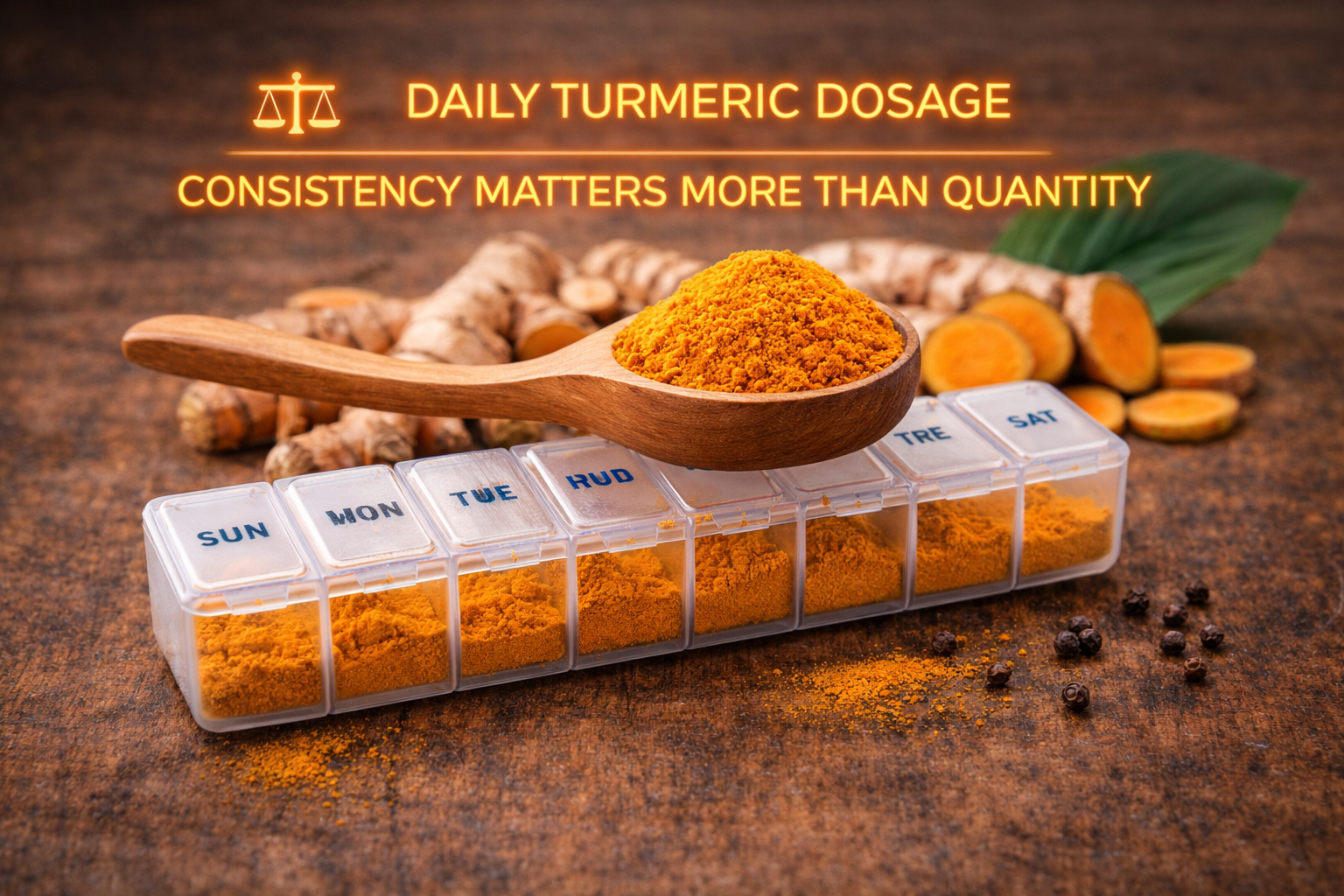
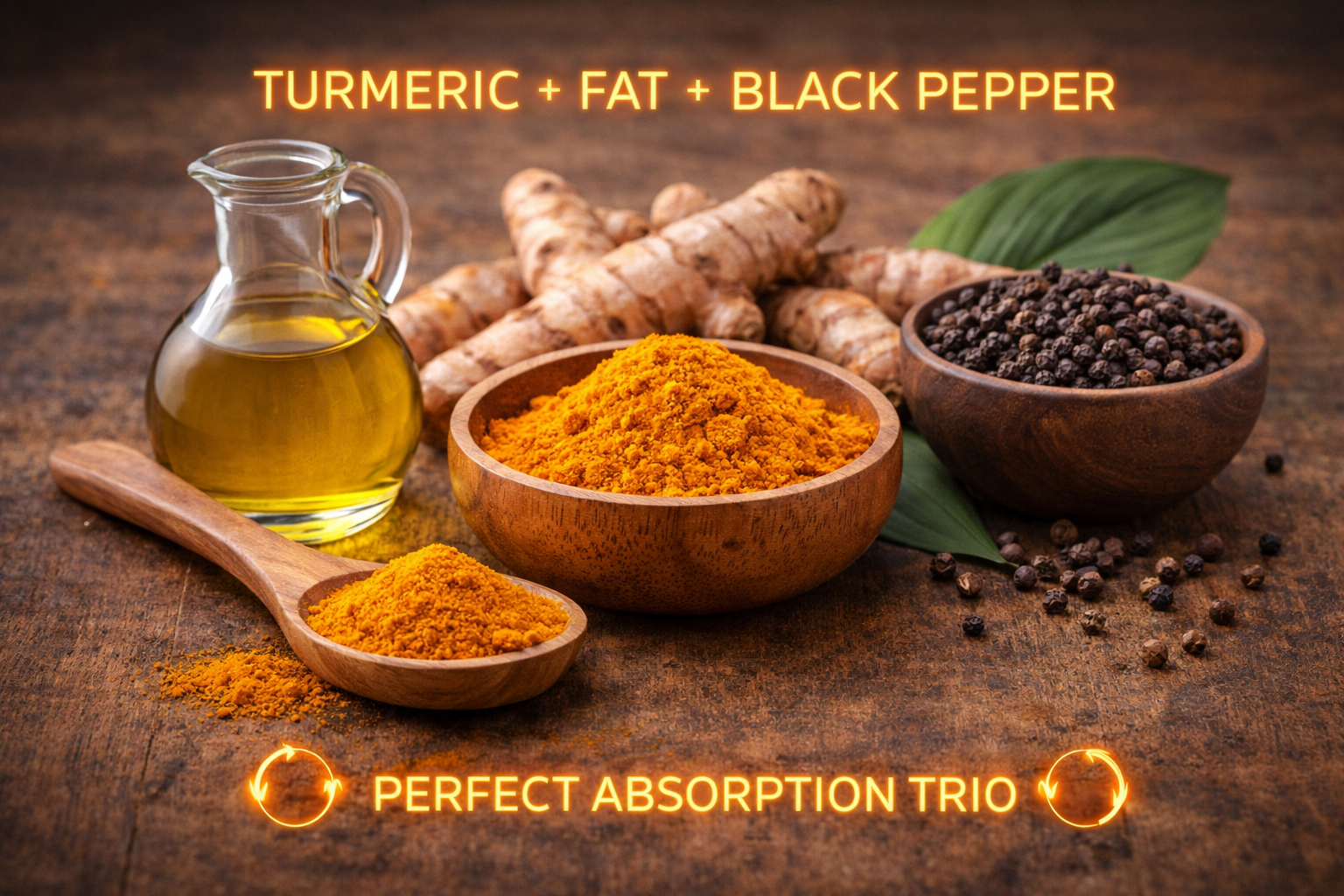
Golden milk — warm milk, 1/4 teaspoon of Organic Lakadong Turmeric Powder, a pinch of black pepper, and honey — is the most widely used daily ritual for high-curcumin turmeric. The fat in the milk and the piperine in the pepper together maximise curcumin absorption.
How to Verify Genuine Organic Lakadong Turmeric Powder
Both "organic" and "Lakadong" are names that get used loosely in the turmeric market. When they appear together on a label — especially online — the documentation behind them matters more than the label itself. Use this checklist to verify both claims simultaneously before committing to a purchase.
- Organic certificate naming the certifying body with a license number and current validity date
- NABL-accredited COA showing curcumin % via HPLC — 7% or above per batch
- GI Tag No. 741 referenced, and origin specifically stated as Jaintia Hills or Meghalaya
- Deep amber-orange colour clearly visible in product photos or on opening
- Strong, earthy, distinctly peppery aroma — noticeably more intense than standard turmeric
- Batch number or harvest date on packaging, allowing traceability to a specific lot
- Price consistent with the cost of third-party certification and small-batch mountain sourcing
- "Organic" label with no named certifying body, no license number, no certificate available
- No COA available or curcumin % not clearly stated anywhere in the listing
- Origin described vaguely as "Northeast India," "India," or simply "Himalayan"
- Pale yellow or generic turmeric colour — inconsistent with genuine high-curcumin product
- Price significantly below other NPOP/USDA certified Lakadong sellers — genuine organic certification has real cost built in
- Stock photography that doesn't correspond to real product packaging
These two documents answer completely different questions and neither substitutes for the other. An organic certificate tells you the turmeric was grown without prohibited synthetic inputs — verified by a third party. A COA tells you what curcumin percentage is in the batch you're actually buying — verified by a NABL-accredited lab. A product with only an organic certificate but no COA could still contain 2% curcumin. A product with only a high-curcumin COA but no organic certificate may have been grown with synthetic pesticides. Genuine organic high-curcumin Lakadong should produce both documents, for the same batch, without hesitation.
FAQs — Organic Lakadong Turmeric Powder
Organic Lakadong Turmeric Powder is GI Tag No. 741-certified turmeric grown exclusively in the Jaintia Hills of Meghalaya, India — cultivated without synthetic fertilisers or pesticides under a recognised organic standard (NPOP, USDA NOP, or EU Organic), and verified by lab testing to contain 7–12% curcumin. It's the only variety that combines the world's highest documented curcumin content with third-party organic certification.
No — and this is one of the most common misunderstandings when buying organic turmeric. The 7–12% curcumin content in Lakadong is a product of the variety's genetics and the specific environmental conditions of the Jaintia Hills: altitude, rainfall, and mineral-rich acidic soil. Organic certification is a process verification — it confirms how the turmeric was grown, not what it contains. Curcumin percentage is only confirmed by a separate batch lab test (COA).
The three most relevant standards are NPOP (India's national organic programme, required for domestic claims and accepted for EU export under equivalency), USDA NOP (required for products sold as organic in the United States), and EU Organic (for EU-based buyers who want direct certification rather than equivalency). Whichever standard applies, the certificate should name the certifying body, include a registration or license number, and show a current validity date. A verbal claim or label alone is not sufficient.
Three costs compound in the price of genuine organic Lakadong turmeric. First, the Lakadong variety itself produces lower yields per acre than commercial commodity turmeric — it's a rare, specific variety, not a mass-cultivated crop. Second, NPOP or USDA NOP certification requires annual third-party audits of farms, processing facilities, and the entire handling chain — all of which add cost that gets built into the product price. Third, Meghalaya's mountainous terrain makes both growing and logistics inherently more expensive than flat-land farming states. A price that seems dramatically lower than other certified organic Lakadong sellers is a prompt to verify the documentation more carefully, not a deal.
A valid COA from an Indian testing laboratory should display the NABL (National Accreditation Board for Testing and Calibration Laboratories) logo and accreditation number on the letterhead. NABL accreditation means the lab operates under ISO 17025 international standards for testing laboratory competence. The COA should also state the specific testing method used (HPLC for curcumin percentage), a batch or sample reference number matching the product you're buying, and the actual curcumin percentage result. A lab report missing any of these details — particularly the NABL number and testing method — is an incomplete document that warrants a follow-up question to the seller.
Culinary amounts — a quarter to half teaspoon added to food or a golden milk drink — are generally considered safe during pregnancy and are widely used in Indian cooking. What's not advisable during pregnancy is supplement-level curcumin intake: high-concentration capsules, or quantities significantly beyond normal culinary use. Because Lakadong's curcumin is already three to four times more concentrated than standard turmeric, it's worth being more careful about quantity than you might be with regular turmeric powder. If you're pregnant and considering regular turmeric supplementation, a conversation with your midwife or doctor is the right starting point.
Yes — it's commonly blended into face masks with yoghurt, honey, besan (chickpea flour), or raw milk, following a tradition that spans most of South Asia. The organic version is particularly suited to direct skin contact because there are no synthetic pesticide residues present in the ingredient. One important note: the high curcumin content means the colour is significantly more intense than standard turmeric, and it will temporarily stain skin orange-yellow. This fades over time, but doing a patch test on your inner arm before using it on your face is a sensible step — especially if your skin is sensitive or reactive.
Choosing Genuine Organic High Curcumin Lakadong Turmeric
The case for Organic Lakadong Turmeric Powder is built on facts, not marketing. A 7–12% curcumin content is a measurable, independently verifiable number. Organic certification is a third-party audited confirmation, not a self-applied label. GI Tag No. 741 is a government-registered designation, not a brand name. Together, they describe a product that is genuinely extraordinary — but only when all three are present and documentable.
The most important habit to develop as a buyer: ask for the documents before you trust the packaging. Any genuine organic high-curcumin Lakadong supplier can produce a current organic certificate, a batch-specific NABL-accredited COA, and traceability to a Jaintia Hills origin without friction. The absence of any one of these is a reason to ask more questions before purchasing.
- 🧪Ask for the batch COA — Look for curcumin % of 7% or higher, tested by HPLC, from a NABL-accredited lab, with a batch reference that matches your order.
- 📜Verify the organic certificate — Get the actual certificate, not just the claim. It should name the certifying body, their license number, and show a current validity date (NPOP, USDA NOP, or EU Organic).
- 🏅Check for GI Tag No. 741 and Jaintia Hills origin — Vague "Northeast India" language without specific Meghalaya/Jaintia Hills attribution is a yellow flag on origin.
- 👃Trust your senses on arrival — Genuine Organic Lakadong has a deep amber-orange colour and a pungent, earthy, peppery aroma that is unmistakably stronger than any standard turmeric you've used before.
- 🥄Use less — always start at 1/4 teaspoon — High curcumin means higher potency. Scale down from your usual turmeric quantity and adjust from there.
- 🌶️Pair with black pepper and fat every time — This meaningfully improves curcumin bioavailability. It's the difference between the curcumin passing through your body unused and actually being absorbed.
NPOP & USDA NOP certified organic · GI-registered, direct from Jaintia Hills farming cooperatives · NABL-accredited COA per batch (curcumin 7–12% via HPLC) · Stone-ground & sun-dried · Zero additives, fillers, or synthetic colour agents · Resealable eco-packaging from 100g to 1kg · WhatsApp support within 2 hours · Full certification documentation provided with every order.