What Does It Mean to Be a Lakadong Turmeric Supplier in Meghalaya?
Search for a Lakadong turmeric supplier in Meghalaya and the results range from a genuine farm cooperative in the Jaintia Hills to a repackaging operation two states away that has never handled a single rhizome grown there. The word "supplier" gets used loosely across the spice trade, and for anyone buying in commercial quantities, the gap between those two things determines almost everything downstream — price, consistency, and whether the shipment that lands matches the sample that was approved.
A genuine supplier in this category controls, or has a direct working relationship with, the growing and primary processing stage. That means they can name the villages or cooperative cluster the rhizome comes from, they oversee or directly run the boiling, drying, and grinding, and they can produce a batch-specific lab report tied to the exact lot being shipped — not a generic figure copied across every listing. Traders, brokers, and private-label repackagers are legitimate parts of the wider trade, but they are not the same thing as a supplier with farm-level traceability, and their pricing, minimum order quantity, and documentation will reflect that difference.
This guide is written from the buyer's side of that relationship — for importers, food and nutraceutical manufacturers, Ayurvedic brands, and wholesale distributors trying to establish exactly who they're dealing with before a purchase order is signed. If you're researching the product itself rather than the sourcing side, our Lakadong turmeric powder guide and organic Lakadong turmeric powder guide cover curcumin content, certifications, and daily use in more depth.
A seller moves inventory. A supplier controls, or has direct visibility into, the source. Because genuine Lakadong turmeric only grows in the Jaintia Hills, that distinction is the difference between a shipment you can trace back to a named cooperative and one you're taking largely on faith.
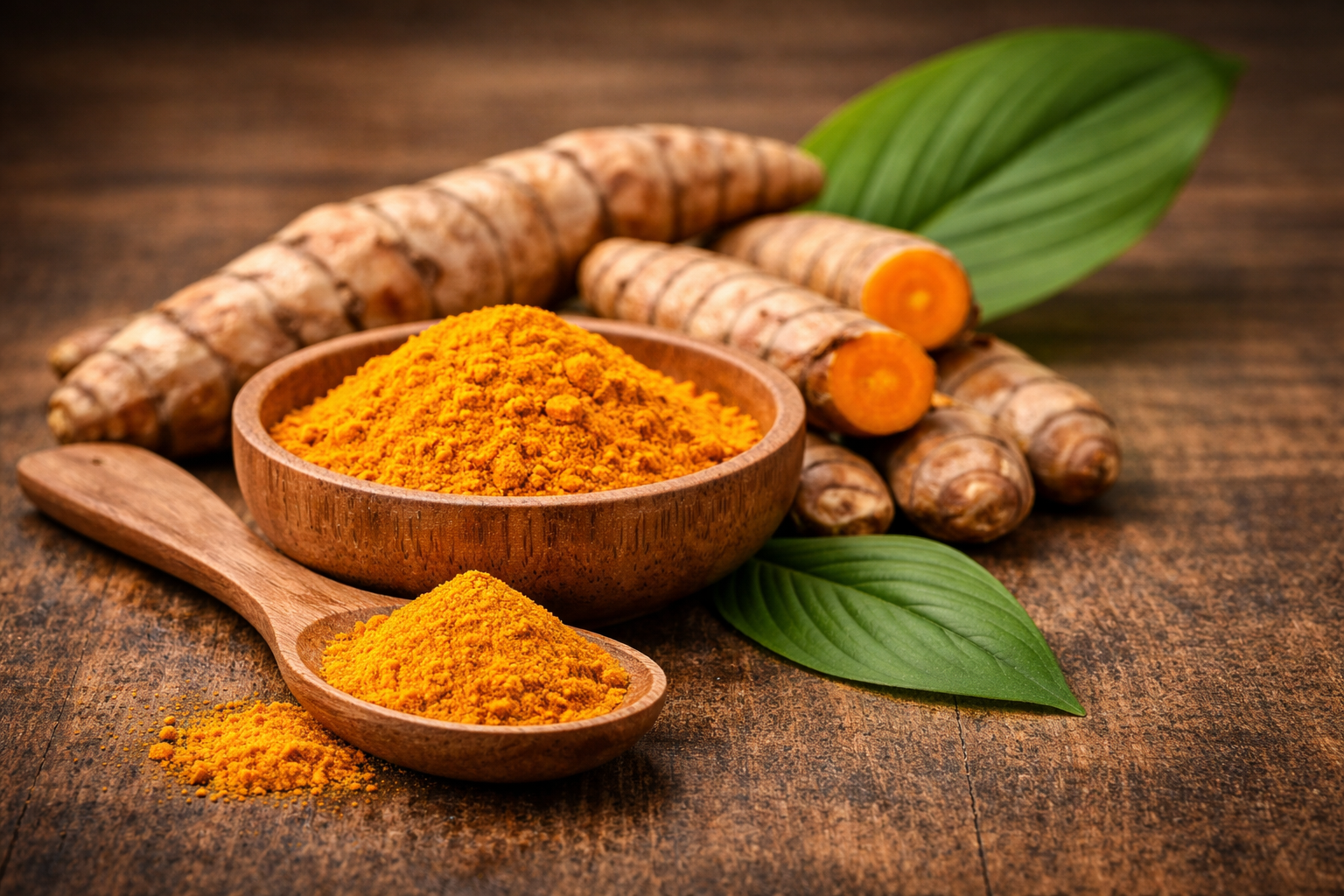
Terraced plots in the Jaintia Hills, Meghalaya — the only region where genuine Lakadong turmeric is grown, and the starting point of every credible supply chain claim.
Inside the Lakadong Turmeric Supply Chain — Jaintia Hills to Export Pallet
Understanding the stages a batch of Lakadong turmeric actually passes through makes it much easier to ask a supplier the right questions — and to notice when an answer is vague where it should be specific.
Most Jaintia Hills harvest and processing activity is concentrated between December and February, shifting slightly with altitude and that year's rainfall. If you're ordering outside that window, ask directly when the specific batch was harvested and how it has been stored since — both curcumin content and aroma drift gradually with age.
Farm-Direct, Trader, or Repackager? Types of Meghalaya Turmeric Suppliers
Every business selling Lakadong turmeric online describes itself, in some form, as a "supplier." In practice, the term covers at least four different positions in the supply chain, each with a different level of traceability and a different set of documents it can realistically hand over.
| Supplier Type | Farm Traceability | GI Tag Verifiable | Typical MOQ | Documentation |
|---|---|---|---|---|
| Farm-Direct Cooperative / Exporter | Named village/cluster | Yes, checkable | Sample to full container | COA, GI reference, full export docs |
| Regional Aggregator / Trader | Usually undisclosed | Rarely confirmed | Often higher, fixed | COA sometimes; origin docs rare |
| Private-Label / Repackaging Brand | Not applicable | Rarely | Low, retail-oriented | Brand packaging only |
| Marketplace-Only Reseller | Unknown | Unverifiable | Small, retail quantities | Rarely available on request |
The fastest way to work out which of these you're dealing with is also the simplest: ask which village or cooperative cluster the turmeric comes from, and watch how quickly and specifically the answer arrives. A farm-direct supplier answers immediately, because it's simply where their stock comes from. A trader or reseller several steps removed from the farm tends to answer in general regional terms instead — "Meghalaya," or "Northeast India" — because that's as far up the chain as they've actually seen.
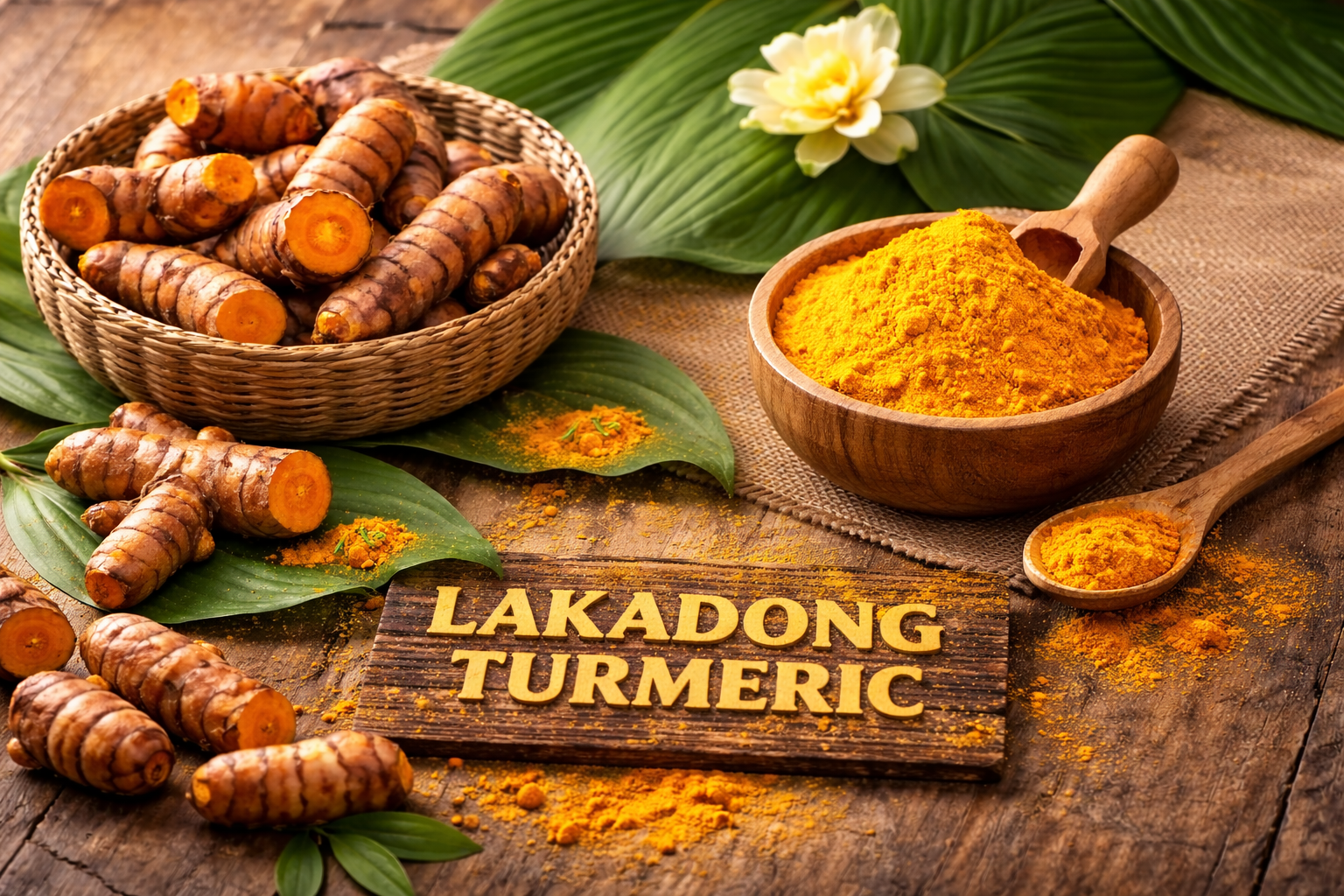
A cooperative drying yard in the Jaintia Hills — the kind of processing detail a farm-direct supplier can show you and a reseller usually cannot.
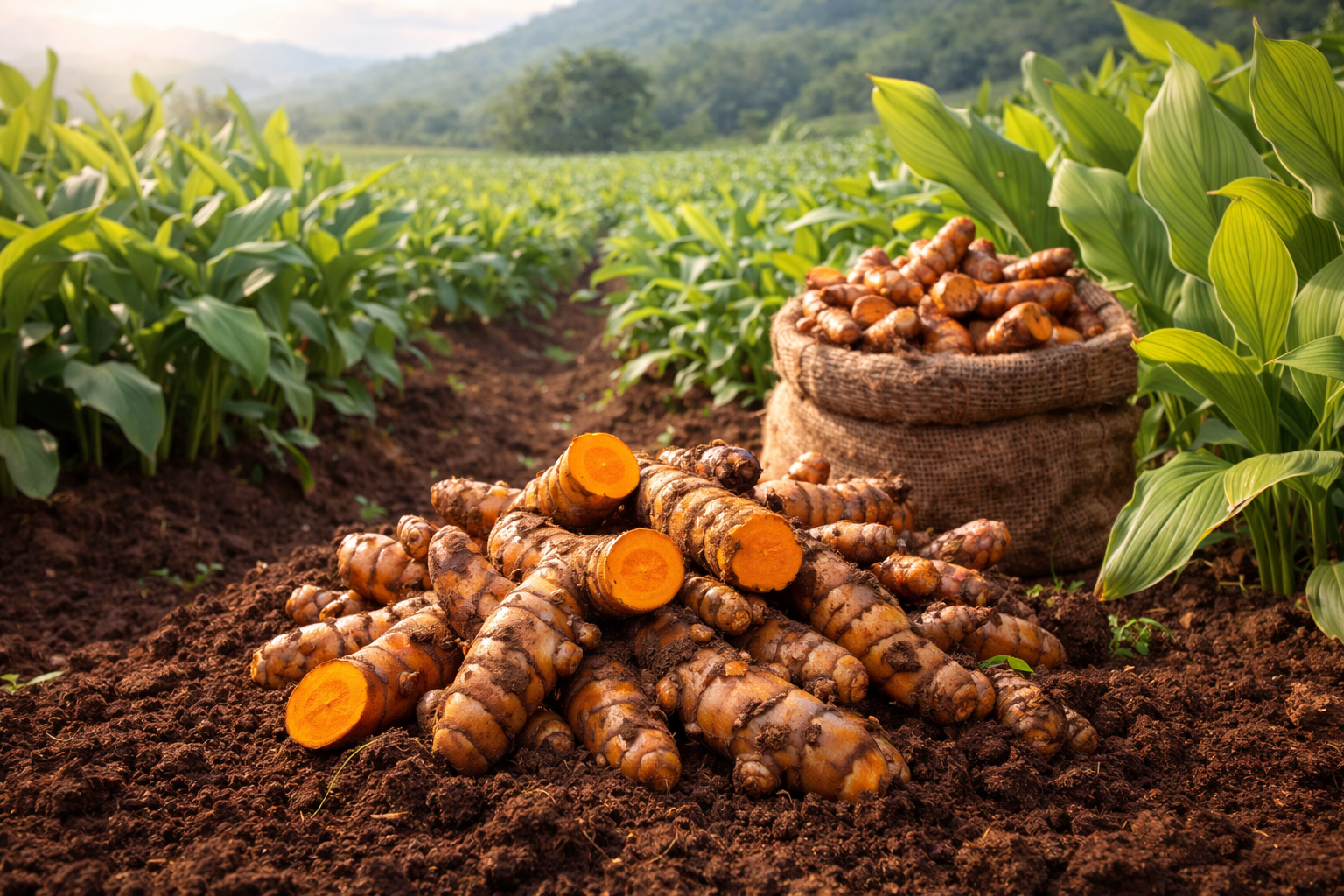
Export-ready bulk sacks, labelled and batch-numbered — the packaging stage where traceability either holds up or quietly disappears.
Certifications & Documents a Genuine Lakadong Turmeric Supplier Should Hold
A supplier's documentation tells you more about legitimacy than their website ever will. These are the registrations and certificates worth asking for by name before you move past initial conversation.
The Government of India's geographical indication reserving the name "Lakadong Turmeric" for turmeric grown in the Jaintia Hills. Ask for the registration reference, not just the phrase printed on a label.
Proves originRegistration required for a legitimate Indian spice exporter. Confirms the business is formally registered to trade spices internationally, not operating informally.
Export eligibilityIssued by India's Directorate General of Foreign Trade. Without an IEC number, a business cannot legally export from India, full stop — this is a non-negotiable check.
Legal requirementIndia's food safety license, required for any food-grade turmeric moving through the domestic supply chain before it's ever export-bound.
Food safetyA batch-specific Certificate of Analysis showing curcumin percentage via HPLC, from a NABL-accredited lab — not an internal test result quoted from memory.
Verifies potencyNPOP or USDA NOP, relevant only if your market specifically requires certified-organic stock. Adds cost and lead time and is not universal even among genuine Jaintia Hills suppliers.
Market-dependentAny of the six items above can appear as a line of text on a product page without ever being backed by a real certificate. Before a bulk order, request the actual documents — certificate numbers, accreditation bodies, and validity dates included — rather than accepting the claim on the listing at face value.
Source Genuine Lakadong Turmeric Direct From the Growers
GI Tag No. 741 · NABL-tested 7–12% curcumin · Bulk sacks, private label & sample dispatch · Full export documentation on every order
Bulk Formats, Packaging & Private Label Options
A capable Meghalaya turmeric supplier should be able to offer more than a single fixed SKU. These are the formats most bulk and B2B buyers end up choosing between.
Ready-to-use powder packed in export sacks with food-grade inner liners, most commonly ordered in 5kg, 25kg, or larger sack sizes depending on shipping mode and destination market.
- Standard format for food and nutraceutical manufacturers
- Batch COA matched to the exact sack lot
The least processed format, favoured by buyers who want to grind in-house, verify authenticity visually before milling, or supply a market that expects whole dried rhizome rather than powder.
- Longer shelf stability than pre-ground powder
- Easier to visually confirm colour and quality on arrival
Supplier packs turmeric under your own brand and packaging specification. Usually requires a higher minimum order than standard bulk sacks, plus lead time for artwork approval and production run scheduling.
- Raise packaging specs early — it affects MOQ and timeline
- Ask to see a physical mock-up before full production
Most credible suppliers will send a 100–500g sample, sometimes at cost to cover shipping, with a matching COA — the standard step before any serious bulk conversation begins.
- Always request the COA alongside the physical sample
- Compare colour and aroma against the lab figures on paper
Mesh size and grind adjustments for specific manufacturing uses — finer grinds for capsule filling or cosmetic use, coarser cuts for certain food-processing lines.
- Confirm mesh size in writing, not just "fine" or "coarse"
- Custom grinds may extend lead time on first orders
Available specifically from suppliers maintaining NPOP or USDA NOP certification across their farm network — a smaller subset of overall Jaintia Hills supply, and usually priced and lead-timed separately from conventional stock.
- Confirm certification covers the specific farms in your batch
- Expect longer lead times around certification audit cycles
Export Logistics From Meghalaya — Lead Times, Routes & Paperwork
Meghalaya is a hill state without its own major port or international airport, which shapes how every shipment actually moves and how far in advance a buyer needs to plan.
The Jaintia Hills sit in one of the wettest regions on earth, and heavy monsoon rainfall between roughly June and September can slow road transit between the farms and Guwahati. If your timeline is tight, ask your supplier directly how monsoon season typically affects their dispatch schedule that year.
How to Vet a Lakadong Turmeric Supplier in Meghalaya Before You Commit
Most sourcing problems trace back to questions that were never asked before a purchase order was placed. Use this checklist during supplier conversations, not after the goods have shipped.
- Names the specific village or cooperative cluster without hesitation
- Willing to do a live video walk-through of the farm or processing unit
- Sends a real sample with a batch-matched COA before pushing for a bulk PO
- GI Tag reference and IEC number are independently checkable
- Gives a clear, upfront answer on MOQ, lead time, and current-season volume
- Payment terms follow standard international trade practice, not full advance only
- Cannot name a village, cluster, or processing location when asked directly
- Declines a paid sample or any form of video verification
- Price sits well below every other Jaintia Hills supplier you've compared
- Vague or evasive about how much volume they can actually supply this season
- Documentation offered only after payment, never before
- Origin described only as "Northeast India" or "Himalayan region"
A supplier advertising a low minimum order to attract inquiries may still only have a modest quantity of genuine Jaintia Hills stock available in a given season. Before committing to a growing or repeat-order relationship, ask directly what tonnage they can realistically commit to beyond the first trial order — not just what the listing says.
FAQs — Lakadong Turmeric Supplier in Meghalaya
MOQs vary a lot by supplier type. Farm-direct cooperatives and exporters often work with a trial order in the range of 25–100kg before scaling toward container-level volumes for repeat business. Traders and marketplace resellers sometimes advertise lower MOQs, but genuine Jaintia Hills-origin stock at very small volumes and low pricing is worth double-checking — farm-direct economics rarely support it.
Yes, and a supplier's willingness to send one is one of the clearest signals of legitimacy. Reasonable suppliers provide a sample of roughly 100–500g, sometimes at cost to cover shipping, along with the batch's Certificate of Analysis so you can confirm the curcumin percentage matches what's advertised before committing to a purchase order.
Many do, though private label typically requires a higher minimum order than a standard bulk sack order, plus lead time for packaging artwork approval and a dedicated production run. If private labeling is part of your plan, raise it early in supplier conversations, since it affects pricing, MOQ, and lead time together.
At minimum, expect a Commercial Invoice and Packing List, a Certificate of Origin, a Phytosanitary Certificate, and a batch-specific Certificate of Analysis from a NABL-accredited lab. Depending on shipping mode, a Bill of Lading (sea freight) or Airway Bill (air freight) will also be issued. A supplier unable to produce these on request is not properly equipped to export.
During harvest and processing season — roughly December through February, shifting slightly by altitude and rainfall each year — in-stock orders can often ship within one to three weeks of PO confirmation. Off-season orders, first-time private-label runs, or large-volume container orders typically need four to six weeks to align with cooperative harvest and processing schedules.
Yes, from suppliers who maintain NPOP or USDA NOP certification across their farm network — but not every genuine Jaintia Hills supplier carries organic certification, since it adds annual audit cost that not every smallholder cooperative has taken on. If certified-organic status matters for your market, confirm it explicitly and ask to see the current certificate rather than assuming it from the word "organic" on a listing.
Terms vary by supplier and order size, but a common structure for first-time buyers is a partial advance payment to confirm the order, with the balance due against shipping documents. Very large or repeat orders sometimes move to letter of credit arrangements. Be cautious of suppliers who will only accept full payment in advance with no sample or documentation provided first.
Choosing a Lakadong Turmeric Supplier in Meghalaya — Buyer's Checklist
The case for sourcing from a genuine Jaintia Hills supplier isn't a marketing angle — it comes down to traceability, documentation, and whether the person you're negotiating with actually controls the supply they're quoting on. Work through this list before any purchase order goes out.
- 📍Confirm farm-level traceability — ask for the specific village or cooperative cluster, not just "Meghalaya" or "Northeast India."
- 🧪Request a sample and matching COA before discussing bulk pricing or committing to a purchase order.
- 📜Verify GI Tag No. 741, IEC, and Spices Board/FSSAI registration independently rather than taking the listing's word for it.
- 📦Get MOQ, current-season supply capacity, and lead time in writing — not just a verbal estimate.
- 🚢Clarify which export documents are included and who arranges freight — FOB versus CIF changes your cost and responsibility.
- 💳Agree payment terms that include a documented shipment stage, rather than full advance payment with nothing to verify against.
GI-registered, cooperative-sourced Lakadong turmeric · NABL-accredited COA per batch (7–12% curcumin via HPLC) · Bulk sacks, private label, and sample dispatch available · Full export documentation — invoice, COO, phytosanitary certificate, and COA — provided with every order · WhatsApp response within 2 hours for buyer inquiries.