What Turmeric Leaves Actually Are — And Why They're Not on Every Shelf
Turmeric leaves come from Curcuma longa, the very same plant that produces the turmeric rhizome ground into the spice sitting in most kitchen cabinets. But the leaf and the root behave nothing alike once harvested. The leaves are long, lance-shaped and deep glossy green, with a fragrance that has almost nothing in common with ground turmeric — think raw mango, pine and a faint camphor note, rather than the warm, earthy heat of the powdered spice.
That difference is a big part of why they're genuinely hard to find. Once cut, a turmeric leaf starts wilting almost immediately, so it has never lent itself to the kind of long-shelf-life retail distribution that turmeric powder enjoys. It has also historically stayed a regional ingredient — common in a handful of South Asian kitchen traditions and largely unknown outside them — rather than something stocked nationally the way curry leaves or bay leaves are.
In practice, a search for turmeric leaves where to buy almost always boils down to three practical questions: who actually sells them, when they're realistically available, and how to tell a genuinely good batch from one that's already past its best. That's exactly what the rest of this guide walks through.
If you're used to ordering turmeric as a jar of shelf-stable powder, buying the leaf is closer to buying a fresh herb than a spice. That's precisely why sourcing matters so much more here — freshness, handling and timing all affect what actually arrives at your door, in a way they simply don't for a sealed jar of ground turmeric.
Where People Actually Buy Turmeric Leaves
There isn't one single answer to where turmeric leaves are sold — it genuinely depends on what you need and how far you are from a turmeric-growing region. Broadly, buyers rely on four channels: local wet markets in growing regions, general online grocery apps, specialty spice and herb exporters, and buying direct from a farm or nursery. Each comes with real trade-offs.
Turmeric Leaf Buying Channels, Compared
How each sourcing route typically performs on the things that actually matter for a perishable, seasonal leaf.
🏪 Local Wet Markets / Mandis
📱 General Online Grocery Apps
🌿 Specialty Spice & Herb Exporters
🌱 Direct-from-Farm / Nurseries
When Turmeric Leaves Are Actually in Season
Turmeric is a rain-fed crop. It's planted as the monsoon begins, grows through the wet months, and is harvested for its rhizome once the plant naturally dies back and the leaves turn yellow and dry. That last detail matters more than it sounds: by the time the root is ready to dig up, the leaves have usually already passed their useful window — which is a common point of confusion for buyers trying to time an order.
In practice, that means fresh turmeric leaves are at their most lush and fragrant during the mid-to-late growing season, well before the harvest of the rhizome itself. Outside that window, fresh supply becomes genuinely scarce, and dried or pre-booked stock from an exporter becomes the realistic option.
Typical Fresh-Leaf Availability, Month by Month
A general seasonal pattern for growing regions like Meghalaya's Jaintia Hills. Actual timing shifts with local rainfall, altitude and the specific season's weather.
Fresh vs Dried Turmeric Leaves — What Actually Changes
Once you know both fresh and dried turmeric leaves exist as buying options, the next question is which one actually fits what you're making. The honest answer is that it depends almost entirely on the recipe.
Fresh Leaf vs Dried Leaf, Side by Side
What changes between the two forms, and where each one is genuinely the better choice.
| Attribute | Fresh Leaf | Dried Leaf |
|---|---|---|
| Aroma | Bright and green, strongest right after cutting | Milder, more concentrated and earthy once dried |
| Best Use | Wrapping steamed rice cakes & sweets | Infusions, flavouring stocks & marinades |
| Typical Shelf Life | Short — best used within a week | Long — many months if sealed well |
| Ideal Storage | Damp cloth or perforated bag, refrigerated | Airtight container, kept away from light |
| Where You'll Usually Find It | Local markets in season, farm-direct, specialty exporters | Specialty spice exporters & online sellers, year-round |
How Long Turmeric Leaves Actually Last
Whatever form you buy, how you store turmeric leaves afterward matters just as much as where you bought them. Left loose on a counter, a fresh leaf can wilt within a day. Handled properly, the same leaf — or a well-dried version of it — can last considerably longer.
Storage Method vs Typical Usable Window
A general, illustrative comparison. Bar lengths are for visual comparison only and aren't drawn to a strict linear time scale.
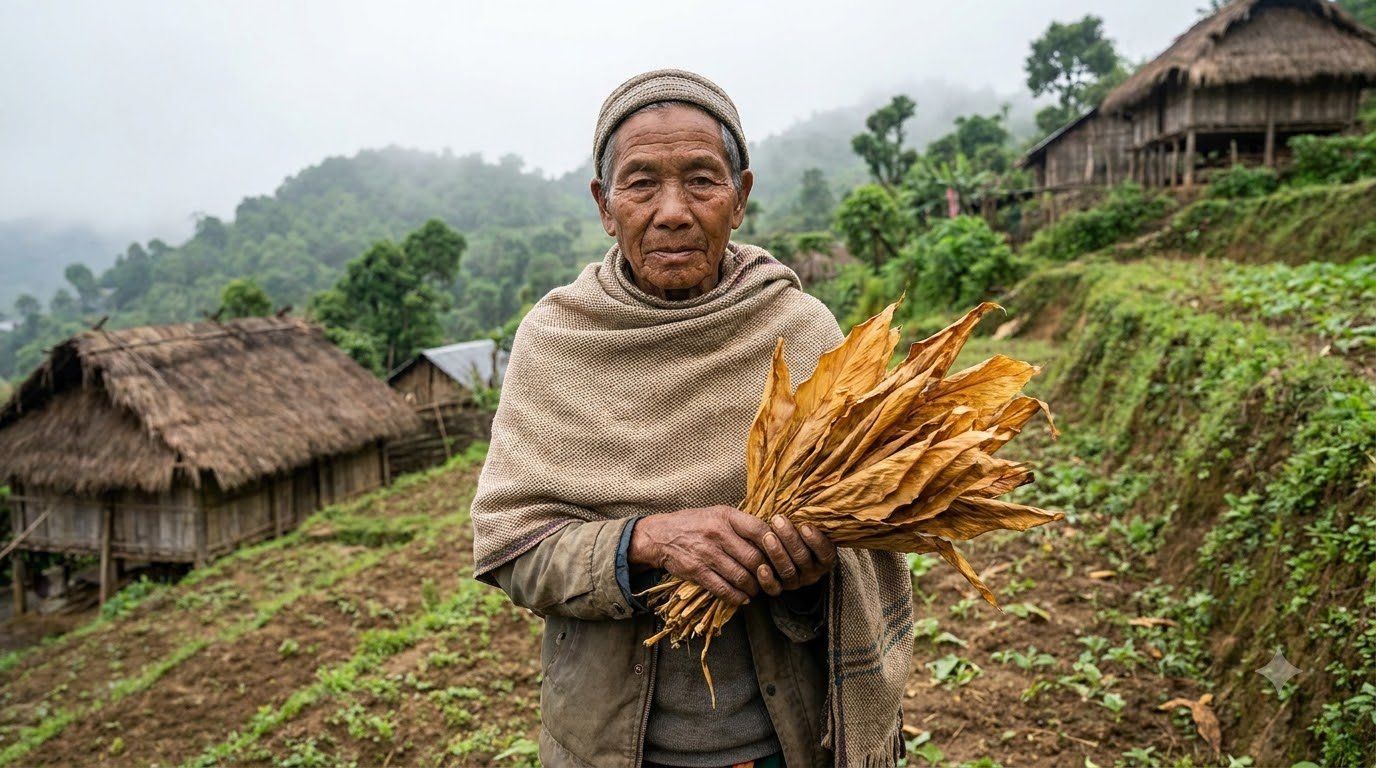
The same Jaintia Hills plots that grow Lakadong turmeric rhizome also produce the plant's broad, fragrant leaves during the growing season.
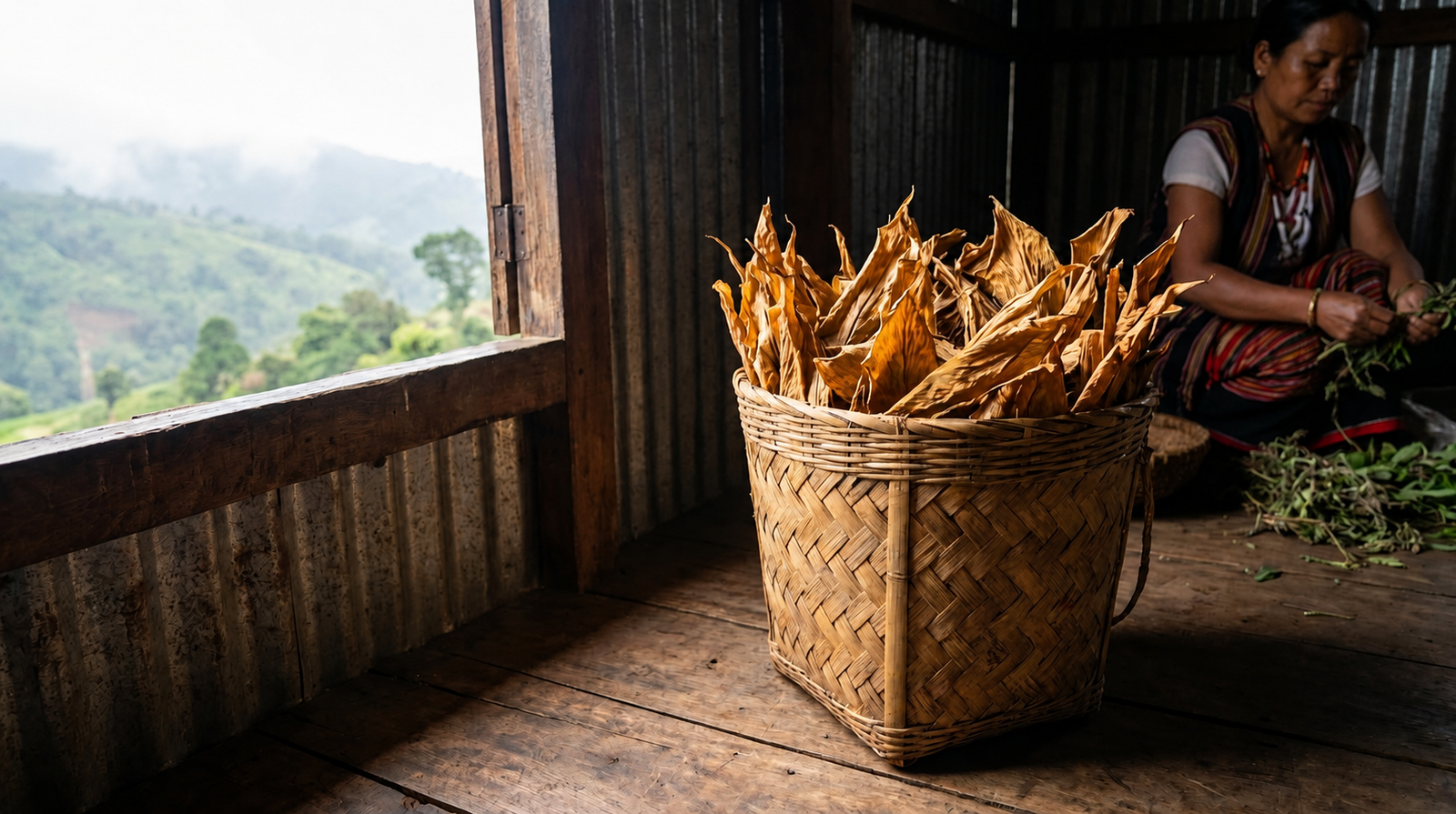
By the time the root is dug up and cured, the leaves have usually already been harvested and used — exactly why leaf and rhizome buying seasons rarely line up.
How to Tell Good Turmeric Leaves From Tired Ones
Because a turmeric leaf is closer to a fresh herb than a packaged spice, judging quality comes down to a quick visual and aroma check rather than a lab certificate — though a serious seller should still be able to tell you where and when a batch was harvested.
- Deep, even green colour with a glossy surface
- Leaves feel supple and bend without cracking
- A clear, fresh, slightly citrusy aroma when the leaf is lightly crushed
- Seller can tell you the harvest or pack date
- Origin is named — a specific farm, cooperative or growing region
- Yellowing edges, brown spots, or a dull, faded green
- Leaves feel brittle, papery, or crack when folded
- Musty, sour, or barely-there smell
- No harvest date, or only a vague "recently packed" claim
- Origin described only as "imported" with no specifics offered
What People Actually Do With Turmeric Leaves
Once you've tracked down a good batch, it helps to know exactly what they're for — turmeric leaves aren't usually eaten directly, they're valued for the fragrance they lend to whatever they're wrapped around or steeped in.
Rice and jaggery-coconut filling steamed inside a folded turmeric leaf, which perfumes the sweet without being eaten itself.
Steamed rice cakes wrapped the same way, a festival-season specialty across parts of Odisha and West Bengal.
Fresh or dried leaves steeped for a mild, fragrant tisane — a distinctly different drink from turmeric-root tea or golden milk.
A biodegradable alternative to foil or plastic for steaming other stuffed preparations, popular with eco-conscious home cooks.
Need a Reliable Source for Turmeric Leaves?
We work with the same Jaintia Hills cooperatives behind our GI-tagged Lakadong turmeric to supply fresh-cut and sun-dried turmeric leaves for retail, bulk and export orders — reach out for current availability and sample options.
A Practical Checklist for Ordering Turmeric Leaves Online
Buying a perishable leaf sight-unseen is different from ordering a jar of powder. A short round of questions before you commit — especially for a bulk or first-time order — saves most of the disappointment.
See What a Genuine Batch Looks Like First
Want photos of current stock, harvest timing, or packaging options before you order? We're happy to share details for both fresh-cut and dried turmeric leaf batches.
FAQs — Turmeric Leaves Where to Buy
Fresh turmeric leaves are typically sold in local wet markets in turmeric-growing regions during the growing season, occasionally through general online grocery apps, and more reliably through specialty spice and herb exporters who carry both fresh-cut and dried stock year-round. Direct-from-farm purchase or a potted plant from a nursery is another option if you want an ongoing home supply.
No, and this is a common mix-up. Curry leaves come from a completely different plant, Murraya koenigii, and are small, glossy and used mainly for tempering. Turmeric leaves come from Curcuma longa, the same plant that produces the turmeric rhizome, and are long, broad and used mostly as an aromatic wrap for steamed dishes rather than a tempering ingredient.
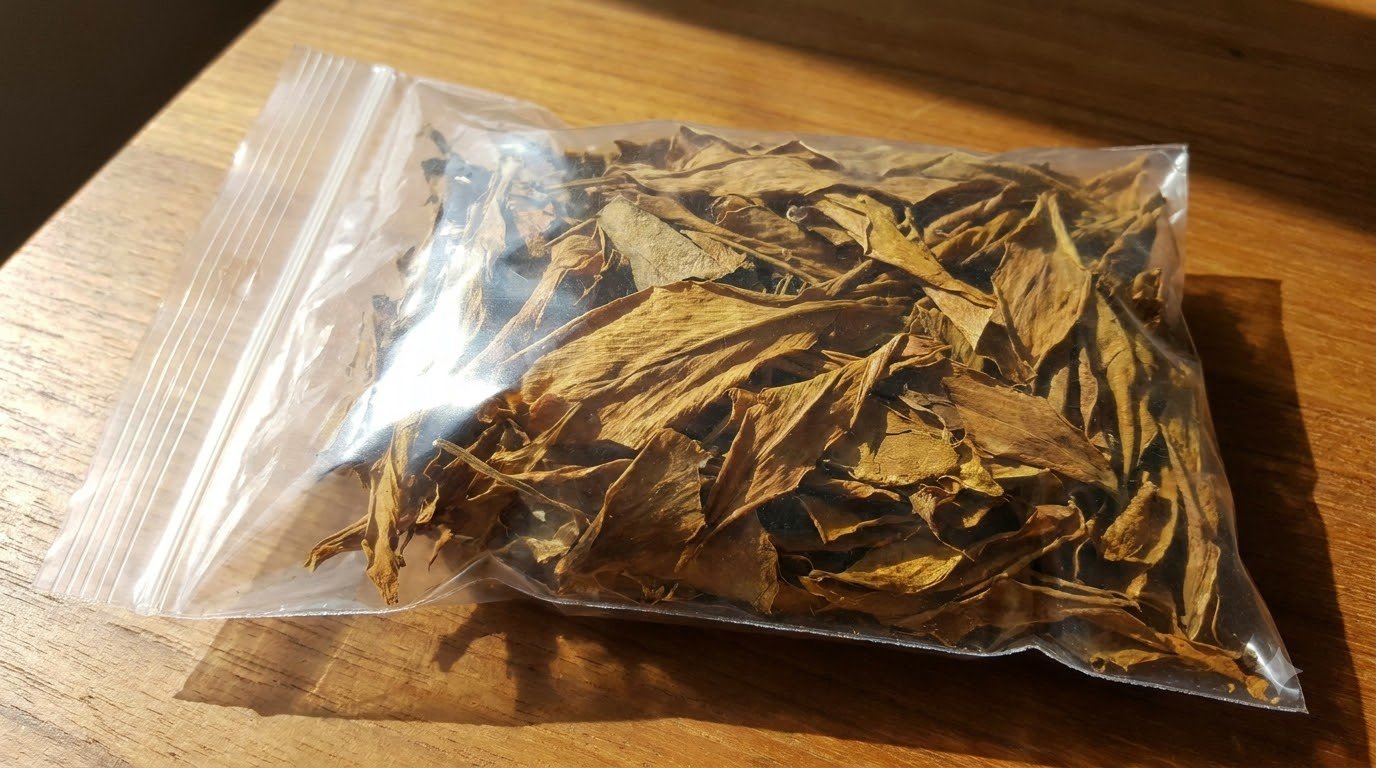
Yes. Dried or vacuum-sealed turmeric leaves are a practical option outside the growing season or outside turmeric-growing regions entirely. They work well for infusions, flavouring stocks and marinades, though they're a poor substitute for fresh leaf in recipes that rely on the leaf's flexibility for wrapping.
Handled well, fresh turmeric leaves generally hold up for about five to seven days when wrapped in a damp cloth or kept in a perforated bag in the refrigerator. Left at room temperature, they tend to wilt within a day or two, so it's worth planning to use them soon after buying rather than storing them for later.
Their biggest culinary role is as an aromatic wrap for steamed rice cakes and sweets, such as Goan patoleo and Odia patra pitha, where the leaf perfumes the dish without being eaten itself. Dried leaves are also steeped for a mild, fragrant infusion, and fresh leaves are sometimes used as a biodegradable alternative to foil for steaming other stuffed preparations.
Yes, turmeric grows reasonably well from a rhizome in a large pot or a warm, partly shaded garden bed, and established plants can be lightly harvested for leaves once they're established over a growing season. It won't replace a commercial supply for regular cooking, but it's a realistic option for anyone who wants leaves on hand without depending on a seasonal market.
Ask for a harvest or pack date, confirm the packaging suits the product (breathable for fresh, fully airtight for dried), ask whether the leaves were grown without heavy pesticide use, and request current photos of the actual stock before placing a bulk order. A seller who can answer all of this without hesitation is usually a safer bet than one who can't.
So, Where Should You Actually Buy Turmeric Leaves?
Honestly, the right answer depends on what you need and when you need it. For a quick, one-off recipe and a local market still in season, buying nearby is often the simplest route. For anything planned in advance, needed outside the growing season, or ordered in bulk for a restaurant or export shipment, a specialty grower or exporter who can supply both fresh-cut and properly dried leaf — and tell you exactly when and where it was harvested — is the more dependable choice.
Whichever route you take, the same short checklist keeps you from being disappointed: confirm a harvest or pack date, ask where the leaves actually came from, and store what you buy the right way for its form — chilled and used quickly if fresh, airtight and away from light if dried.
- 🗓️Match the source to your timeline — local and in-season for immediate use, an exporter for planned or bulk orders.
- 🔍Always ask for a harvest or pack date — it's the single most useful thing a seller can tell you.
- ❄️Store fresh leaves chilled and use them within about a week for the best result.
- 🫙Keep dried leaves airtight and away from light for the longest-lasting aroma.
- 📍Treat a vague origin claim as a reason to ask more, not less.
Alongside our GI-tagged Lakadong turmeric rhizome, we supply fresh-cut and sun-dried turmeric leaves harvested from the same Jaintia Hills cooperative farms in Meghalaya. Leaves are gathered by hand during the growing season, with pesticide-free growing practices and private-label packaging available on request. Reach out through the form above for retail, bulk or export enquiries.