What Is Lakadong Turmeric?
Lakadong turmeric is a distinct turmeric cultivar grown in the East and West Jaintia Hills districts of Meghalaya, a state tucked into India's northeastern hills. It takes its name from Lakadong village, where the variety has been cultivated by Pnar (Jaintia) tribal farming families for generations, long before it became known outside the region.
What sets it apart from being just a regional name is that it is now a legally protected term. In November 2023, the Registrar of Geographical Indications in Chennai granted Lakadong turmeric GI Tag No. 741 under India's Geographical Indications of Goods (Registration and Protection) Act, 1999. In practical terms, this works much like the protection given to Darjeeling tea or Champagne — only turmeric grown within the recognised Jaintia Hills belt, using the traditional local cultivar, can legally be sold under the Lakadong name.
Botanically, Lakadong turmeric belongs to the same species as all culinary turmeric, Curcuma longa. The rhizome — the underground stem that is dried and ground into powder — carries a noticeably deeper orange-red flesh than most commercial turmeric, a visible clue to the curcumin concentration that has made it famous among spice buyers, Ayurvedic practitioners, and health-conscious cooks alike.
A freshly cut Lakadong turmeric rhizome. The intensity of the orange-red colour is a visual indicator — though never a substitute for lab testing — of curcumin concentration.
Because Lakadong turmeric is GI-protected, turmeric grown outside the Jaintia Hills — however similar it looks — cannot legally carry the name. In recent years, "Lakadong-style" or "Lakadong-type" turmeric grown in other regions has occasionally appeared in the market, which is precisely why understanding the GI tag matters as much for everyday buyers as it does for exporters.
The Curcumin Advantage
Curcumin is the golden-yellow polyphenol compound responsible for turmeric's colour, much of its aroma, and the majority of the properties researchers have studied it for. It is also the single biggest reason Lakadong turmeric commands such a strong reputation: independent lab reports on Lakadong batches have recorded curcumin levels of 7% up to 12%, compared with roughly 2–3% in standard commercial turmeric and 3–5% in Kerala's well-regarded Alleppey variety.
That gap isn't a marketing exaggeration — it is largely a story of geography. The Jaintia Hills sit at an elevation of roughly 800 to 1,200 metres, with acidic, mineral-rich lateritic soil and some of the heaviest monsoon rainfall anywhere in the world. Agricultural scientists who have studied the region note that this specific combination of soil chemistry, altitude and microclimate, paired with a locally evolved seed line, is what drives curcumin synthesis in the rhizome. Attempts to grow the identical seed variety in other parts of India have not reproduced the same curcumin levels — strong evidence that Lakadong turmeric's potency is tied to place, not just plant genetics.
It's worth noting that curcumin percentage is not perfectly uniform across every harvest or plot — soil variation, rainfall in a given season, and post-harvest handling all play a role. This is why serious buyers rely on a batch-specific, NABL-accredited Certificate of Analysis rather than treating "7–12%" as a fixed number for every bag of Lakadong turmeric.
Lakadong turmeric powder's deep amber-orange tone is a direct reflection of its curcumin density.
The fog-shrouded Jaintia Hills — the terroir that agricultural researchers credit for Lakadong turmeric's curcumin content.
Health Benefits of Lakadong Turmeric
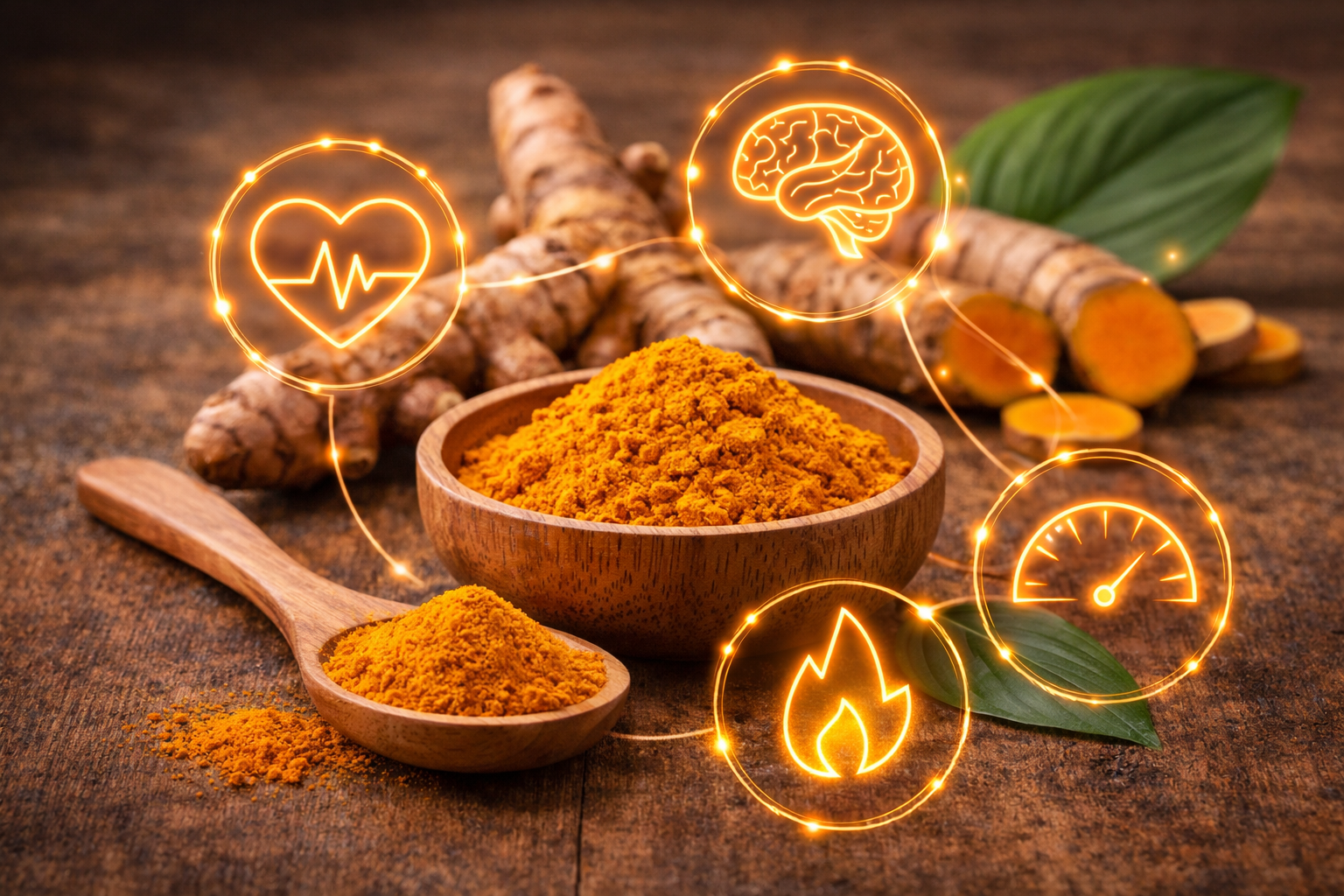
Curcumin has been one of the most widely researched plant compounds of the last few decades, and much of that research is specifically interested in high-curcumin turmeric sources — which is part of why Lakadong turmeric attracts attention beyond the kitchen. The points below reflect general, widely reported areas of interest around curcumin and turmeric; they are educational, not medical claims about any specific product.
Curcumin is one of the most studied natural compounds for its potential role in supporting the body's normal response to everyday inflammation.
As a polyphenol, curcumin has notable antioxidant properties, helping neutralise free radicals alongside a broader balanced diet.
Turmeric has a long history of traditional use for everyday joint and muscle comfort, an area of ongoing scientific interest in curcumin research.
In Ayurveda and Northeast Indian food culture, turmeric is traditionally added to meals to support everyday digestion.
Turmeric is a staple in traditional immune-supportive preparations across South and Southeast Asia, most famously turmeric milk.
Turmeric is a long-standing ingredient in traditional skincare pastes, valued for its natural glow-supporting reputation.
Lakadong turmeric is a food ingredient, not a drug, and the points above describe general, well-known areas of curcumin research rather than guaranteed outcomes. If you are pregnant, nursing, on blood-thinning medication, preparing for surgery, or managing a gallbladder or kidney condition, speak with a qualified healthcare professional before increasing your turmeric or curcumin intake — especially in concentrated form.
How Lakadong Turmeric Is Used
Because Lakadong turmeric is so concentrated, it tends to go further than ordinary turmeric — a smaller pinch delivers a similar depth of colour and flavour. That potency shows up across three broad categories of everyday use.
The most common way Lakadong turmeric is used, from everyday Indian cooking to modern wellness drinks.
- Curries, dals and vegetable stir-fries
- Golden milk / turmeric latte
- Turmeric tea and warm infusions
- Marinades for meat, fish and paneer
- Rice dishes and pickles
Turmeric holds a central place in Ayurveda and in Northeast Indian household traditions passed down across generations.
- Warm turmeric milk ("haldi doodh")
- Turmeric-honey paste
- Traditional post-meal digestive routines
- Seasonal wellness preparations
A long-standing beauty ingredient across South and Northeast Asia, used sparingly due to its concentration and staining potential.
- Turmeric-gram flour face packs (ubtan)
- Turmeric-honey spot treatments
- Turmeric-milk brightening masks
- Traditional pre-wedding beauty rituals
Beyond the home kitchen, the food and nutraceutical industries increasingly seek out high-curcumin sources like Lakadong turmeric for curcumin extraction, natural food colouring, and turmeric-based supplements, where a higher starting curcumin percentage means less raw material is needed to reach a target concentration.
How Lakadong Turmeric Is Grown
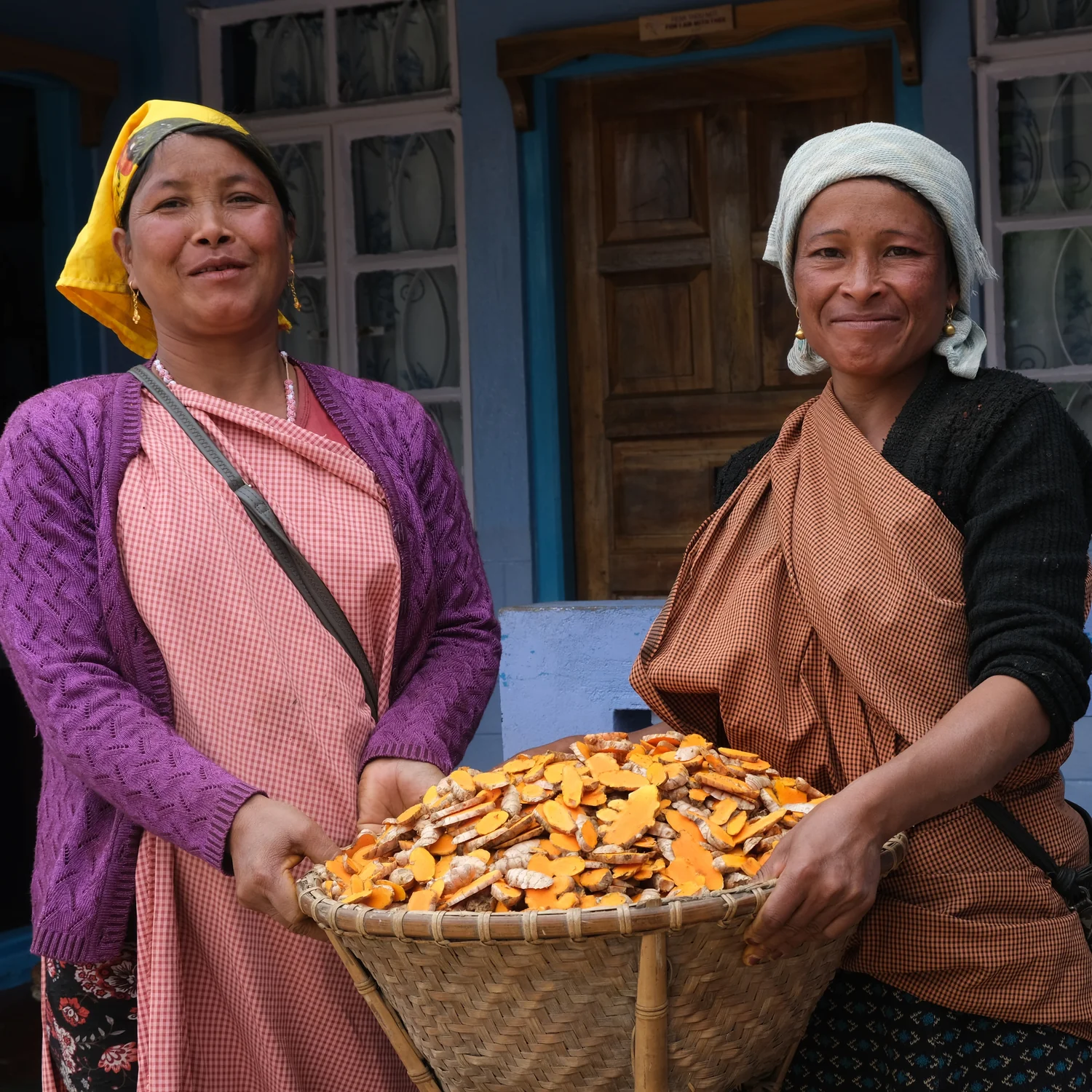
Lakadong turmeric is planted at the start of the monsoon, typically around April–May, and grows through the wet Jaintia Hills summer before being harvested once a year, usually between January and February. Most cultivation still follows methods passed down through generations of Pnar, Khasi and Garo farming families — hand-tilled plots, minimal or no synthetic fertiliser, and rhizomes dug up carefully by hand rather than mechanically, to avoid bruising the flesh.
Once harvested, turning raw rhizomes into the finished spice is a multi-stage process, and the care taken at each stage has a real effect on the final colour, aroma and shelf life of the turmeric.
Lakadong turmeric is still harvested largely by hand across the small terraced plots of the Jaintia Hills.
Get to Know Real Lakadong Turmeric
GI Tag No. 741 · Curcumin up to 12% · Grown by Jaintia Hills farming families · Traceable to source
Lakadong Turmeric vs Other Indian Varieties
India grows several well-known turmeric varieties, each tied to a particular growing region. Seeing them side by side makes it easier to understand exactly where Lakadong turmeric stands out — and why curcumin percentage, not just colour, is the number that matters most.
| Variety | Growing Region | Typical Curcumin | Colour | Best Known For |
|---|---|---|---|---|
| Lakadong | Jaintia Hills, Meghalaya | 7% – 12% | Deep orange-red | Highest curcumin content, GI-protected |
| Alleppey Finger | Kerala | 3% – 5% | Golden yellow | Traditional export-grade turmeric |
| Erode / Salem | Tamil Nadu | 2% – 3.5% | Bright yellow | India's largest volume trading centre |
| Rajapuri | Maharashtra / Karnataka | 2% – 4% | Yellow-orange | Large, bold fingers with good yield |
| Sangli | Maharashtra | 2% – 3.5% | Yellow | Major domestic turmeric trading hub |
Curcumin ranges above are typical figures reported across the spice trade and can vary by season, soil and testing method — always confirm with a batch-specific lab report for any commercial purchase.
How to Identify Genuine Lakadong Turmeric
As demand for Lakadong turmeric has grown, so has the number of products loosely labelled "Lakadong-style" or simply "Meghalaya turmeric" that aren't actually grown in the GI-protected Jaintia Hills belt. Knowing what to look for helps you tell the genuine article from a look-alike.
- References GI Tag No. 741 on packaging or documentation
- Deep orange-red interior, not pale yellow
- Strong, distinctly earthy-peppery aroma
- Names Jaintia Hills or Meghalaya specifically, not "Northeast India"
- NABL-accredited COA available on request for bulk orders
- Batch or harvest-lot traceability for commercial purchases
- Pale yellow or orange colour with a mild aroma
- No mention of GI tag, Jaintia Hills, or specific origin
- Vague labelling like "premium Northeast turmeric"
- No lab documentation offered for bulk quantities
- Curcumin percentage claimed but never verifiable
- Unusually cheap for the potency being claimed
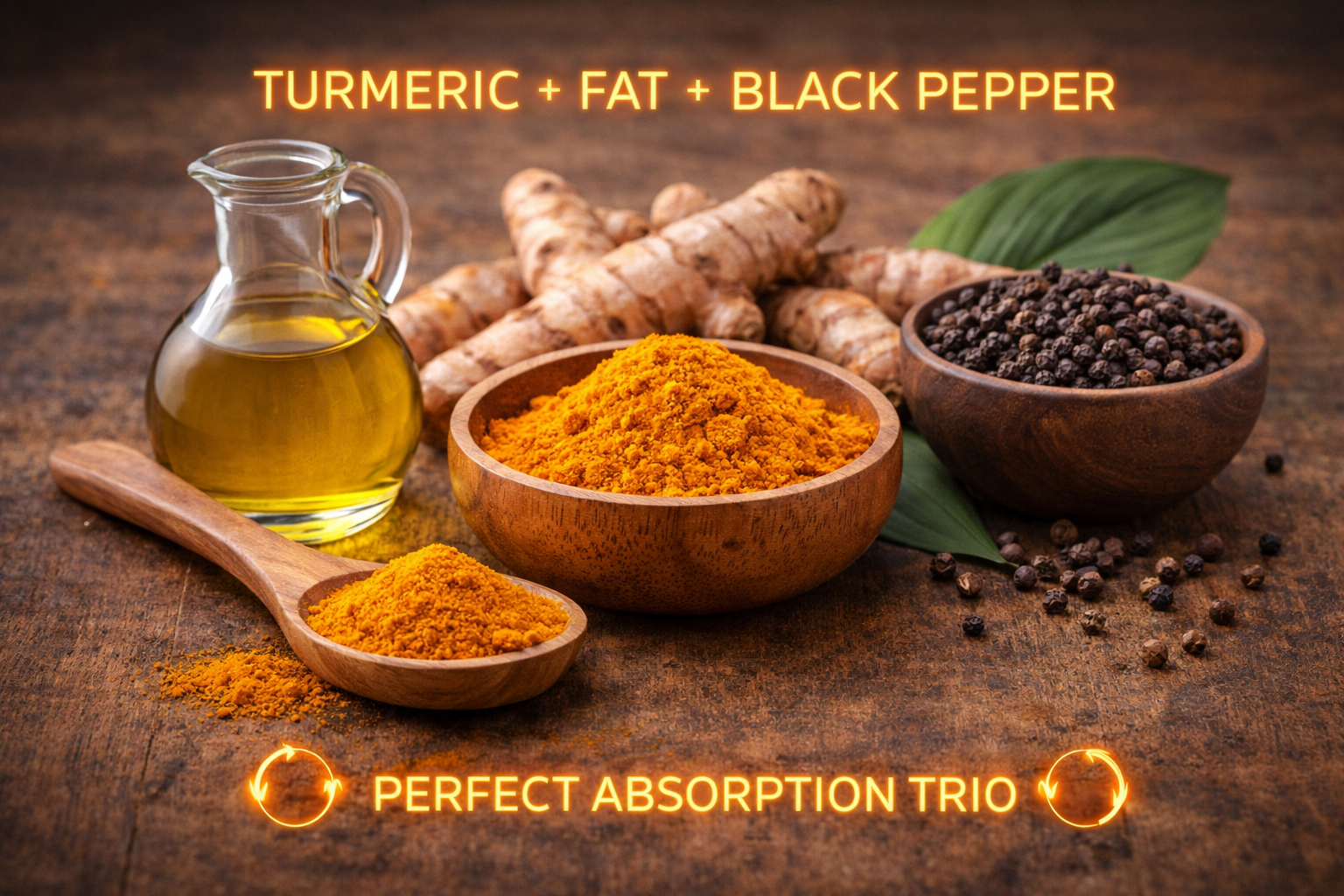
Colour and aroma are useful first checks, but they aren't proof on their own. For any meaningful purchase, ask whether a batch-specific Certificate of Analysis is available from an NABL-accredited lab, stating curcumin percentage, moisture and ash content. A supplier confident in their product will not hesitate to share it.
Storing Lakadong Turmeric for Maximum Freshness
Curcumin and turmeric's aromatic essential oils are both sensitive to heat, light and moisture, so how you store Lakadong turmeric after opening makes a real difference to how long it stays potent.
- 🫙Use an airtight container — glass or tin keeps out humidity far better than the original paper or thin plastic packaging.
- 🌑Keep it cool and dark — a cupboard away from the stove and out of direct sunlight preserves colour and aroma much longer.
- 🥄Always use a dry spoon — moisture introduced during use is one of the fastest ways spice powders lose quality and develop clumping.
- 🧊Whole dried fingers last longer than powder — grinding accelerates the loss of volatile oils, so buying fingers and grinding in small batches preserves potency best.
- 📅Expect roughly 12–18 months of good potency for powder, and two years or more for whole dried fingers stored correctly.
The Farmers Behind Lakadong Turmeric
Behind every bag of Lakadong turmeric is a network of small tribal farming households rather than large industrial farms. Roughly 14,000 farming families, spread across 43 villages of the Jaintia Hills, cultivate the crop on an estimated 1,753 hectares of land — most of it in small, terraced plots tended using knowledge passed down through generations of Pnar, Khasi and Garo communities.
The 2023 GI tag was, in large part, secured specifically to protect this farming community: by legally restricting the Lakadong name to genuine Jaintia Hills produce, the tag helps ensure that the reputation — and the market demand — built around this turmeric benefits the farmers who actually grow it, rather than being diluted by turmeric grown and sold elsewhere under the same name. It also encourages the preservation of the traditional, low-input cultivation methods that shaped the variety's character in the first place.
Every batch of Lakadong turmeric traces back to a specific plot, village and farming family in the Jaintia Hills.
FAQs — Lakadong Turmeric
Lakadong turmeric is a turmeric cultivar grown exclusively in the Jaintia Hills of Meghalaya, named after Lakadong village. It carries GI Tag No. 741 and is recognised for curcumin content that can reach 7–12%, well above ordinary turmeric grown elsewhere in India.
Researchers point to the Jaintia Hills environment itself — acidic, mineral-rich soil, heavy monsoon rainfall, an elevation of roughly 800–1,200 metres, and a locally evolved seed variety cultivated over generations. The same seed grown outside this specific terroir has not reproduced the same curcumin levels, suggesting the potency is tied to place as much as genetics.
They belong to the same plant species, but Lakadong turmeric's curcumin concentration is several times higher than standard commercial turmeric, which typically runs 2–3%. It also has a deeper orange-red colour, a stronger aroma, and — unlike ordinary turmeric — legal GI protection tied to a specific growing region.
Much of it is grown using traditional low-input methods with little or no synthetic fertiliser, since Jaintia Hills farming has long relied on natural soil fertility and crop rotation. That said, formal organic certification (India NPOP, USDA NOP or EU organic) is a separate process that only applies where a farm or supply chain has completed it, so buyers who specifically need certified organic stock should confirm this rather than assume it from origin alone.
Look for a reference to GI Tag No. 741, a deep orange-red interior rather than pale yellow, and a strong earthy-peppery aroma. For any bulk or commercial purchase, ask for a NABL-accredited Certificate of Analysis stating curcumin percentage — a supplier who can name the Jaintia Hills origin specifically, rather than a vague "Northeast India" description, is a good sign.
Yes, it can replace ordinary turmeric in everyday recipes. Because it's more concentrated, many cooks use slightly less than they would with standard turmeric to reach the same colour and flavour intensity. Anyone on medication or managing a specific health condition should check with a doctor before regularly consuming high-curcumin turmeric in concentrated amounts.
Turmeric has a long tradition of use in South and Northeast Asian skincare, typically blended into face packs with gram flour, milk, honey or yogurt. Because Lakadong turmeric is more concentrated, less is generally needed per application. As turmeric can temporarily stain skin and occasionally cause irritation, it's sensible to patch-test before using it more widely.
Keep it in an airtight glass or tin container, away from heat, light and moisture — a cool, dark cupboard works better than a spot near the stove. Stored this way, powder typically holds good potency for about 12–18 months, while whole dried fingers keep considerably longer, since grinding speeds up the loss of aromatic oils.
Choosing & Using Lakadong Turmeric
Lakadong turmeric earns its reputation honestly — through geography, generations of tribal farming knowledge, and a curcumin content that lab tests consistently show is higher than any other Indian turmeric variety. It isn't simply "turmeric from Meghalaya"; it's a specific, GI-protected cultivar grown in one particular hill district, and understanding that distinction is the difference between buying the real thing and buying a look-alike.
Whether you're adding it to your everyday cooking, exploring traditional wellness preparations, or evaluating it as an ingredient for a food or wellness brand, the same short checklist applies.
- 🏅Confirm GI Tag No. 741 — the single clearest marker of authentic Jaintia Hills origin.
- 🔬Ask for lab-verified curcumin content — a NABL-accredited COA, not just a claimed percentage.
- 🎨Check the colour and aroma — deep orange-red and strongly earthy-peppery, not pale and mild.
- 🫙Store it properly — airtight, cool and dark to protect curcumin and aroma over time.
- 🗺️Insist on named origin — Jaintia Hills or Meghalaya specifically, not vague "Northeast India" labelling.
Lakadong Gold works directly with Jaintia Hills farming cooperatives, with every batch traceable back to source and backed by lab-verified curcumin content. If you're a business looking to source Lakadong turmeric in bulk, our complete supplier guide covers verification, certifications and export documentation in detail.