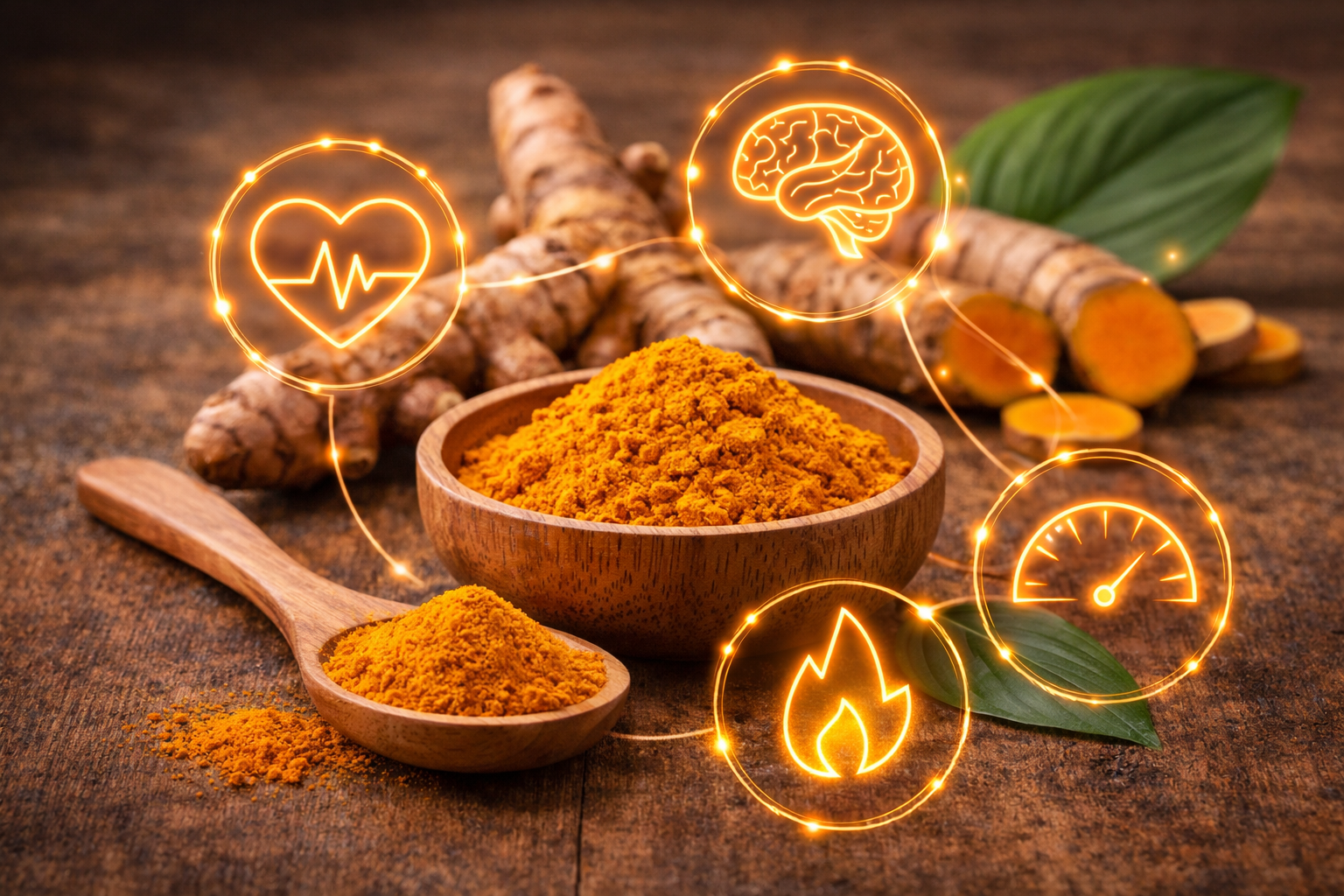
Lakadong turmeric benefits come primarily from its exceptional curcumin concentration — 7–12%, compared to just 1–3% in most commercial turmeric. Grown exclusively in Meghalaya's Jaintia Hills under GI Tag No. 741, it is traditionally used, and increasingly studied, for:
- Anti-inflammatory & joint comfort support
- Antioxidant, free-radical protection
- Healthy digestion & gut comfort
- Immune system support
- Skin health & natural radiance
- Heart & circulatory wellness
- Brain & mood support
- Far better absorption when paired correctly
This guide is for general wellness information and is not a substitute for professional medical advice.
Why Lakadong Turmeric Benefits Are Stronger Than Ordinary Turmeric
Curcumin is the compound most responsible for turmeric's wellness reputation — it's what gives turmeric its colour and the bulk of its studied activity. Not all turmeric carries the same amount of it. Grown at 800–1,200 metres in the Jaintia Hills, in acidic, mineral-rich soil under a distinct monsoon climate, Lakadong turmeric develops a curcumin concentration far above what's typically found elsewhere in India.
Ranges are illustrative and based on typical published curcumin values for each variety; actual batch results vary with harvest and testing.
Because curcumin concentration drives most of turmeric's studied wellness effects, a higher percentage per gram is one reason Lakadong turmeric is often used in smaller everyday amounts than ordinary turmeric to achieve a comparable effect.

The deep orange interior of a freshly cut Lakadong rhizome is a visible marker of its unusually high curcumin content.
10 Lakadong Turmeric Health Benefits You Should Know
The list below combines generations of traditional use in Meghalaya with what modern research on curcumin has explored so far. Effects vary between individuals, and none of this should be read as a claim to treat or cure a diagnosed condition.
How Curcumin in Lakadong Turmeric Works in the Body
Having a high curcumin percentage is only half the story — how much of it your body actually absorbs matters just as much. Here's the simplified journey from spoon to bloodstream:
One widely cited bioavailability study found that combining curcumin with piperine — the active compound in black pepper — increased absorption by as much as 2000%. It's why traditional Lakadong turmeric preparations, like golden milk, are so often paired with a pinch of black pepper and a spoon of ghee or coconut oil.
Traditional & Ayurvedic Uses of Lakadong Turmeric
Long before curcumin had a scientific name, Jaintia, Khasi, and Garo communities in Meghalaya — alongside Ayurvedic practice across India — had already built a body of everyday wellness knowledge around turmeric. Many of today's studied benefits echo these older, tested rituals.
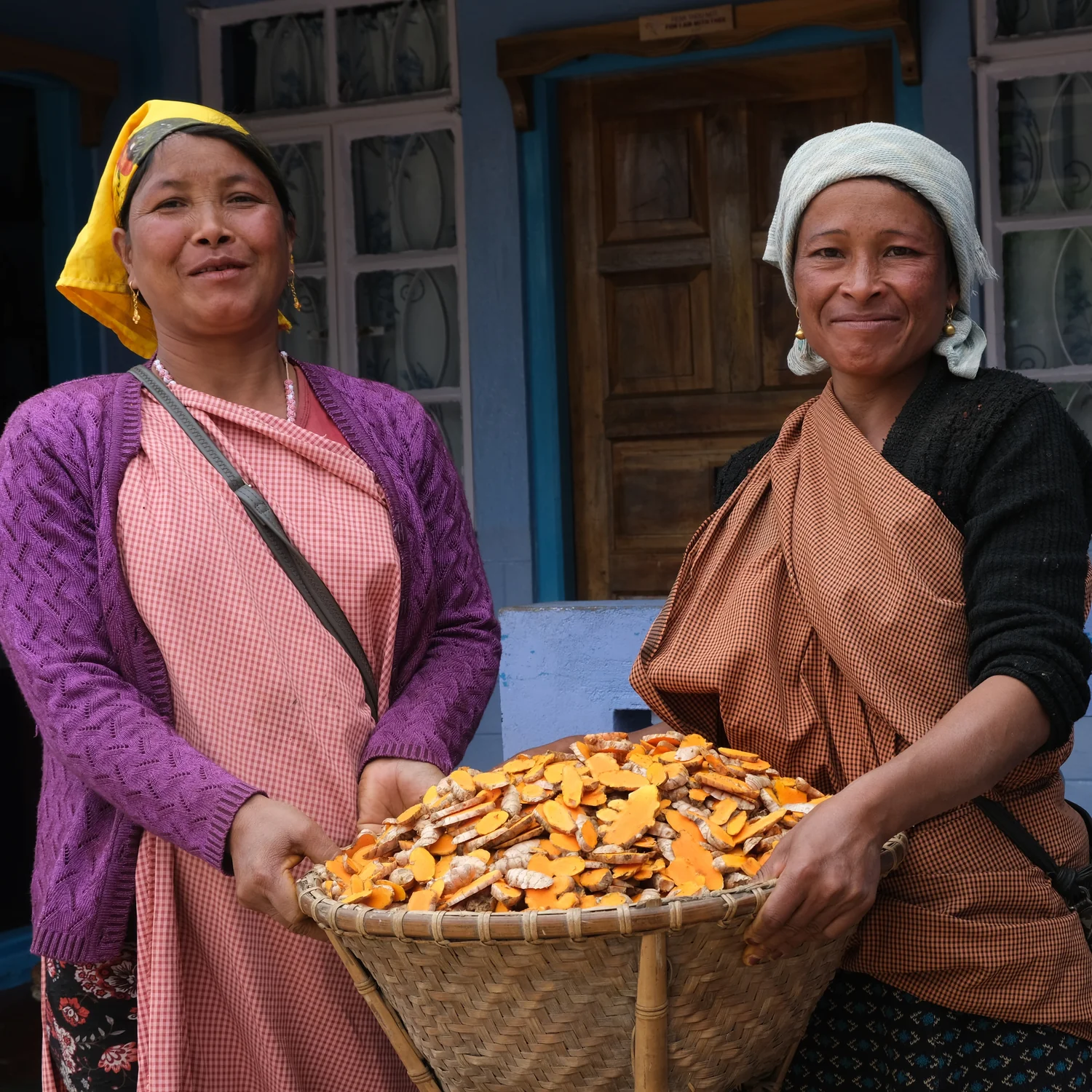
The fog-shrouded Jaintia Hills — home to the tribal farming traditions behind Lakadong turmeric's everyday wellness use.
Best Ways to Use Lakadong Turmeric for Maximum Benefit
Experience Genuine High-Curcumin Turmeric
GI-certified · Lab-tested 7–12% curcumin · APEDA registered · Farm-traceable batches · Private label available · Worldwide export
Recommended Daily Amount & Absorption Tips
There's no single "correct" dose of turmeric — how much is right for you depends on your body, your goals, and the form you're using. In traditional culinary and wellness use across India, a common everyday amount is roughly a quarter to one teaspoon (around 1–3 grams) of turmeric powder, taken with a source of fat and a pinch of black pepper to support absorption.
Because Lakadong turmeric carries 2–4 times the curcumin of standard turmeric, smaller amounts can provide a comparable concentration of the active compound — one reason many households use less of it per meal than they would ordinary turmeric.
This information is general and educational, not a prescribed dose for treating any medical condition. Individual needs vary significantly, especially if you're pregnant, nursing, managing a health condition, or taking medication. Always check with a doctor or qualified healthcare provider before starting turmeric as a supplement, particularly at concentrated or high-dose levels.
Precautions & Who Should Be Careful
Turmeric used as a everyday culinary spice is considered safe for most people. At higher, supplement-level doses, a few groups should take extra care:
Lakadong Turmeric vs Ordinary Turmeric
| Factor | Lakadong Turmeric | Ordinary Turmeric |
|---|---|---|
| Curcumin Content | 7–12% | 1–3% |
| GI Certification | Yes — GI Tag 741 | No |
| Growing Region | Jaintia Hills, Meghalaya only | Mixed / often unverified |
| Cultivation Method | Traditional, largely low-chemical | Often intensive commercial farming |
| Batch Traceability | Farm-to-batch COA available | Rarely available |
| Colour & Aroma | Deep amber-orange, earthy-peppery | Duller yellow, milder aroma |
FAQs — Lakadong Turmeric Benefits
Lakadong turmeric benefits are largely driven by its exceptionally high curcumin content (7–12%). Traditionally and increasingly in modern wellness routines, it is used to support a healthy inflammatory response, antioxidant protection, joint comfort, digestion, immunity, skin health, and general everyday wellness.
In terms of curcumin concentration, yes — Lakadong turmeric contains 7–12% curcumin compared to 1–3% in most standard commercial turmeric grown outside Meghalaya. Because curcumin is the primary bioactive compound behind turmeric's benefits, a higher concentration generally means a more potent effect per gram, though individual results vary and both are used similarly in cooking and traditional wellness practices.
There's no universal dose, but many people use around 1–3 grams (roughly a quarter to one teaspoon) of turmeric powder daily in food or warm water, paired with black pepper and a source of fat to support absorption. Because Lakadong turmeric is more concentrated than ordinary turmeric, smaller amounts may be sufficient — but always consult a healthcare provider for guidance specific to your situation, especially before high-dose supplementation.
Curcumin, turmeric's primary active compound, is one of the most studied natural compounds for supporting a healthy inflammatory response, and it's traditionally used across Northeast India to support joint comfort and mobility. It should be viewed as a complementary wellness practice, not a substitute for medical treatment of a diagnosed joint condition.
Turmeric used as a culinary spice in normal food amounts is considered safe for most people. At higher, supplement-level doses, some people may experience mild digestive upset, and turmeric can interact with blood-thinning medication, affect blood sugar, or aggravate gallbladder issues. Pregnant or breastfeeding individuals and anyone on medication should consult a doctor before therapeutic use.
Curcumin is fat-soluble and poorly absorbed on its own. Pairing turmeric with black pepper (which contains piperine) and a source of healthy fat, such as ghee, coconut oil, or milk, can significantly increase how much curcumin your body actually absorbs — a combination widely used in traditional golden milk recipes.
Key Takeaways on Lakadong Turmeric Benefits
Lakadong turmeric benefits are best understood as a well-documented, traditionally trusted piece of a broader wellness routine — not a quick fix. Choosing a GI-certified, lab-tested source and using it thoughtfully, in the right combinations and amounts, is what turns a kitchen spice into a genuinely worthwhile daily habit.