What "Highest Curcumin Turmeric" Actually Means
Every turmeric rhizome contains a group of natural compounds called curcuminoids — curcumin, demethoxycurcumin, and bisdemethoxycurcumin — with curcumin making up the largest and most studied share. It's the compound responsible for turmeric's deep orange-yellow colour and most of the plant's bioactive reputation.
What changes dramatically from one turmeric to the next is how much curcumin it actually contains. Commodity turmeric grown across most of India averages somewhere between 2% and 3% curcumin by dry weight. A small number of regional varieties push past that. And one cultivar, grown only in a specific pocket of Northeast India, has been independently documented at 7–12% — roughly three to four times the commodity average.
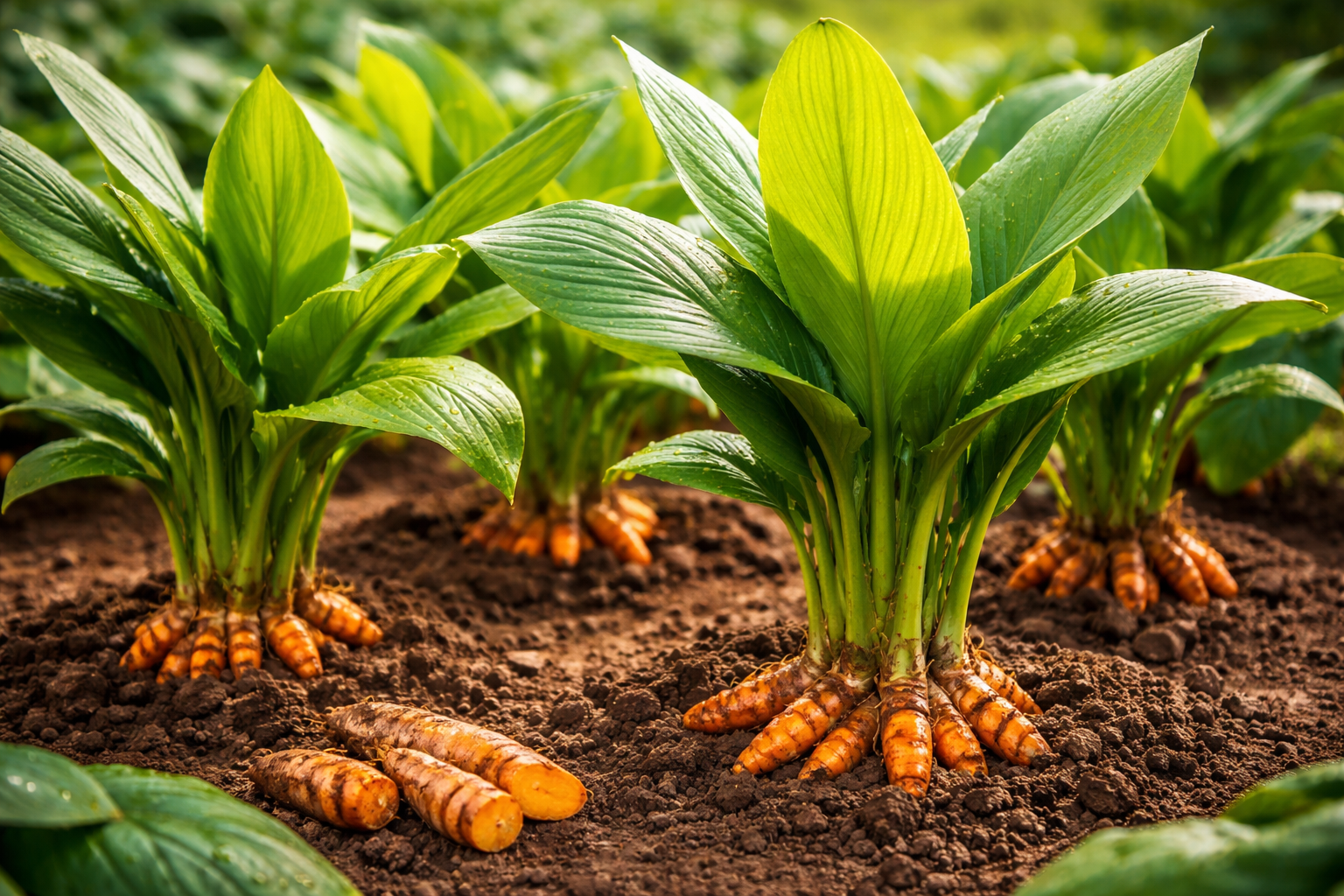
A cut rhizome's colour intensity is a rough visual cue — but only a lab report confirms actual curcumin percentage.
That cultivar is Lakadong turmeric, grown exclusively by tribal farming cooperatives in the Jaintia Hills of Meghalaya and legally protected under India's Geographical Indication registry as GI Tag No. 741. When people search for the "highest curcumin turmeric," this is almost always the variety they end up finding — and for good reason, since no other documented cultivar has matched its curcumin range in independent lab testing.
Curcumin Content Compared Across Turmeric Varieties
Curcumin percentage varies by growing region, soil composition, altitude, and cultivar lineage. The ranges below reflect figures commonly reported across agricultural and trade literature for each region's typical produce — always confirm the exact figure for any specific batch against its own lab report rather than a regional average.
Bar length is scaled to the upper end of Lakadong's documented range for visual comparison only, not a precise linear scale.
A three-to-four-times difference in curcumin content between the highest and lowest entries above isn't a rounding error — it reflects genuinely different growing conditions and, in some cases, distinct cultivar lineages. This is why "turmeric" as a single category is a poor basis for comparison; the specific variety and its origin matter far more than the word on the label.
What Actually Pushes Curcumin Higher
No single factor explains why one region's turmeric outperforms another's. Researchers at the Spices Board of India and ICAR point to a combination of four conditions found together in the Jaintia Hills — rarely replicated elsewhere in exactly this combination.
Trial plantings of the same seed stock in other regions have consistently produced lower curcumin readings than the original Jaintia Hills crop — evidence that terroir, not just genetics, drives the result. It's a similar principle to why a wine grape grown outside its native region rarely tastes identical to the original.
This is also why the GI protection matters commercially: it legally ties the name "Lakadong" to this specific growing region, so the curcumin claim and the geographic origin claim can't be separated from each other.
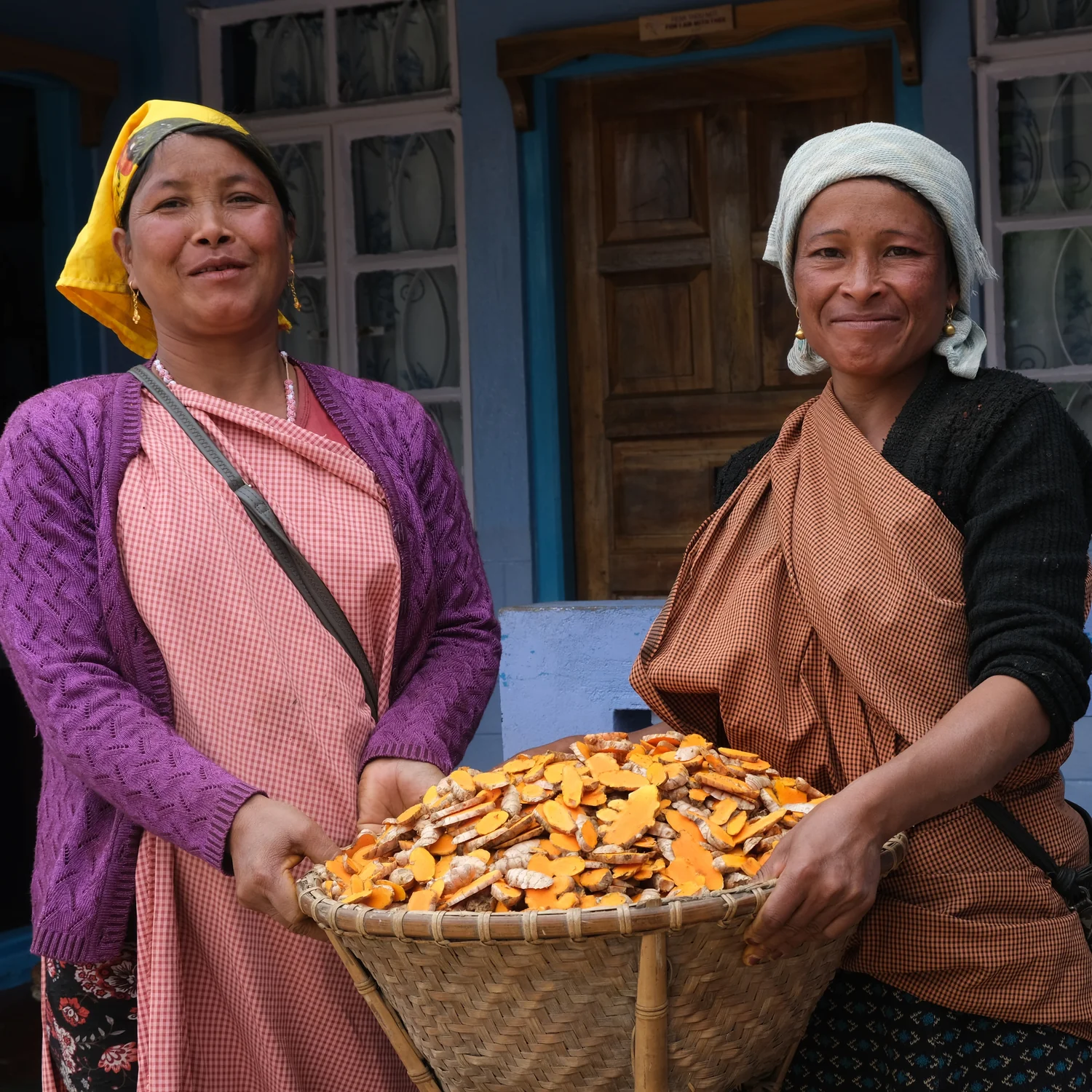
The fog-shrouded Jaintia Hills terrain — the growing conditions behind the highest documented curcumin readings.
Want to See a Batch-Specific COA?
Every Lakadong Gold batch ships with an HPLC-tested Certificate of Analysis showing curcumin percentage, moisture, and ash content.
How to Read a Curcumin Lab Report
A Certificate of Analysis (COA) is the document that turns a curcumin claim into a verifiable fact. Every legitimate high-curcumin turmeric batch should come with one, generated via HPLC testing at an NABL-accredited laboratory rather than an in-house estimate. Here's what the key lines typically mean:
| Parameter | What It Tells You | Typical High-Curcumin Range |
|---|---|---|
| Curcumin content | The core potency figure, measured by HPLC or UV-Vis spectrophotometry | 7% – 12% (Lakadong) |
| Moisture | Water content remaining after drying; affects shelf life and effective potency | Below 9% |
| Total ash | Mineral residue after incineration; an indicator of purity | Below 7% |
| Acid-insoluble ash | Flags contamination with soil, sand or foreign mineral matter | Below 1.5% |
| Volatile oil | Essential oil content, tied to aroma and some bioactivity | 4% – 7% |
| Foreign matter | Any non-turmeric material present in the sample | Below 1% |
The single most important detail buyers overlook: the COA must reference the exact batch or harvest lot number of the material being shipped. A generic report from a previous season, or one not tied to a lot number at all, tells you nothing about the turmeric actually arriving at your door.
Why Curcumin Content Isn't the Whole Story
A high curcumin percentage sets the ceiling on potency — but how much of that curcumin actually gets absorbed and used depends on a separate set of factors:
In short: start with the highest curcumin turmeric you can verify, then handle it in a way that preserves and supports absorption of what's already there.
Where High-Curcumin Turmeric Gets Used
Curcumin content is the deciding specification across several distinct industries, each with its own tolerance thresholds:
Verifying a Genuine High-Curcumin Source
Curcumin claims are easy to print on a label and hard to fabricate convincingly with real documentation. Run any claimed high-curcumin turmeric supplier through this sequence before committing to an order:
- 1GI documentation on requestFor Lakadong specifically, GI Certificate No. 741 should be produced immediately, without hesitation.
- 2Batch-specific COAThe lab report must reference the actual harvest lot being shipped, not a generic or outdated report.
- 3Third-party lab, not "tested internally"Look specifically for NABL accreditation — an in-house claim is not independent verification.
- 4Traceable originA genuine supplier can name the specific cooperative or growing village behind the batch.
- 5Sample before bulk commitmentA small pre-shipment sample tied to your intended lot lets you verify colour, aroma, and independently test curcumin content.
- 6Consistent, testable claimsCurcumin percentage, moisture, and ash figures should hold up under independent lab testing, not just on paper.
The phrase "highest curcumin turmeric" appears on plenty of listings that have never seen an HPLC machine. Treat any curcumin percentage as unverified until it's backed by a dated, batch-specific Certificate of Analysis from an accredited third-party laboratory.
FAQs — Highest Curcumin Turmeric
Lakadong turmeric, grown exclusively in the Jaintia Hills of Meghalaya and protected under GI Tag No. 741, holds the highest documented curcumin content of any known cultivar — typically 7% to 12%, compared with 2–5% for most other Indian varieties.
Not automatically. Curcumin percentage sets the potency ceiling of the raw material, but real-world outcomes also depend on bioavailability, formulation, and intended use. A high-curcumin turmeric handled and used correctly will always outperform a low-curcumin one for the same purpose — but percentage is one variable among several.
The industry standard is HPLC (High-Performance Liquid Chromatography), which separates and quantifies curcumin alongside the related curcuminoids demethoxycurcumin and bisdemethoxycurcumin. Simpler UV-Vis spectrophotometry methods are sometimes used for quicker estimates but are considered less precise than HPLC for certification purposes.
Curcumin degrades gradually with prolonged exposure to heat, light, and moisture. Properly dried turmeric kept in an airtight, opaque container away from direct sunlight retains its curcumin content considerably longer than powder left open on a shelf. Normal home cooking use has a minor effect compared to long-term storage conditions.
No. Alleppey turmeric from Kerala is genuinely high-curcumin by commercial standards, typically in the 3–5% range, and is well regarded in the spice trade. It is not, however, the highest — that distinction goes to Lakadong turmeric from Meghalaya, documented at 7–12% under its GI certification.
Concentrated curcumin extracts can be produced from raw turmeric through solvent extraction for pharmaceutical or nutraceutical applications, reaching curcuminoid concentrations far above whole turmeric powder. But the curcumin content of the raw turmeric powder itself is fixed by the plant's genetics and growing environment — it isn't something ordinary drying or grinding can meaningfully change.
Choosing a Genuine High-Curcumin Source
"Highest curcumin turmeric" is a specific, checkable claim — not a marketing phrase. It rests on three things: a documented growing origin, a batch-specific lab report from an accredited laboratory, and a supplier willing to let you verify both before you commit to an order.
Lakadong turmeric from Meghalaya's Jaintia Hills currently holds that title on the strength of its GI certification and repeated third-party lab verification at 7–12% curcumin. Whichever source you choose, ask for the same proof: the certificate, the COA, and a sample you can test independently.
Talk to the Growers Behind the Number
Direct farm traceability, batch-specific HPLC reports, and samples available before any bulk commitment.