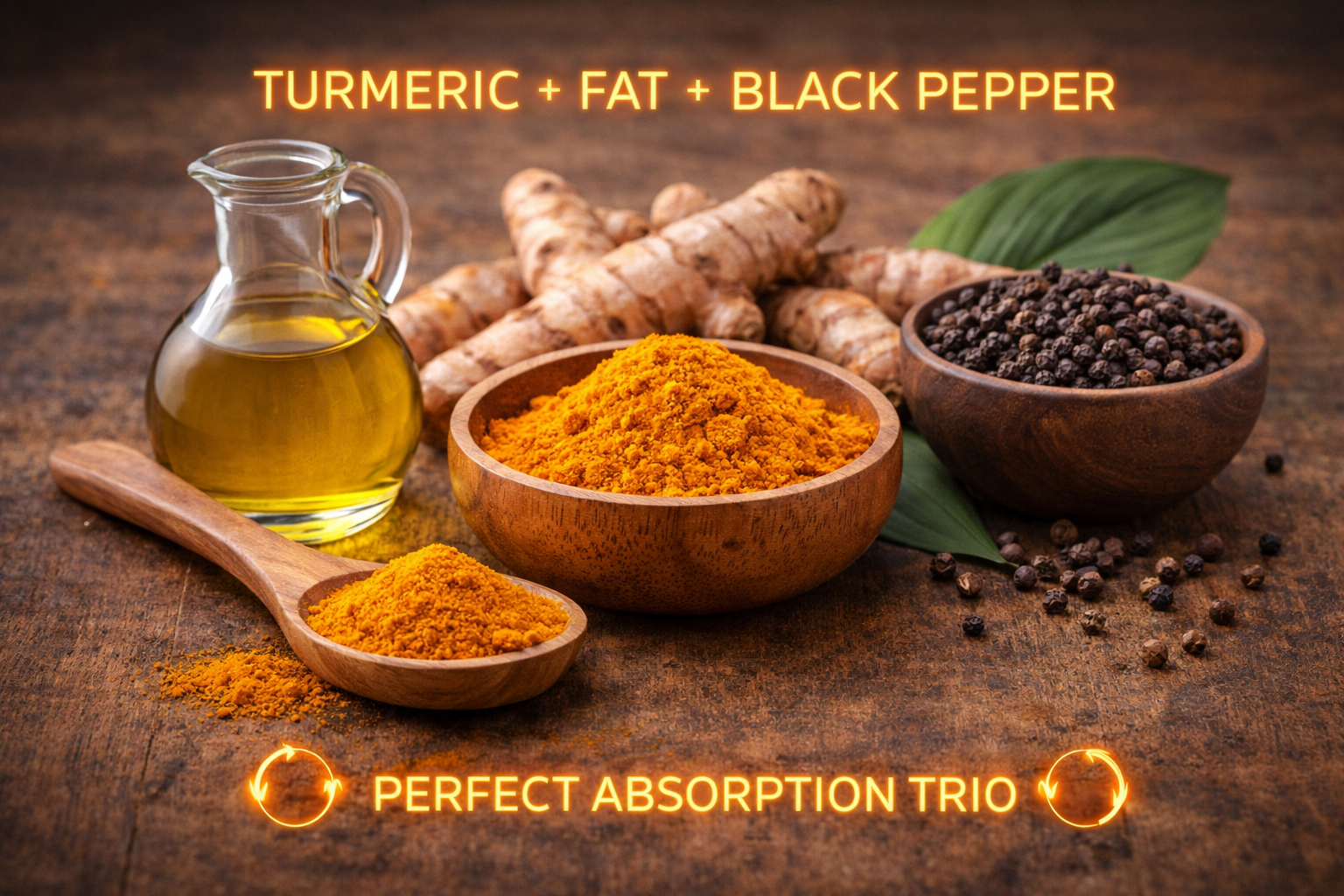
Lakadong Turmeric vs Normal Turmeric — The Core Difference
The single most important difference between Lakadong Turmeric and normal turmeric is curcumin content. Curcumin is the bioactive compound responsible for turmeric's anti-inflammatory, antioxidant, and therapeutic properties. Normal supermarket turmeric contains 1–3% curcumin. Lakadong Turmeric, grown exclusively in the Jaintia Hills of Meghalaya, India, contains 7–12% curcumin — making it 4 to 8 times more potent than the turmeric you find in most kitchens and stores.
This is not a marginal improvement. At these concentrations, the difference between Lakadong Turmeric and normal turmeric is the difference between a spice and a medicine-grade ingredient. A daily teaspoon of Lakadong (approximately 500–700 mg curcumin) delivers a therapeutically meaningful curcumin dose. The same teaspoon of ordinary turmeric delivers 50–150 mg — well below the threshold validated in clinical trials for anti-inflammatory or neuroprotective effects.
If you are adding turmeric to food purely for flavour and colour, normal turmeric works fine. If you want a meaningful daily curcumin dose — the kind validated in clinical trials for anti-inflammatory, brain, joint, and metabolic effects — you need a source that delivers 500 mg or more of curcumin per realistic daily serving. That requires Lakadong Turmeric or a standardised curcumin extract supplement. A teaspoon of normal turmeric simply cannot get you there.
The Curcumin Gap — Explained in Detail
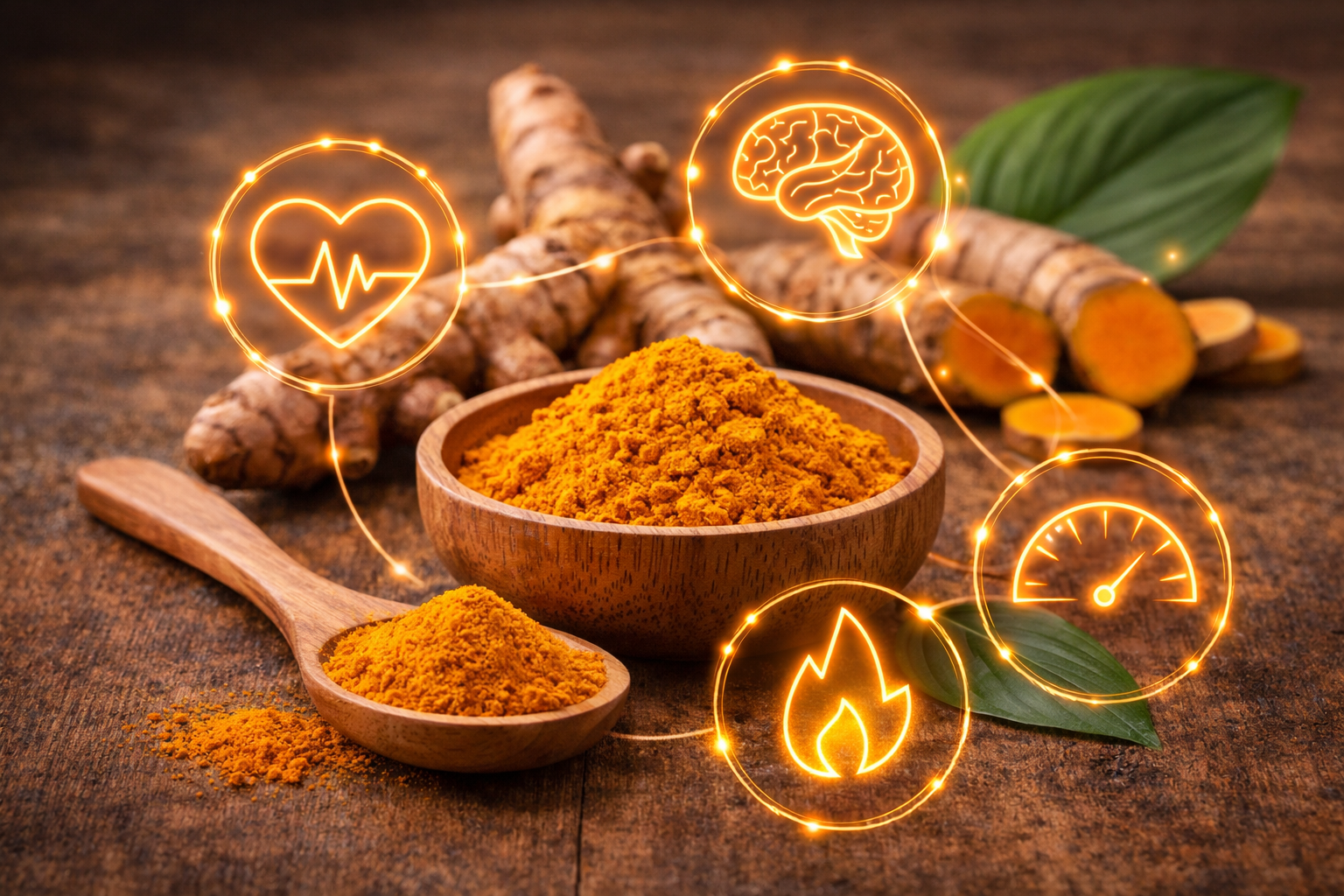
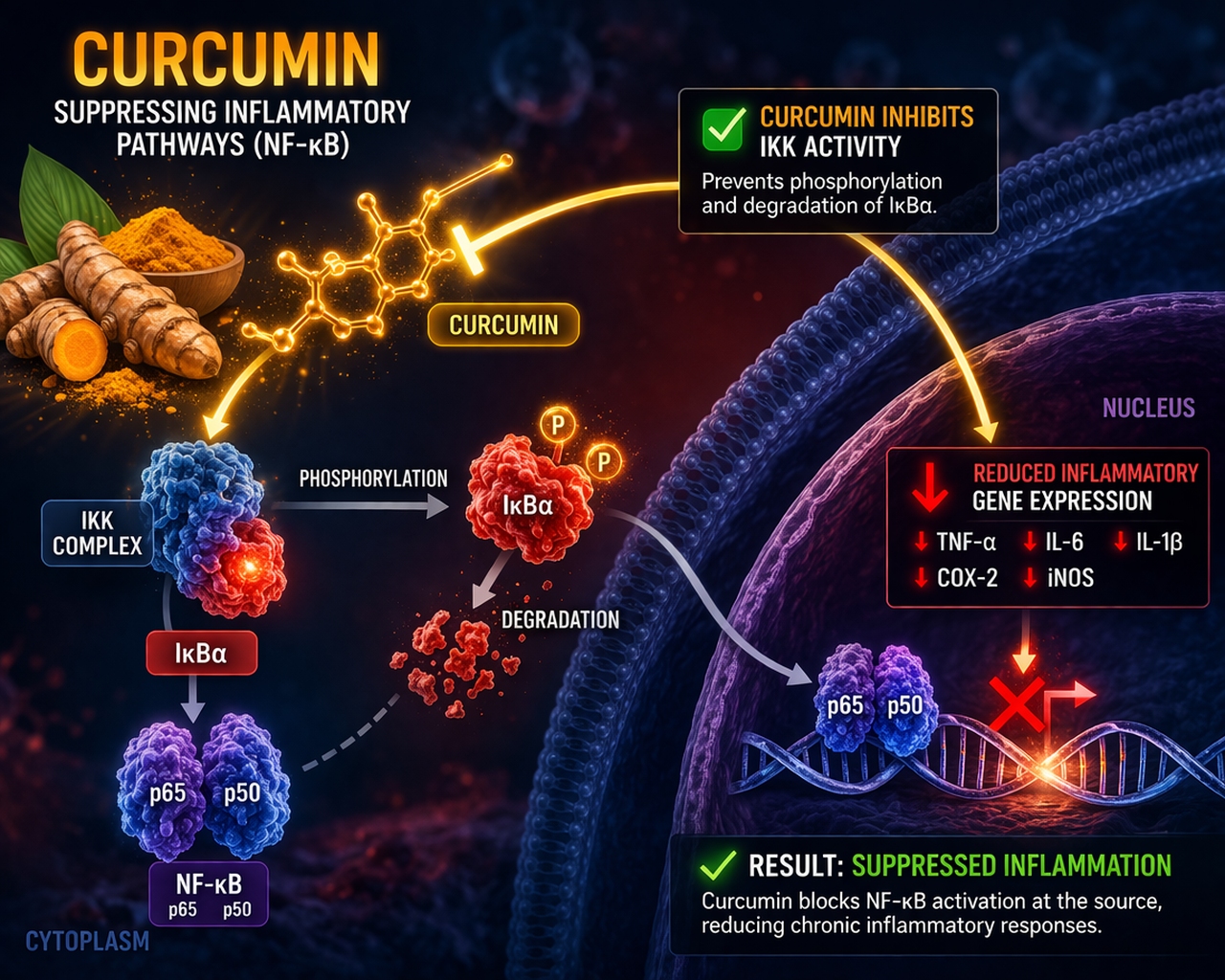
Curcumin (C₂₁H₂₀O₆) is the primary polyphenol in the curcuminoid complex found in all turmeric varieties. It inhibits NF-κB (the body's inflammation signalling pathway), activates Nrf2 (the master antioxidant regulator), elevates BDNF (brain-derived neurotrophic factor), and has demonstrated anti-cancer, cardiovascular, and metabolic effects across over 15,000 peer-reviewed studies. But all of this only becomes relevant at sufficient doses — which are only achievable through everyday food consumption with Lakadong Turmeric.
The curcumin gap between Lakadong and normal turmeric is caused by the unique combination of soil chemistry, altitude, and microclimate in the Jaintia Hills of Meghalaya — acidic laterite soil rich in potassium and phosphorus, elevations of 800–1,200 metres, and a specific monsoon rainfall pattern that no other growing region replicates. Scientists from the Spices Board of India have confirmed that attempts to cultivate the same Lakadong seed variety in other regions consistently produce lower curcumin outputs.
Average curcumin % by dry weight — sources: Spices Board India, published lab analyses. Lakadong figure is mid-range of 7–12% documented range.
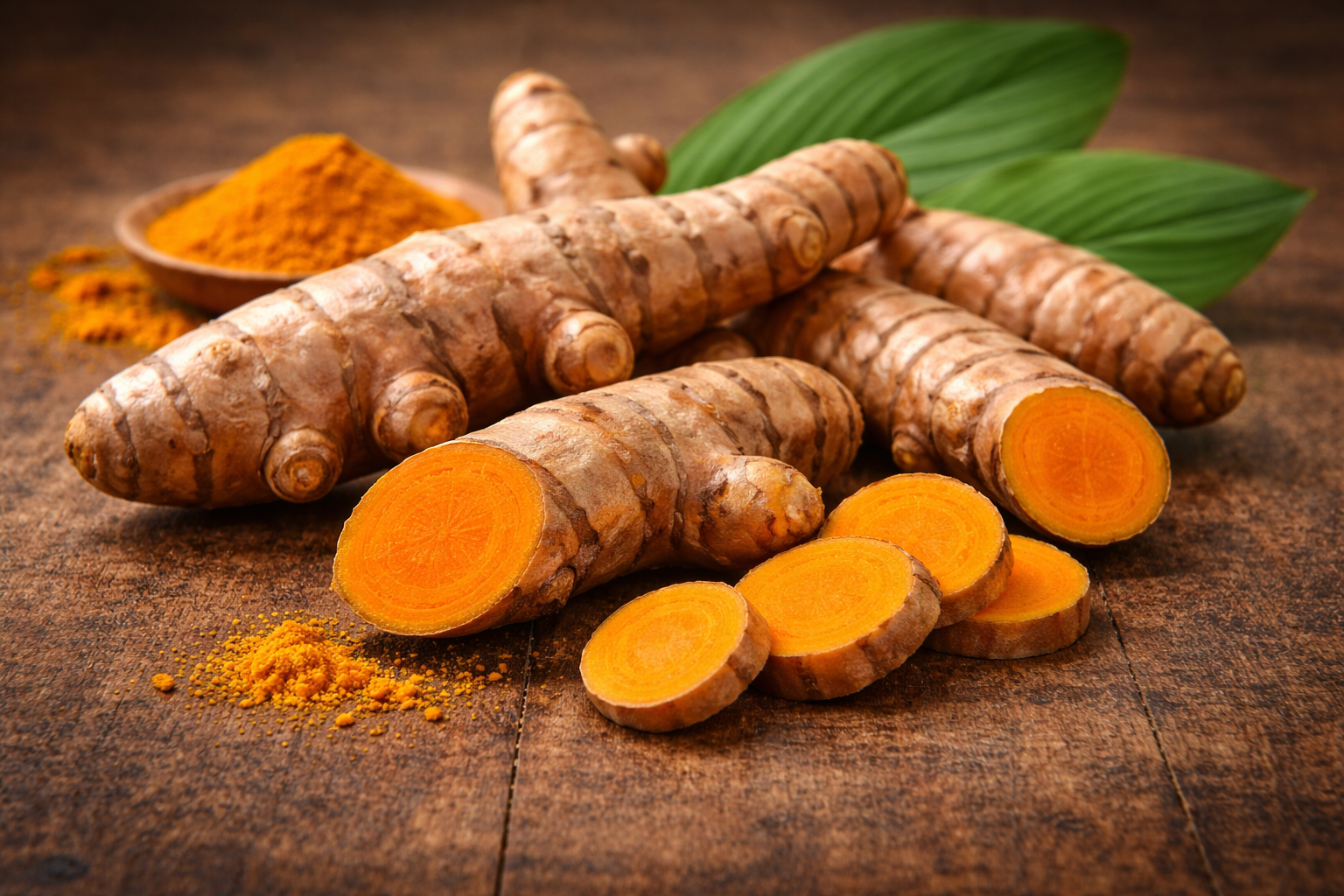
Lakadong Turmeric rhizomes — the vivid orange cross-section is physical evidence of exceptional curcumin density. Normal turmeric rhizomes show a paler yellow interior.

Powder colour comparison — Lakadong is a deep amber-orange. Normal turmeric ranges from pale yellow to medium golden. The colour difference is immediate and visible.
Lakadong Turmeric vs Normal Turmeric — Full Comparison Table
| Factor | Lakadong Turmeric | Normal Turmeric | Winner |
|---|---|---|---|
| Curcumin Content | 7–12% | 1–3% | Lakadong ✓ |
| GI Certification | GI Tag No. 741 (Govt. certified) | None | Lakadong ✓ |
| Colour (Powder) | Deep orange-amber | Pale to medium yellow | Lakadong ✓ |
| Aroma | Strong, earthy, slightly bitter | Mild to moderate | Lakadong ✓ |
| Therapeutic Use | Yes — documented clinical dose | Limited at culinary quantities | Lakadong ✓ |
| Culinary Use | Excellent (use less — more potent) | Excellent | Both ≈ |
| Lab Documentation | NABL COA per batch | Rarely available | Lakadong ✓ |
| Availability | Limited — region only | Widely available everywhere | Normal ✓ |
| Retail Price (per 100 g) | $2.50–5.00 | $0.50–1.50 | Normal ✓ |
| Wholesale Price (per kg) | $14–22 (FOB India) | $1.50–4 (FOB India) | Normal ✓ |
| Organic Certification | Available on request | Some varieties available | Both ≈ |
| Curcumin per Daily Tsp | ~500–700 mg | ~50–150 mg | Lakadong ✓ |
| Farming Method | Tribal organic, traditional | Varies — often commercial | Lakadong ✓ |
| Value per mg Curcumin | Better per mg of active compound | Higher per gram, lower per mg | Lakadong ✓ |
Origin — The Key Geographic Difference
Normal turmeric is grown across India — primarily in Tamil Nadu (Erode and Salem districts), Andhra Pradesh, Maharashtra, Odisha, and Karnataka. These regions collectively produce over 80% of the world's turmeric supply. India exports approximately 100,000 metric tonnes of turmeric per year, the vast majority of which is this commodity-grade product with 1–3% curcumin.
Lakadong Turmeric, by contrast, is grown only in the East and West Jaintia Hills — a total cultivated area estimated at under 5,000 hectares managed by approximately 13,000 tribal farming families. The supply is finite, seasonal (harvested once annually in January–February), and legally protected: no turmeric grown outside Jaintia Hills can legally carry the Lakadong name under GI Tag No. 741.
This geographic exclusivity is not a marketing strategy — it is the scientific and legal foundation of every quality claim associated with Lakadong Turmeric. The Jaintia Hills terroir is the source of the curcumin advantage, and the GI protection ensures that source cannot be mimicked or misrepresented in trade.
The misty, high-altitude Jaintia Hills of Meghalaya — the only place on earth where the specific soil chemistry, elevation, and rainfall pattern combines to produce turmeric with 7–12% curcumin. Normal turmeric is grown in flat, lowland agricultural areas that cannot replicate these conditions.
Health Benefits — How Lakadong and Normal Turmeric Differ
Because the health benefits of turmeric are driven almost entirely by curcumin, the difference between Lakadong Turmeric and normal turmeric in terms of health impact mirrors the curcumin gap directly. Both contain curcumin — but the therapeutic threshold for most studied health benefits requires a minimum of 300–500 mg curcumin per serving (with fat and black pepper for proper absorption). Lakadong reaches this threshold at one teaspoon. Normal turmeric does not.
One teaspoon of Lakadong delivers ~500–700 mg curcumin — enough to meaningfully inhibit NF-κB and COX-2 inflammatory pathways. Clinical trials showing equivalence to NSAIDs used this dose range.
One teaspoon delivers only 50–150 mg curcumin — below the clinical threshold. You would need 5–10 teaspoons of normal turmeric daily to match one teaspoon of Lakadong, which is impractical.
The UCLA memory study showing 28% improvement in cognition used a 90 mg bioavailable curcumin dose twice daily — achievable from food with one teaspoon of Lakadong plus fat and pepper.
At 1–3% curcumin, normal turmeric would require 3–5 teaspoons per day to approach the dose used in clinical brain studies — impractical for consistent daily food consumption.
Arthritis RCTs comparing curcumin to diclofenac used 500 mg curcumin doses — delivered by one teaspoon of Lakadong with fat and pepper. Meaningful joint benefit is achievable through food.
Normal turmeric contributes general antioxidant support but falls far short of the curcumin concentrations used in joint pain clinical trials. Supplement form is typically needed to bridge the gap.
The 2014 RCT comparing curcumin to fluoxetine used 500 mg curcumin per day — one teaspoon of Lakadong territory. BDNF elevation at this dose is clinically documented.
Insufficient curcumin per serving to replicate clinical antidepressant trial doses from food alone. General wellness support but not clinically comparable to Lakadong quantities.
To achieve a 500 mg daily curcumin intake (the minimum therapeutic threshold in most clinical trials) from food alone: you need one teaspoon of Lakadong Turmeric (at 10% curcumin) or approximately five teaspoons of normal turmeric (at 2% curcumin). Five teaspoons daily is flavour-disruptive and practically unsustainable. One teaspoon of Lakadong in Golden Milk or a curry is entirely realistic. This is the practical case for the difference between Lakadong Turmeric and normal turmeric for health use.
Colour, Aroma & Taste — What You'll Notice Immediately
The difference between Lakadong Turmeric and normal turmeric is visible before you even taste it. Because curcumin is the pigment compound, higher curcumin concentration directly translates to more intense colour. Lakadong powder is a deep, vivid orange-amber — significantly darker than most commercial turmeric. Normal supermarket turmeric ranges from pale yellow to a medium golden tone depending on variety and storage age.
Colour
The colour difference is consistent and immediate. Mix a pinch of each in cold water side by side — Lakadong will produce a deep amber suspension; normal turmeric produces a pale yellow one. The colour also intensifies when heated in fat, which is why Lakadong Golden Milk or curry has a noticeably richer, more vivid golden colour than dishes made with ordinary turmeric.
Aroma
Lakadong Turmeric has a stronger, more complex aroma than ordinary turmeric — earthy, slightly woody, with a faint bitterness that signals high volatile oil content (typically ≥3.5 ml/100g). Normal commercial turmeric, particularly products that have been in storage for months, often has a muted, almost dusty aroma. The intensity of aroma in Lakadong is a reliable freshness and quality indicator.
Taste
Lakadong Turmeric is more bitter and pungent than normal turmeric at the same quantity — which is actually a useful indicator. Because of this, you use less. A half-teaspoon of Lakadong delivers the same flavour impact as a full teaspoon of ordinary turmeric, while delivering 3–5× more curcumin in the process. In Golden Milk or therapeutic preparations, this intensity is desirable and expected.
Golden Milk made with Lakadong Turmeric — the depth of colour is immediately visible compared to versions made with ordinary turmeric. The rich amber hue signals the high curcumin concentration in every cup.
When to Use Lakadong vs Normal Turmeric
Understanding the difference between Lakadong Turmeric and normal turmeric helps you make the right choice for each context. Here is a practical guide to when each variety is appropriate.
Price Difference Between Lakadong and Normal Turmeric
Lakadong Turmeric costs more than normal turmeric — but when you account for curcumin content, the cost per milligram of curcumin is actually comparable to or better than normal turmeric, and dramatically lower than standardised curcumin extract supplements.
- ✓ Widely available in supermarkets
- ✓ Lowest purchase price per gram
- ✗ Only 50–150 mg curcumin per tsp
- ✗ No GI certification or lab report
- ✗ Cannot reach clinical curcumin dose from food
- ≈ ~$5–8 per gram of curcumin delivered
- ✓ 500–700 mg curcumin per teaspoon
- ✓ GI Tag 741 + NABL lab report
- ✓ Reaches clinical dose from food
- ✓ Eco-friendly jute / glass packaging
- ✓ Monthly subscription from $14/month
- ≈ ~$3–5 per gram of curcumin delivered
Normal turmeric at $1.00/100 g with 2% curcumin gives you 2,000 mg of curcumin per 100 g — a cost of $0.50 per gram of curcumin. Lakadong at $3.50/100 g with 10% curcumin gives you 10,000 mg of curcumin per 100 g — a cost of $0.35 per gram of curcumin. Lakadong is actually cheaper per unit of active ingredient delivered. Compare both to standardised 95% curcumin extract supplements at $0.30–0.50 per capsule (500 mg), and Lakadong turmeric from food is the best value for daily wellness use.
At wholesale scale, the price gap between Lakadong and normal turmeric widens in absolute terms but narrows per unit of curcumin. Normal turmeric wholesales at $1.50–4/kg FOB India. Lakadong Turmeric wholesales at $14–22/kg FOB India — but delivers 4–8× more curcumin per kilogram, making it the clear choice for supplement manufacturers and premium health food brands.
Order Authentic Lakadong Turmeric
GI-certified · Lab-tested 7–12% curcumin · Free India-wide shipping · Monthly plans from $14/month · Worldwide export
How to Spot the Difference When Buying
Because the difference between Lakadong Turmeric and normal turmeric carries a price premium, mislabelling is common. Here is how to identify genuine Lakadong Turmeric at the point of purchase.
- 🏅GI Tag No. 741 on the label — This is the non-negotiable first check. Genuine Lakadong must reference the Government of India GI certificate. Normal turmeric carries no such certification.
- 🎨Colour — deep orange, not pale yellow — Lakadong powder is a distinctly deeper, more saturated orange-amber compared to the pale or medium yellow of ordinary turmeric. The colour is visible even through transparent packaging.
- 🔬NABL-accredited lab report showing ≥ 7% curcumin — Legitimate Lakadong sellers provide this on request. Normal turmeric sellers almost never have batch-specific curcumin reports.
- 📦Batch number and harvest date on the pack — Authentic Lakadong is traceable to a specific Jaintia Hills harvest lot. Generic or untraced turmeric has no batch provenance.
- 👃Aroma test — Open the package and smell. Genuine Lakadong has a strong, complex, slightly bitter-earthy aroma. Pale, dusty, or faint aroma indicates normal commercial turmeric regardless of what the label says.
- 💧Water test — Drop a pinch in cold water. Lakadong forms a deep amber cloud that sinks gradually. Normal turmeric forms a paler yellow suspension. Adulterated products often cloud the water instantly due to dye solubility.
- 💰Price check — Genuine Lakadong costs $2.50–5.00 per 100 g retail. Anything below $1.50/100 g claiming to be Lakadong is almost certainly not genuine.
FAQs — Difference Between Lakadong and Normal Turmeric
The primary difference between Lakadong turmeric and normal turmeric is curcumin content. Lakadong Turmeric from the Jaintia Hills of Meghalaya contains 7–12% curcumin — the bioactive compound responsible for turmeric's anti-inflammatory, antioxidant, and therapeutic properties. Normal commercial turmeric (grown in Tamil Nadu, Andhra Pradesh, and other states) contains 1–3% curcumin. This 4–8× difference means that a single teaspoon of Lakadong delivers more therapeutic curcumin than four to eight teaspoons of ordinary turmeric. Secondary differences include colour (deeper orange in Lakadong), aroma (stronger), geographic origin (GI-protected Jaintia Hills only), and documentation (batch-specific lab reports from authentic Lakadong suppliers).
Yes — for health and therapeutic use, Lakadong Turmeric is significantly better than normal turmeric. The clinical evidence for curcumin's health benefits (anti-inflammatory, neuroprotective, joint, metabolic, and mood effects) is based on doses of 300–1,000 mg curcumin per day. At 7–12% curcumin content, a single daily teaspoon of Lakadong delivers 500–700 mg curcumin — within this therapeutic range. Normal turmeric at 1–3% delivers only 50–150 mg per teaspoon — below the clinically validated threshold. For health purposes, Lakadong is not just better than normal turmeric; it is categorically in a different league. For purely culinary applications (flavour and colour without a health goal), normal turmeric is perfectly adequate and more economical.
The high curcumin content of Lakadong Turmeric relative to normal turmeric is caused by a unique combination of terroir factors in the Jaintia Hills of Meghalaya. The key variables are: high altitude cultivation (800–1,200 metres), acidic laterite soil rich in potassium and phosphorus (the primary mineral drivers of curcumin biosynthesis in Curcuma longa), specific monsoon rainfall patterns, cooler temperatures during the growing season, and centuries of traditional organic cultivation without synthetic chemical interference. Scientists from India's Spices Board have confirmed that the same Lakadong seed variety grown in other regions consistently produces lower curcumin output — proving that the elevated potency is a product of the Meghalaya environment, not seed genetics alone.
Yes — and in most cases you should use less than you would with normal turmeric. Because Lakadong is 4–8× more potent, using the same quantity as ordinary turmeric will result in a stronger colour and more pronounced flavour. Start with half the quantity you normally use and adjust to taste. The deeper amber-orange colour of Lakadong enriches the appearance of dishes — curries, dals, rice, and smoothies all benefit visually. For Golden Milk and therapeutic preparations, use the full teaspoon quantity to capture the health benefit. Lakadong is excellent for cooking; it simply adds significant health value on top of the culinary benefit that normal turmeric provides.
Lakadong Turmeric costs more than normal turmeric for several legitimate reasons: it is cultivated in a limited geographic area (the Jaintia Hills of Meghalaya) that cannot be expanded without losing the environmental conditions that create the curcumin advantage; it requires third-party NABL-accredited lab testing and GI documentation for every batch; it is harvested once annually by tribal farming communities using traditional organic methods (higher labour intensity than commercial farming); and total supply is finite while demand is growing rapidly. At retail, Lakadong costs $2.50–5.00 per 100 g versus $0.80–1.50 for normal turmeric. However, when calculated as cost per milligram of curcumin delivered, Lakadong is often cheaper or comparable — making the premium economically rational for any health-driven purchase.
Normal turmeric and Lakadong Turmeric contain the same active compound — curcumin — but at very different concentrations. Normal turmeric does provide genuine antioxidant and mild anti-inflammatory support at culinary quantities. However, the specific health benefits documented in clinical trials (joint pain reduction equivalent to NSAIDs, cognitive improvement, antidepressant effects, blood sugar regulation) require curcumin doses that are simply not achievable through normal turmeric as a food ingredient at realistic daily quantities. For these therapeutic outcomes, Lakadong Turmeric — or a standardised curcumin extract supplement — is required. Normal turmeric is beneficial; Lakadong is therapeutic. The difference between them is not qualitative but quantitative — and at the doses required for clinical outcomes, that quantity difference is decisive.
The Final Word on Lakadong vs Normal Turmeric
The difference between Lakadong Turmeric and normal turmeric is not a matter of marketing — it is a measurable, laboratory-verifiable, government-certified distinction. Normal turmeric is a valuable culinary spice and a mild antioxidant food. Lakadong Turmeric is all of that, plus a genuinely therapeutic ingredient that delivers clinically meaningful curcumin doses through everyday food consumption.
The decision between them comes down to purpose. If you cook with turmeric for flavour and general wellness, normal turmeric is adequate and economical. If you want to experience the anti-inflammatory, neuroprotective, metabolic, and mood benefits that curcumin science has documented across thousands of clinical studies — and if you want to get there through food rather than supplements — Lakadong Turmeric is the only realistic choice.
Start with a monthly subscription: 250 g per month is sufficient for most households using one teaspoon daily in Golden Milk, curries, or morning smoothies. At $14–18/month from a GI-certified direct supplier, with a lab-tested curcumin guarantee and free shipping, the difference between Lakadong and normal turmeric becomes immediately tangible — in colour, in aroma, and in how you feel after 4–8 weeks of consistent daily use.