What Is Curcumin — And Why Does Percentage Matter?
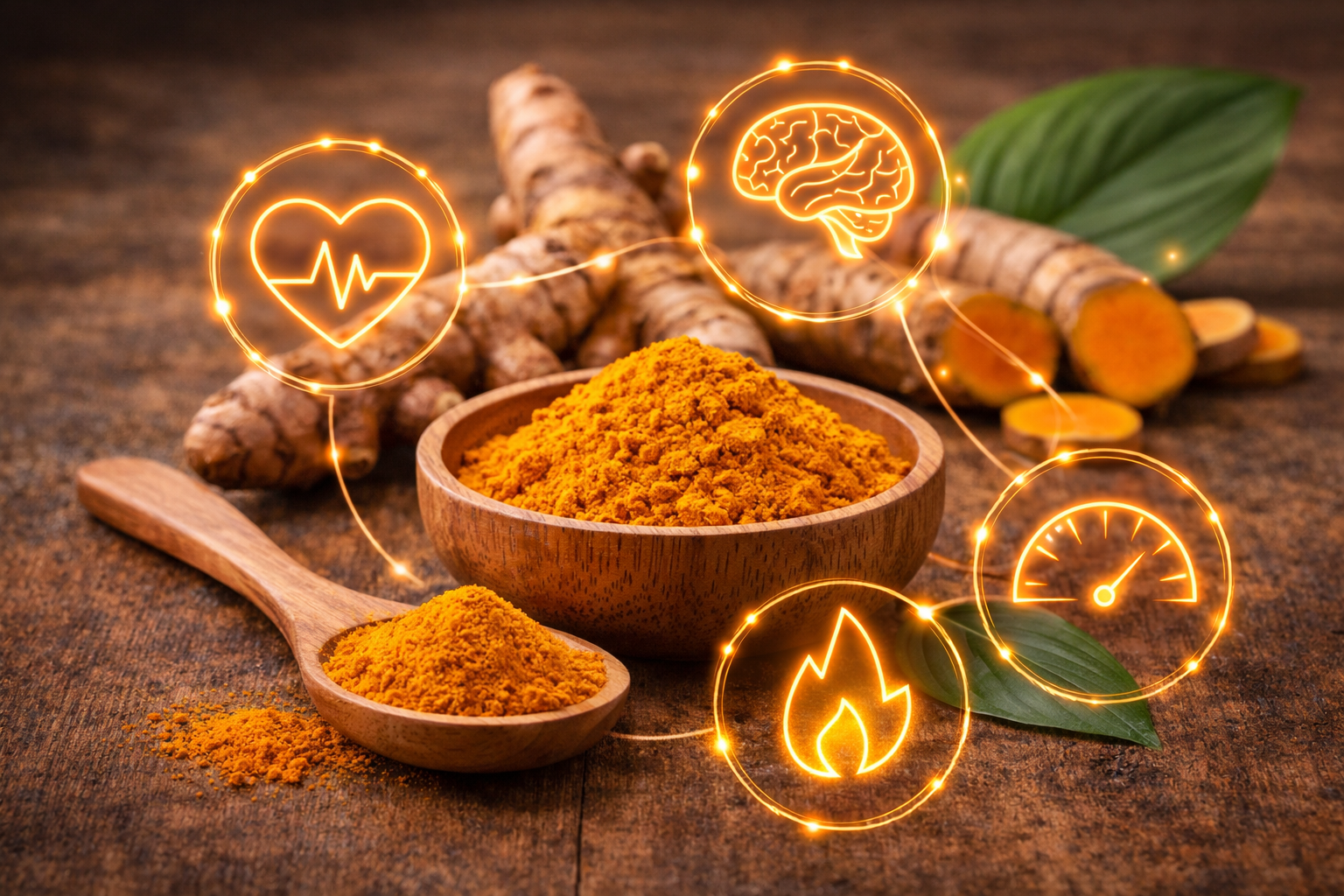
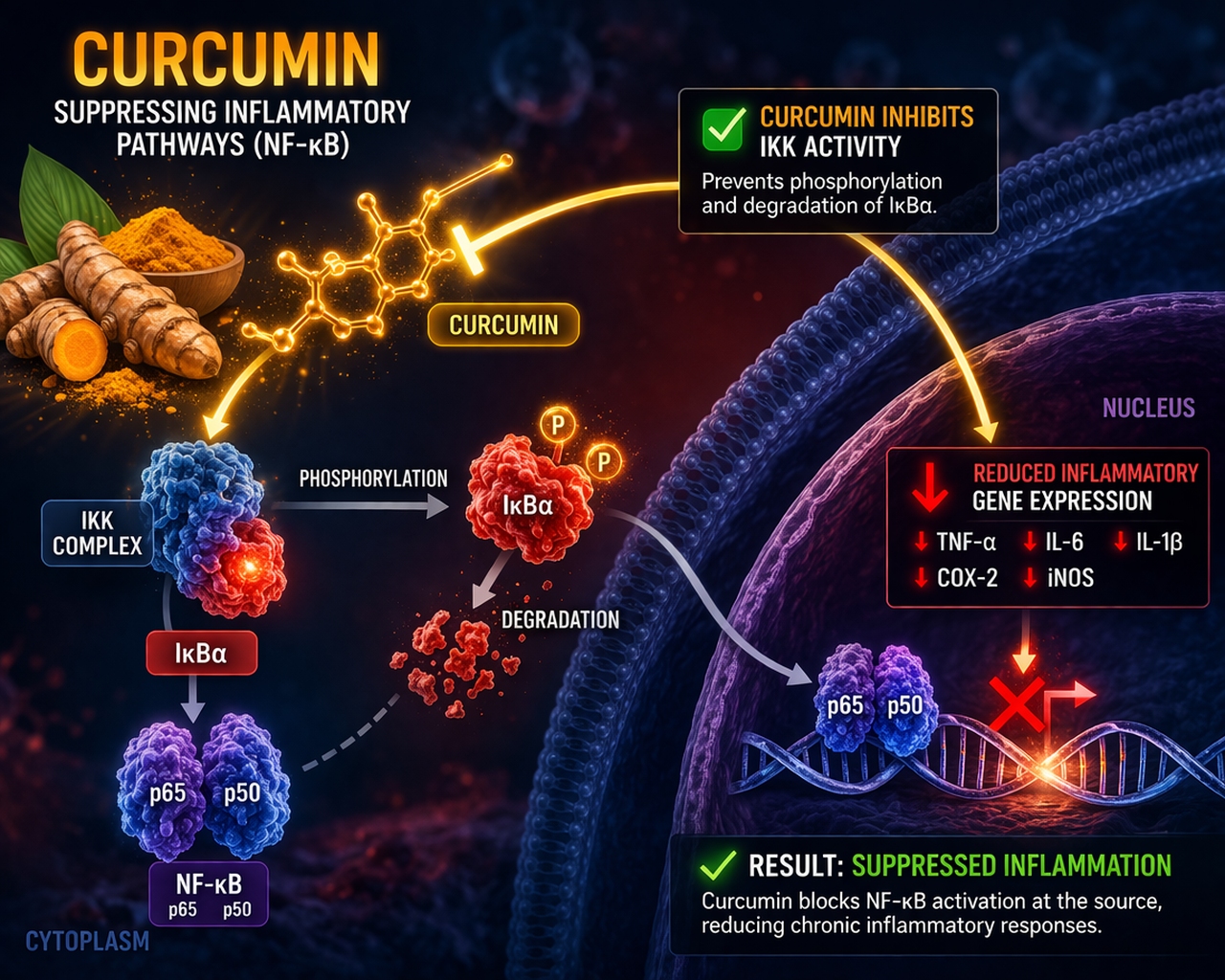
Curcumin (diferuloylmethane) is the primary polyphenolic bioactive compound found in the rhizome of Curcuma longa — the turmeric plant. It is the molecule responsible for turmeric's distinctive deep golden-orange colour, its powerful anti-inflammatory action, its antioxidant capacity, and the majority of its well-documented therapeutic properties. When scientists and researchers study turmeric's health effects, they are studying curcumin.
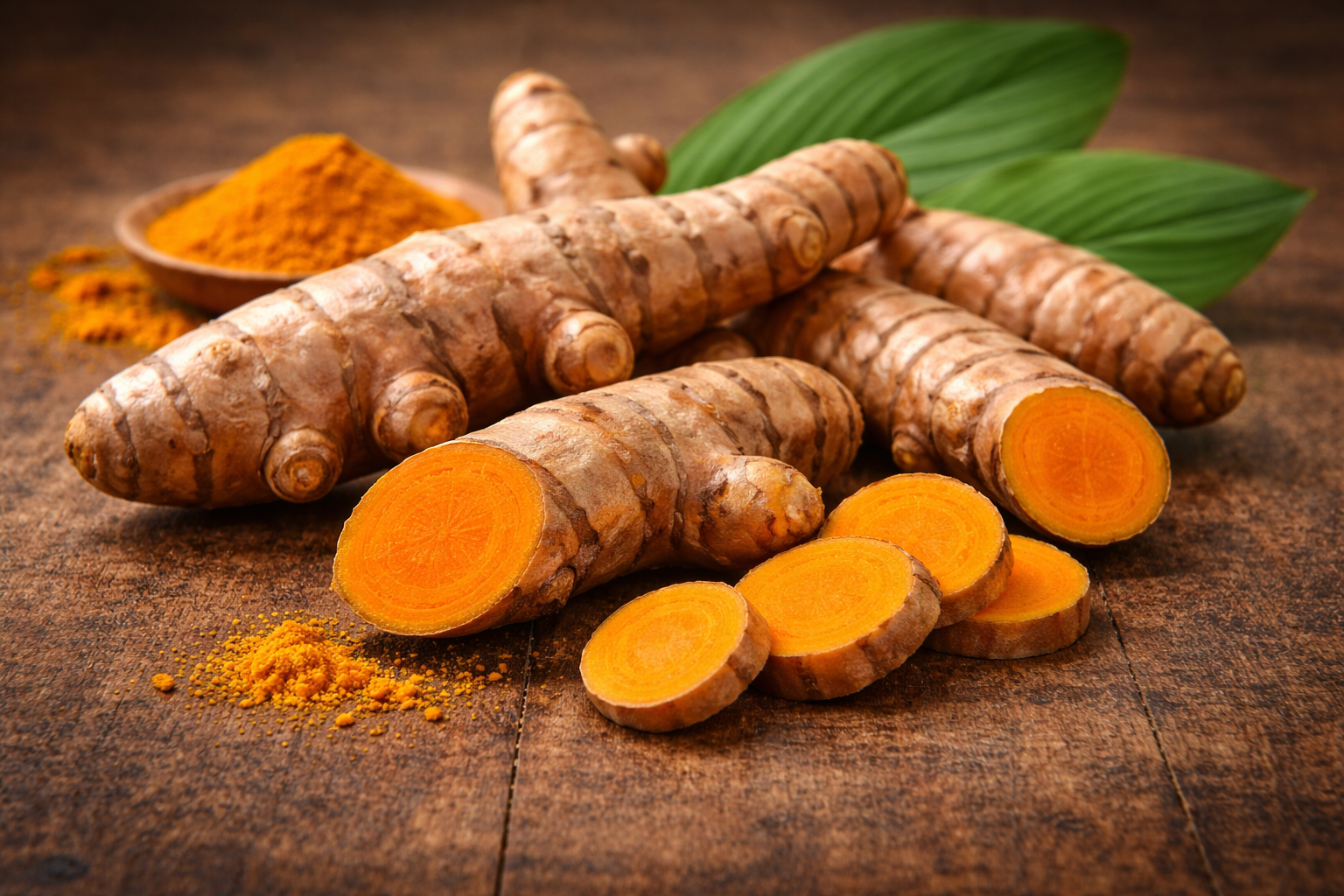
Yet curcumin is only a fraction of the whole turmeric rhizome. In most commercially grown turmeric varieties — Erode, Alleppey, Rajapuri, Sangli — curcumin constitutes just 1–3% of dry weight. This is why conventional turmeric supplements require such large, concentrated doses: the active molecule is simply not present in meaningful quantities in ordinary turmeric.
Curcumin percentage is the only meaningful measure of turmeric's therapeutic potency. Aroma, colour, and culinary flavour are separate quality markers. Two products can look and taste identical yet differ by 6–9 percentage points in curcumin content — a difference that completely determines whether the product has a clinical effect or merely a culinary one.
A 5 g daily serving of 1% curcumin turmeric delivers 50 mg of curcumin. The same 5 g of certified Lakadong Turmeric at 9% curcumin delivers 450 mg — nine times more active compound from an identical portion. This is the difference between culinary use and genuine therapeutic dosing through food.
The Curcuminoid Family: More Than Just Curcumin
Turmeric actually contains a family of closely related compounds collectively called curcuminoids. In certified Lakadong Turmeric from Meghalaya, all three are present in exceptionally high proportions:
The co-presence of all three curcuminoids in natural proportions — as found in whole certified Lakadong Turmeric — is widely considered superior to isolated curcumin supplements, which typically contain only purified Curcumin I. The natural matrix also includes essential oils, turmerones, and fibre that improve absorption.
HPLC (High-Performance Liquid Chromatography) is the gold standard method used by NABL-accredited laboratories to certify the precise curcumin percentage in Lakadong Turmeric. Each batch receives its own Certificate of Analysis (COA).
Why Meghalaya Produces the World's Highest-Curcumin Turmeric
The extraordinary curcumin content of Lakadong Turmeric from Meghalaya is not a marketing claim — it is a biological reality rooted in the irreproducible interaction between a specific plant variety, a specific microclimate, and specific soils found only in the Jaintia Hills district of Meghalaya. This convergence is so unique that it cannot be replicated by growing the same Curcuma longa Lakadong variety in any other region.
Scientists, agronomists, and the Government of India's Geographical Indication Registry have all formally documented this uniqueness, culminating in the award of GI Tag No. 741. Understanding why Meghalaya produces certified high-curcumin turmeric requires examining three inseparable factors: soil chemistry, climate, and centuries of tribal cultivation intelligence.
Jaintia Hills — The Only Origin That Matters
East and West Jaintia Hills districts in Meghalaya sit at 600–900 metres above sea level, receiving 2,000–4,000mm of annual rainfall — some of the highest in the world. This extreme, consistent moisture enables the Lakadong variety to complete its 9-month growing cycle under ideal hydration without irrigation. The cool nights (15–18°C during growing months) slow metabolic rates, concentrating secondary metabolites including curcuminoids within the rhizome rather than volatilising them. The result is a rhizome that stores its bioactive compounds in exceptional density.
The Soil Chemistry Factor
Jaintia Hills soils are classified as laterite-loam hybrid with exceptionally high iron oxide and organic matter content. The iron-rich substrate is a primary driver of curcumin biosynthesis — the Curcuma longa plant upregulates curcuminoid production as a stress response to high-iron environments. This is a well-documented phytochemical mechanism: mineral stress in controlled quantities acts as a metabolic trigger, causing the plant to produce more protective polyphenols (curcuminoids) as part of its cellular defence system.
Compounding this is the exceptionally high organic matter from the region's dense forest floor — organic carbon levels in Jaintia Hills agricultural soils frequently exceed 3.5–4%, compared to national averages of 0.5–0.8%. This rich biological substrate feeds slow, sustained rhizome development that maximises compound accumulation over the full 9-month growth cycle.
The Jaintia Hills of Meghalaya — classified as one of the world's wettest regions, creating the ideal microclimate for high-curcumin turmeric cultivation.
Tribal Jaintia farmers have cultivated the Lakadong variety for over 400 years, preserving the specific seed stock and traditional practices that maintain its exceptional curcumin profile.
The Human Factor: 400 Years of Tribal Cultivation Intelligence
The Jaintia tribal communities of Meghalaya have cultivated the Lakadong turmeric variety for over 400 years through a process of continuous selection — preserving and replanting only the highest-vigour rhizomes, maintaining seed purity against cross-contamination with lower-quality varieties, and transmitting agricultural knowledge through generations. This centuries-long selective cultivation has effectively created a locally adapted landrace of Curcuma longa — genetically distinct from other commercial turmeric varieties — that is uniquely optimised to express maximum curcuminoid production in its native environment.
No external inputs, synthetic fertilisers, or hybridisation have altered this variety. It grows as it always has: on terraced hillside plots under the monsoon sky, tended by the same communities who have guarded its genetic integrity for generations. This is why certified Lakadong Turmeric from Meghalaya cannot be replicated by growing "Lakadong seeds" elsewhere — the terroir is inseparable from the product.
Agricultural scientists at the ICAR Research Complex for NEH Region in Meghalaya confirmed that Lakadong turmeric seeds grown in controlled conditions outside Jaintia Hills consistently produce rhizomes with 40–60% lower curcumin content than when grown in their native environment. The curcumin content is a product of origin, not genetics alone — which is precisely why geographic certification exists.
GI Tag No. 741 — What Geographical Indication Certification Means
Geographical Indication (GI) protection is a legal intellectual property right granted by the Geographical Indications of Goods (Registration and Protection) Act, 1999 of the Government of India, administered through the Controller General of Patents, Designs and Trade Marks. It is legally equivalent to how "Champagne" can only refer to sparkling wine from the Champagne region of France, or how "Darjeeling" can only describe tea grown in the specific hills of West Bengal.
Lakadong Turmeric received GI Tag No. 741, protecting its name and certifying that only turmeric grown in East and West Jaintia Hills, Meghalaya can be legally sold under the Lakadong designation. The GI specification formally codifies minimum curcumin content standards and prohibits mislabelling from other origins — making it illegal, not merely unethical, to sell substitute turmeric as Lakadong.
What GI Tag No. 741 Specifically Certifies
The GI Tag certifies origin — it tells you the turmeric was grown in Jaintia Hills, Meghalaya. NABL laboratory curcumin certification tells you the specific curcumin percentage of that batch. Both documents together give you the complete proof of authenticity. A product can technically hold GI origin status while being a lower-grade harvest batch. A reputable certified exporter provides both — GI registration documentation AND a per-batch NABL curcumin Certificate of Analysis.
Authentic curcumin-certified Lakadong Turmeric from Meghalaya comes with two critical documents: the GI registration certificate (origin) and the NABL-accredited COA (curcumin percentage). Both must be present.
How Curcumin Certification Works — The NABL Testing Process
Curcumin certification is not a visual inspection or a farmer's claim — it is a rigorous analytical chemistry process performed by accredited third-party laboratories. Understanding the testing methodology helps buyers correctly interpret certificates and identify fraudulent documentation.
The National Accreditation Board for Testing and Calibration Laboratories (NABL) is India's official accreditation body under the Department for Promotion of Industry and Internal Trade (DPIIT), Government of India. NABL accreditation certifies that a laboratory meets ISO/IEC 17025 standards for technical competence and impartiality. For curcumin certification to be valid, the issuing laboratory must be NABL-accredited specifically for food and agricultural testing — not all accreditations cover this category.
The HPLC Testing Method
High-Performance Liquid Chromatography (HPLC) is the universally accepted gold standard for curcumin quantification. It is the same methodology used by the European Spice Association, the American Spice Trade Association, and FSSAI (India's food safety authority) for curcumin claims in food and supplement products.
How to Read and Verify a Curcumin COA
Many sellers claim to provide lab reports but offer documents that are either fabricated, outdated, or from non-NABL laboratories. Here is exactly what a legitimate COA must contain and how to verify each element:
- 🏛️NABL Accreditation Number on letterhead — Every NABL-accredited lab prints its accreditation number (format: T-XXXX or CC-XXXX) on its official letterhead. Verify this number on the official NABL portal at nabl-india.org. An unverifiable number is an immediate red flag.
- 📦Batch or lot number matching the product — The COA must reference the same batch/lot number printed on the product packaging. A generic COA not linked to a specific batch proves nothing about the product in your hand.
- 📅Testing date within 6 months of harvest — Curcumin content is highest close to harvest and degrades over time. A COA from 18 months ago does not represent the current batch's potency.
- 🔢Individual curcuminoid percentages listed — A genuine HPLC report lists Curcumin I, Demethoxycurcumin, and Bisdemethoxycurcumin separately plus a total. A single "curcumin: X%" without breakdown is a simplified or non-HPLC report.
- ✍️Authorised signatory with designation — The COA must bear the signature and printed designation (e.g., "Lab Director," "Analytical Chemist") of the authorising officer along with the laboratory's official stamp.
- 📬Laboratory contact information — The issuing laboratory's full address, phone, and email must be present. Call the lab directly to confirm they issued the specific COA if you have any doubt.
Visit nabl-india.org → Search Accredited Laboratories → Food & Agriculture. Enter the NABL number from the COA. If it appears with an active "Food" accreditation scope, the lab is legitimate. If not found, or found with only a different scope (e.g., calibration-only), the COA is not valid for curcumin claims.
Certified Lakadong vs. All Other Turmeric Varieties — Curcumin Comparison
The data below is based on peer-reviewed studies, Spices Board India laboratory results, and published COA averages from GI-certified Lakadong exporters. These are not estimates — they are documented curcumin percentages by dry weight as determined by HPLC analysis.
| Variety & Origin | Curcumin % | GI Protected | NABL Certified | Best Use |
|---|---|---|---|---|
| Lakadong — Meghalaya Highest | 7–12% | ✓ GI 741 | ✓ Per Batch | Therapeutic + Culinary |
| Alleppey Finger — Kerala | 3.5–5% | ✓ GI 54 | ~ Some sellers | Culinary + Mild Wellness |
| Erode / Salem — Tamil Nadu | 2–3% | ~ Partial | ✗ Rarely | Culinary / Export Volume |
| Rajapuri — Maharashtra | 1.5–2.5% | ✗ | ✗ | Culinary (colour/flavour) |
| Generic Supermarket Turmeric | 1–2% | ✗ | ✗ | Culinary only |
| Curcumin Extract (95% supplement) | 95% | ✗ | ~ Some | Supplement — No food matrix |
✓ Yes · ✗ No · ~ Varies by seller/batch. Source: Spices Board India, ICAR-NEH, peer-reviewed literature.
Health Benefits of High-Curcumin Certified Lakadong Turmeric
The therapeutic benefits attributed to turmeric in both traditional Ayurvedic medicine and modern clinical research are specifically attributable to its curcumin content. This creates a direct dosing relationship: the higher the certified curcumin content, the more potent the therapeutic effect per gram consumed. Certified Lakadong Turmeric from Meghalaya, at 7–12% curcumin, is the only whole-food turmeric that delivers clinically meaningful curcumin doses through normal dietary consumption.
The following benefits are supported by peer-reviewed clinical and in vitro research. Note that all referenced studies used curcumin doses achievable through regular consumption of certified high-curcumin turmeric — doses that are not achievable through ordinary 1–2% curcumin turmeric varieties.
Why Curcumin Bioavailability Matters — And How to Maximise It
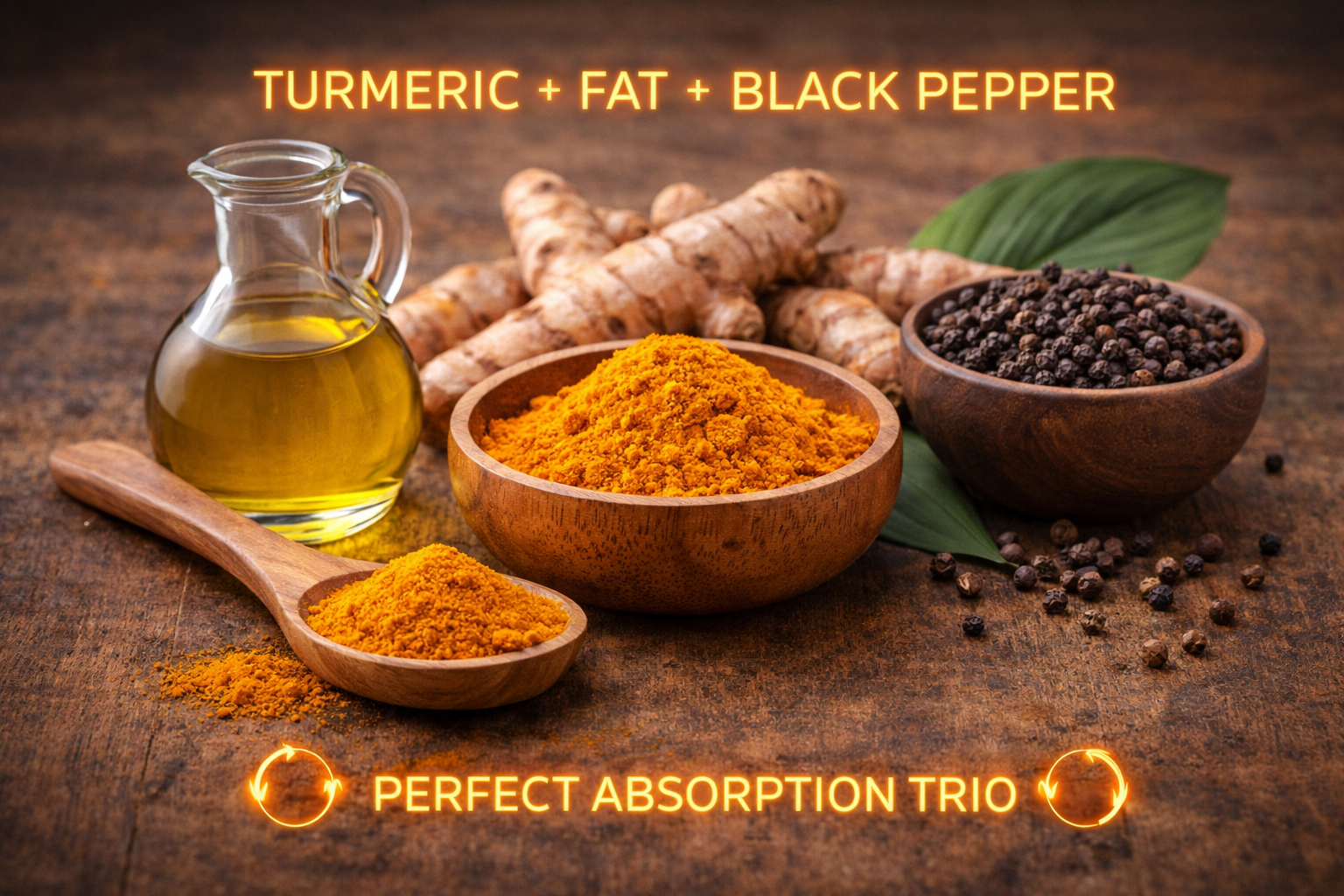
Curcumin in its natural state has relatively low water solubility, which limits gastrointestinal absorption. This is well-established — but equally well-established are simple, evidence-backed methods to dramatically increase bioavailability that require no supplements or formulations:
The classic Lakadong Golden Milk — 1 tsp certified turmeric, 1/4 tsp black pepper, 1 tsp ghee in warm milk — is the optimal bioavailability formula, combining fat and piperine for maximum curcumin absorption.
How to Use Curcumin-Certified Lakadong Turmeric Daily
Because certified Lakadong Turmeric from Meghalaya contains 7–12% curcumin versus 1–2% for ordinary turmeric, your effective daily dose requires far less powder to achieve the same curcumin intake. This means a smaller daily usage amount goes significantly further — making the premium price per gram more cost-effective than it initially appears.
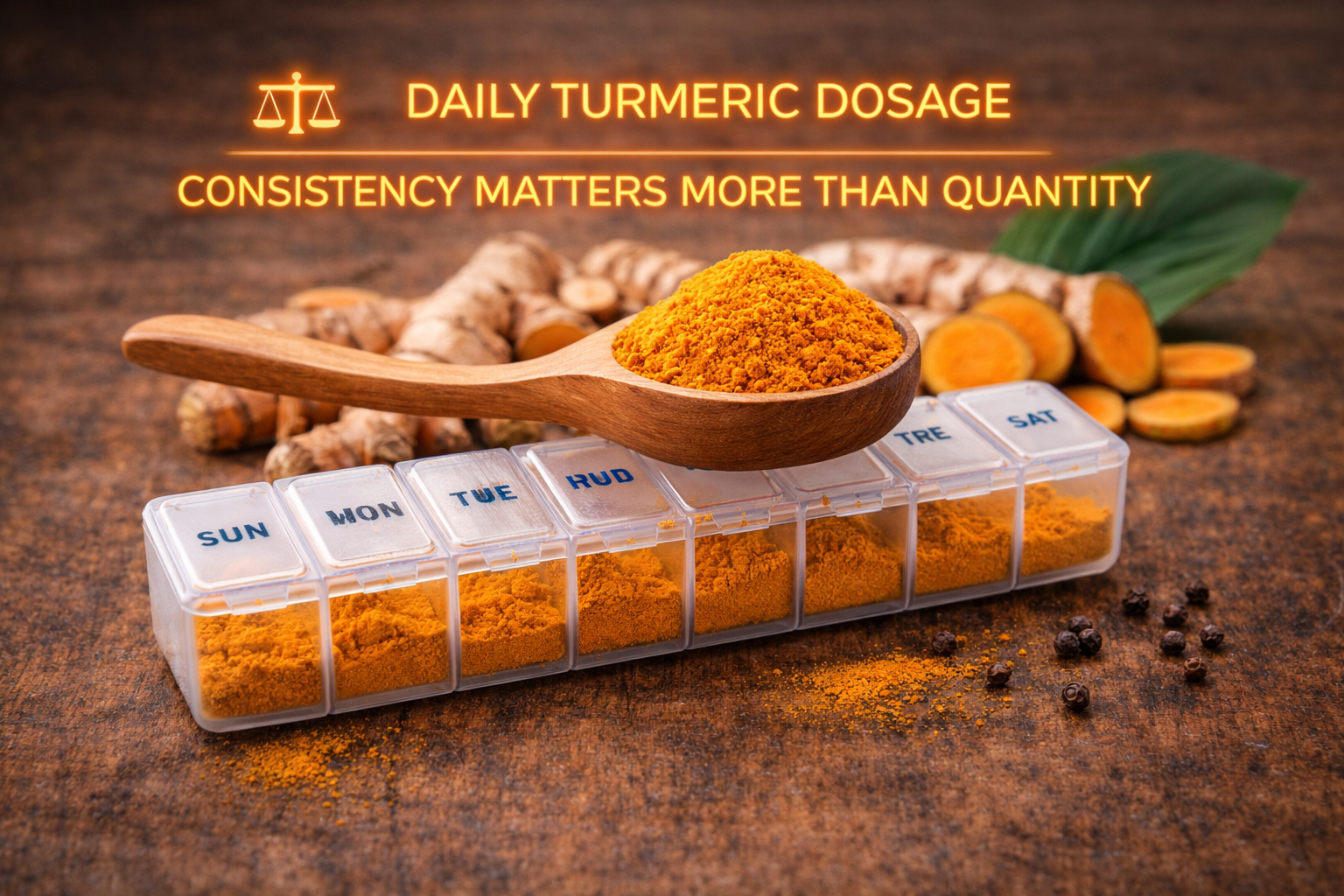
Recommended Daily Dosing — Curcumin by Weight
| Intended Use | Curcumin Target | Certified Lakadong (9%) | Ordinary Turmeric (2%) |
|---|---|---|---|
| General daily wellness Most Common | 200–500 mg | 2–5g (~1/2–1 tsp) | 10–25g (2–5 tsp) |
| Active inflammation support | 500–1,000 mg | 5–11g (1–2 tsp) | 25–50g (5–10 tsp) |
| Joint health maintenance | 400–800 mg | 4–9g (1 tsp) | 20–40g (4–8 tsp) |
| Culinary / flavour use | Not targeted | 1–3g (1/4–1/2 tsp) | 2–5g |
Always combine with black pepper and a fat source for optimal curcumin absorption. Consult your healthcare provider regarding therapeutic use, especially if on anticoagulant medications.
Best Consumption Methods for Certified Lakadong Turmeric
How to Buy Genuinely Certified Lakadong Turmeric from Meghalaya
The demand for certified curcumin-rich Lakadong Turmeric has created a significant counterfeiting problem. A 2023 market audit of Indian e-commerce platforms found that fewer than 30% of products labelled "Lakadong" included any documentation of GI origin or curcumin content. Understanding the certification chain — and demanding the right documents — is the only reliable protection against paying a premium price for ordinary turmeric.
The Certification Chain to Demand
- 1️⃣GI Tag No. 741 on product label — The Geographical Indication number must physically appear on the label. This is a legal requirement, not a courtesy. Check the label photography carefully in online listings. If it is absent, the product is either mislabelled or the seller is unaware of GI requirements — neither is acceptable.
- 2️⃣Producer's GI Registration Number — Ask the seller for their or their farm cooperative's GI producer registration number. Registered producers can provide this on request. This connects the product to a specific verified farm or cooperative in Jaintia Hills.
- 3️⃣NABL-Accredited COA with batch-specific curcumin % — As detailed in the testing section above, a legitimate COA from an NABL-accredited lab (verifiable on nabl-india.org) showing ≥7% total curcuminoids, linked to the specific batch number on the product, is the gold standard curcumin certification proof.
- 4️⃣Harvest batch number on packaging — Legitimate GI exporters print a harvest batch or lot number on every package. This enables complete traceability — from your kitchen back to the specific farm cooperative and harvest season in Jaintia Hills. No batch number means no traceability.
- 5️⃣APEDA / Spices Board India listing (for international buyers) — International buyers should additionally verify that the exporter is registered with APEDA (Agricultural and Processed Food Products Export Development Authority) and listed with Spices Board India. These registrations confirm legal export status and quality compliance for international food standards.
- 6️⃣Price sanity check — below $1.67 USD / 100g is disqualifying — Authentic certified Lakadong Turmeric is priced $2.40–$4.52 USD per 100g reflecting real costs: GI-certified farming, lab testing, eco packaging, and documentation. Products below this threshold cannot credibly carry genuine certification overhead.
Get Certified Lakadong Gold Turmeric — Farm Direct from Jaintia Hills
Every order from Lakadong Gold includes GI Tag No. 741 documentation, NABL-accredited curcumin COA, harvest batch number, and APEDA/Spices Board certification. Eco jute or glass packaging. Free shipping India-wide. International export available.
International Buyers — Additional Requirements
For buyers in the USA, UK, EU, Australia, Singapore, UAE, Canada, and other international markets, curcumin-certified Lakadong Turmeric from Meghalaya can be legally imported for personal use or commercial purposes. Key requirements vary by destination but typically include:
Storing Certified Lakadong Turmeric to Preserve Curcumin Content
Curcumin is a relatively stable compound at room temperature but is susceptible to three degradation vectors: UV light (photodegradation), oxidation from air exposure, and excessive heat above 40°C sustained over time. Proper storage is not merely about flavour — it is about preserving the certified curcumin potency you paid a premium for.
- 🏺Store in amber glass or opaque ceramic — never clear containers: UV light is the primary curcumin degradation factor for stored powder. Amber glass blocks the 300–400nm wavelength most damaging to curcuminoids. Clear glass or plastic containers on a kitchen counter can degrade curcumin content by 20–40% within 3 months of direct light exposure.
- 🔒Airtight seal is non-negotiable: Oxygen slowly oxidises curcuminoids, reducing potency and developing a stale, cardboard-like flavour. Each time you open the container, replace the lid immediately. Avoid shaking the container near flames or heat sources that accelerate oxidation kinetics.
- 🌡️Optimal storage temperature: 15–25°C: A cool pantry shelf or kitchen cabinet away from the stove is ideal. Do not refrigerate powder — the condensation cycles from repeated opening of cold containers increase moisture content, accelerating microbial risk. Freezing is counterproductive for the same reason.
- 📅Consume within 12 months of harvest date: The harvest date is printed on certified Lakadong packaging. Curcumin content is highest in the 6 months post-harvest and declines gradually thereafter. A product consumed 18 months post-harvest may have lost 15–25% of its certified curcumin content even under ideal storage conditions.
- 🌿For whole rhizomes — dry, ventilated, never refrigerated: Whole dried Lakadong rhizomes store best in a breathable jute or paper bag in a cool, dry pantry. Refrigeration causes humidity cycling that promotes surface mould. Grind small batches fresh as needed — freshly ground turmeric has higher essential oil content and superior flavour compared to pre-ground powder stored for months.
- 📋Keep your COA with the product: Your NABL Certificate of Analysis documents the certified curcumin content at time of testing. Retain it alongside the product for reference and as a baseline against which any change in colour, aroma, or potency can be assessed. If contacting the exporter about a specific batch, the COA batch number is required.
For centuries, Jaintia tribal farmers stored whole dried rhizomes in sealed terracotta pots partially buried in cool, dry earth — creating a remarkably effective natural refrigeration-without-moisture-fluctuation system. Modern food science confirms: a sealed terracotta pot in a shaded pantry maintains stable temperature and near-zero UV exposure — both optimal conditions for maximum curcumin preservation over 18–24 months of whole-rhizome storage.
Frequently Asked Questions — Curcumin Certified Lakadong Turmeric Meghalaya
"Curcumin certified" means the specific batch of Lakadong Turmeric has been independently tested by an NABL-accredited laboratory using HPLC (High-Performance Liquid Chromatography) methodology, and the resulting Certificate of Analysis (COA) documents the precise curcumin percentage by dry weight. For certified Lakadong Turmeric, this value should be ≥7% — distinguishing it from ordinary turmeric varieties at 1–3%.
Curcumin certification is distinct from, though complementary to, GI certification. GI Tag No. 741 certifies origin (Jaintia Hills, Meghalaya). Curcumin certification by NABL lab certifies potency (the actual curcumin % in that specific batch). Both documents together constitute complete authentication of premium certified Lakadong Turmeric.
The exceptional curcumin content of certified Lakadong Turmeric from Meghalaya results from a unique, irreproducible combination of three factors: (1) the specific Lakadong landrace of Curcuma longa, genetically adapted to maximise curcuminoid production through 400 years of tribal selective cultivation; (2) Jaintia Hills soil chemistry — laterite-loam soils rich in iron oxide that trigger elevated curcuminoid biosynthesis as a plant stress response; and (3) the Meghalaya microclimate — high altitude (600–900m), extreme annual rainfall (2,000–4,000mm), and cool nights that slow metabolic rates and concentrate secondary metabolites within the rhizome.
Crucially, agricultural scientists have confirmed that growing Lakadong variety seeds outside Jaintia Hills consistently produces rhizomes with 40–60% lower curcumin content. The high curcumin content is an inseparable product of origin — not purely of genetics — which is why geographical certification exists.
Visit nabl-india.org → Search Accredited Laboratories and enter the NABL accreditation number printed on the COA letterhead. Confirm the laboratory appears with an active "Food & Agricultural Testing" accreditation scope. Then verify the accreditation is current (not expired) and the lab's address matches the COA letterhead.
Additionally, cross-check the batch number on the COA against the batch number printed on the product label. A legitimate COA is batch-specific — a generic certificate without a batch/lot number reference does not prove anything about the specific product in your hands.
If you have any doubt, call the laboratory directly using the phone number on the NABL portal (not from the COA, which could be falsified) and ask them to confirm issuance of the specific certificate by its reference number.
For most wellness applications, yes — certified Lakadong Turmeric offers meaningful advantages over isolated curcumin supplements. The natural food matrix of Lakadong Turmeric includes all three curcuminoids (Curcumin I, demethoxycurcumin, bisdemethoxycurcumin) in their naturally occurring proportions, plus ar-turmerone essential oil which independently inhibits curcumin degradation enzymes — providing natural bioavailability enhancement. Research consistently shows that the complete curcuminoid profile delivers broader biological activity than isolated Curcumin I alone.
However, for specific high-dose therapeutic applications — where 1,000mg+ of curcumin daily is required — a 95% curcumin extract supplement may be more practical than the volume of turmeric powder required. The optimal approach for daily wellness is certified Lakadong Turmeric as a food, combined with black pepper and fat for maximum absorption, with curcumin supplements reserved for acute therapeutic phases if recommended by a healthcare provider.
These are entirely separate certification systems addressing different qualities. GI Tag No. 741 certifies geographic origin — that the turmeric was grown in East or West Jaintia Hills, Meghalaya by a registered producer. It says nothing about farming methods. Organic certification (India Organic / NPOP, EU Organic, or USDA Organic) certifies farming practice — that no synthetic pesticides, chemical fertilisers, or prohibited inputs were used over a certified period, regardless of where the product was grown.
The two certifications are independent and can both apply to the same product. The majority of Jaintia Hills tribal cultivation is naturally low-input or organic by practice — but formal organic certification requires a third-party inspection body and 3-year conversion period documentation. Premium certified exporters hold both GI and organic certification; standard GI-certified Lakadong may not hold formal organic certification even though farming practices are largely natural.
No reliable quantitative home test for curcumin percentage exists — laboratory HPLC analysis is the only accurate method. However, several indicative quality checks can detect obvious counterfeits:
Cold water test: Add a pinch to cold water. Genuine high-curcumin turmeric creates a deep orange-amber particulate that sinks slowly and creates a slightly cloudy, richly coloured suspension. Synthetic dye (used to colour inferior turmeric) instantly clouds the water a vivid yellow, as the water-soluble dye dissolves rapidly. Alcohol test: Dissolve a pinch in a small amount of rubbing alcohol. Genuine turmeric curcumin dissolves to a deep amber-gold. Artificial dyes create a lighter, more transparent yellow-green. Colour standard: Authentic certified Lakadong powder is distinctly deep orange-amber — not pale yellow. Pale or dull yellow powder at premium pricing is a strong visual indicator of mislabelling.
For definitive verification, you can send a 50g sample to any NABL-accredited spice testing laboratory. Most charge $9.52–$17.86 USD for a full curcumin HPLC analysis, delivering results within 5–7 working days.
At 9% curcumin (mid-range for certified Lakadong), the following daily amounts deliver evidence-based curcumin doses for specific purposes:
General wellness and antioxidant support: 2–3g (~1/2 tsp) with black pepper and fat. This delivers approximately 180–270mg curcumin — sufficient for daily antioxidant and mild anti-inflammatory support.
Active inflammation management (joint pain, post-workout, chronic low-grade inflammation): 5–8g (~1–1.5 tsp) daily, split across two servings. This delivers 450–720mg curcumin.
Cognitive support and mood: 3–5g (~1 tsp) daily in the clinical dosing range used in Alzheimer's and depression studies (300–500mg curcumin). Always with piperine (black pepper) for CNS penetration.
These are dietary food doses, not medical prescriptions. Consult your healthcare provider before using high-dose turmeric therapeutically, particularly if you take anticoagulants (warfarin), are pregnant, have gallstones, or are scheduled for surgery.
Yes. GI-registered Lakadong Turmeric exporters with APEDA registration and Spices Board India listing ship internationally to the USA, UK, EU member states, Australia, Singapore, UAE, Canada, Japan, and most other global markets. Each international shipment is accompanied by a phytosanitary certificate, APEDA certificate of origin, curcumin COA from an NABL-accredited lab, and organic certificate if applicable.
Shipping timeframes: 7–14 days to USA, UK, EU, and Australia via air freight; 21–35 days via sea freight for bulk orders. Commercial MOQs for export typically start at 1kg for retail-packaged powder and 5–10kg for bulk powder. Personal export in retail packaging (under 5kg) typically clears customs in all mentioned markets without special import licences.
The Bottom Line on Curcumin Certified Lakadong Turmeric from Meghalaya
Curcumin-certified Lakadong Turmeric from Meghalaya occupies a unique position in the global spice market: it is the only whole-food turmeric variety that naturally contains curcumin in quantities sufficient for genuine therapeutic application. At 7–12% curcumin — verified by NABL-accredited HPLC analysis and protected by GI Tag No. 741 — it is categorically distinct from every other commercially available turmeric variety.
The certification chain — GI origin, NABL curcumin COA, harvest batch traceability, and APEDA/Spices Board registration — is not bureaucratic complexity. It is the necessary evidence infrastructure for a product where the difference between authentic and counterfeit is invisible to the naked eye and fundamental to the product's entire value proposition. Without all four certifications, you do not have certified Lakadong Turmeric — you have ordinary turmeric in premium packaging.
For buyers seeking a daily therapeutic curcumin source through food rather than supplements, certified Lakadong Turmeric from the tribal farms of Jaintia Hills, Meghalaya represents the highest-integrity, highest-potency option available anywhere in the world. Nothing else comes close.
Lakadong Gold is a GI-registered, APEDA-certified, Spices Board India listed direct exporter of certified Lakadong Turmeric from Jaintia Hills, Meghalaya. Every order includes GI certificate, NABL curcumin COA, harvest batch number, and eco-friendly packaging. Farm-to-door. No middlemen. Real certification.