What Is Curcumin, Exactly?
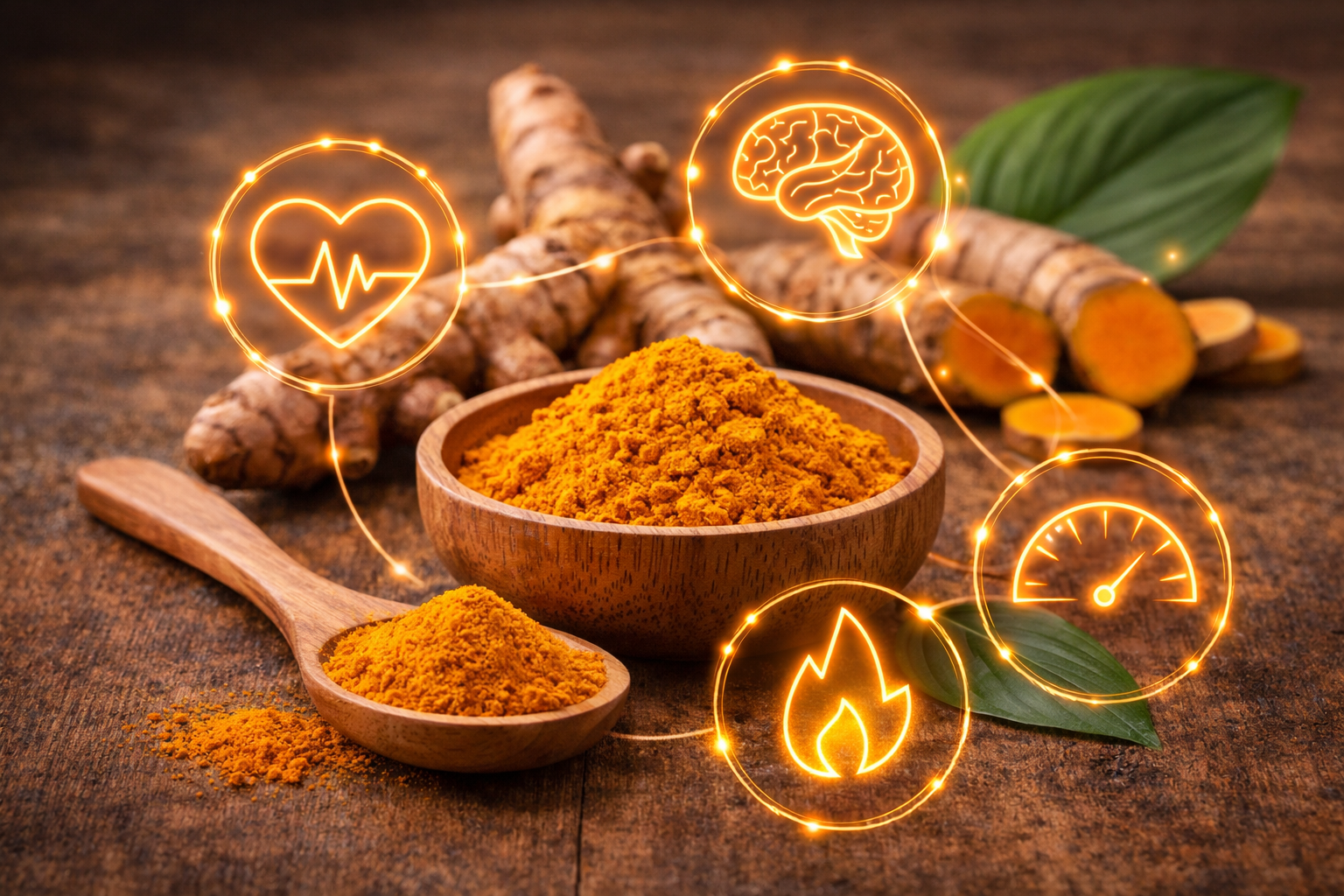
Curcumin is one of three closely related curcuminoids found naturally in the rhizome — the underground stem — of the turmeric plant, Curcuma longa. It's the compound primarily responsible for turmeric's deep orange-yellow color, and it's the specific molecule that most modern research on "turmeric benefits" is actually referring to.
This distinction matters more than it sounds. Turmeric is the whole dried, ground root used as a spice, dye, and traditional wellness ingredient across South and Southeast Asia for thousands of years. Curcumin is just one active constituent inside it — typically around 2 to 5% of ordinary culinary turmeric by weight. A small number of rare, high-curcumin varieties grown in specific regions run considerably higher, which is why curcumin percentage has become a real quality marker rather than a marketing footnote.
Turmeric root has a long history in Ayurvedic and Siddha traditions as a general wellness ingredient, used in food, pastes, and home remedies long before curcumin was isolated and studied as an individual compound by modern chemistry. That older, whole-food tradition and the newer, molecule-specific research are really two chapters of the same story.
If a product label says "turmeric," it may contain very little curcumin unless the curcuminoid percentage is stated. If it says "curcumin extract," it's referring to a concentrated form of the specific compound. Knowing which one you're looking at is the first step in evaluating any curcumin benefits claim.
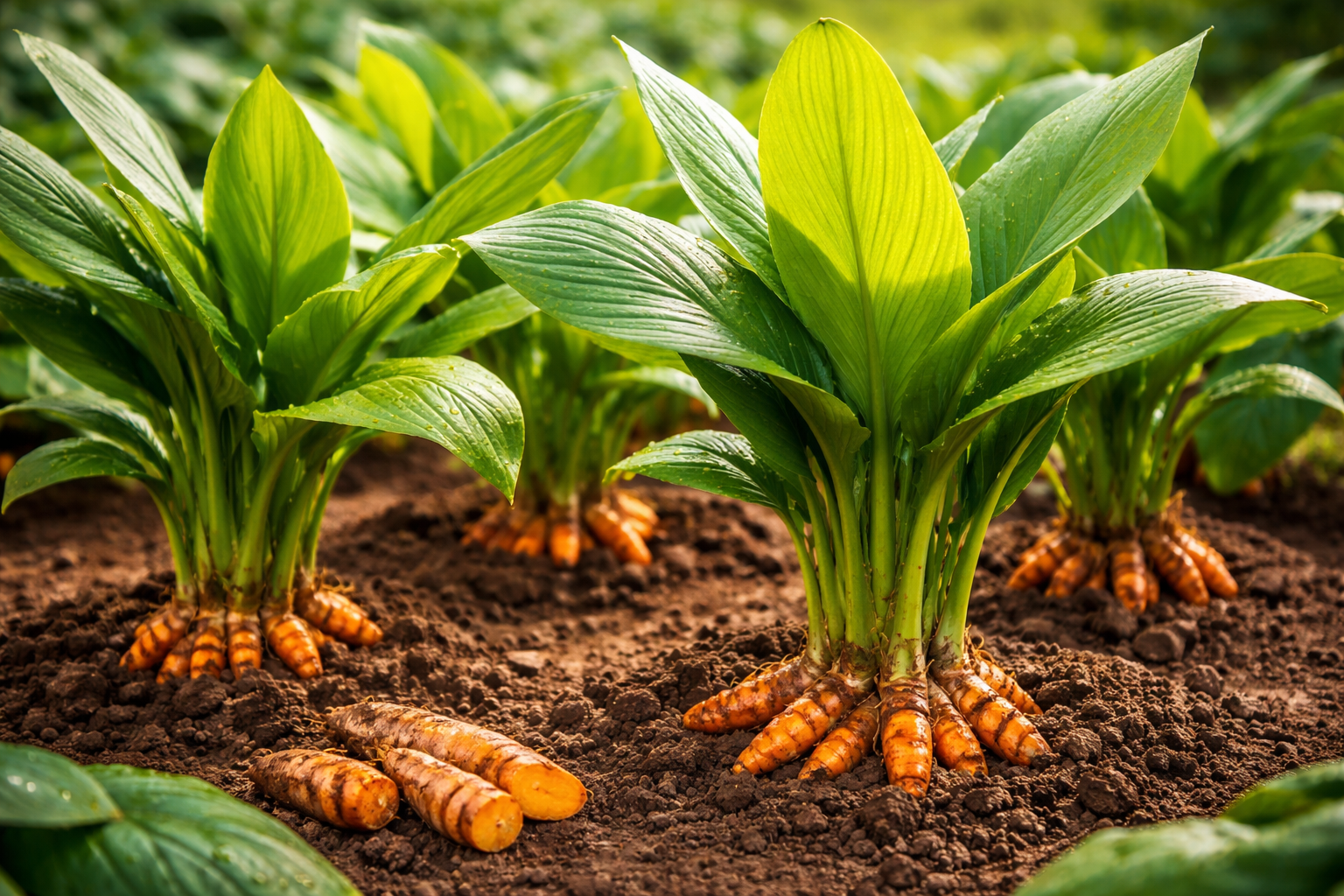
The vivid orange interior of a fresh turmeric rhizome is a visual cue to curcuminoid concentration — though lab testing, not color alone, confirms actual curcumin percentage.
How Curcumin Works in the Body
Most of the curcumin benefits researchers have investigated trace back to two overlapping properties. The first is curcumin's interaction with the body's inflammatory signaling pathways — in particular, molecules tied to the NF-κB pathway, one of the central regulators of how the body initiates and resolves inflammation. This is why curcumin is so often discussed in the context of a "healthy inflammatory response" rather than any single condition.
The second property is antioxidant activity. Curcumin can directly help neutralize reactive, unstable molecules known as free radicals, and some research suggests it may also support the body's own internal antioxidant defenses over time. Since oxidative stress and low-grade inflammation are two threads that run through a wide range of everyday wellness topics — from joint comfort to skin aging to recovery after exercise — it's easy to see why curcumin shows up in so many different conversations.
One honest caveat worth stating upfront: the most consistent clinical results have generally come from concentrated, standardized curcumin extracts — often paired with an absorption enhancer — rather than from the amount of curcumin found in an average serving of dietary turmeric. That absorption piece is important enough that it gets its own section further down this guide.
9 Curcumin Benefits Worth Knowing
Here's a plain-language overview of the areas where curcumin has been most studied. None of this is a substitute for medical advice, and individual results vary — but this is where the current research attention is genuinely focused.
This is curcumin's most-studied property. By interacting with inflammatory signaling pathways in the body, curcumin is widely researched for its role in supporting a balanced, healthy inflammatory response — the foundation that many of the other benefits on this list build on.
Curcumin can help neutralize free radicals directly and may support the body's own antioxidant enzyme systems, helping guard cells against everyday oxidative stress.
A number of human trials have looked at curcumin extracts for everyday joint comfort, particularly in the context of general wear-and-tear discomfort, with some studies reporting outcomes comparable to standard comfort measures.
Curcumin can cross the blood-brain barrier, which has driven interest in its potential role supporting mood balance and cognitive wellness, an area still actively being researched.
Some studies have examined curcumin's effect on endothelial function — how well blood vessels dilate and respond — as one contributor to overall cardiovascular wellness support.
Turmeric and curcumin have a long traditional history of use for everyday digestive comfort, and curcumin's interaction with bile production is one proposed mechanism behind this.
Curcumin's antioxidant and anti-inflammatory properties are why it appears in skincare-adjacent wellness routines, both applied topically in traditional practice and taken as part of an everyday diet.
By helping modulate inflammatory signaling, curcumin is studied as part of a broader picture of everyday immune system support rather than as a stand-alone solution.
Several small studies in active adults have looked at curcumin supplementation around exercise, with some reporting less perceived muscle soreness in the days following intense activity.
Curcumin vs. Whole Turmeric
Choosing between whole turmeric, a standardized curcumin extract, or turmeric paired with black pepper depends on what you're trying to get out of it. Here's how the three commonly used options compare.
| Attribute | Whole Turmeric Powder | Standardized Curcumin Extract | Turmeric + Black Pepper |
|---|---|---|---|
| Typical curcuminoid content | 2–5% (up to 7–12% in rare high-potency varieties) | Often standardized to 95% curcuminoids | Same as turmeric alone, absorption enhanced |
| Natural bioavailability | Low on its own | Still limited without an enhancer | Improved vs. turmeric alone |
| Best suited for | Everyday cooking, whole-food approach | Higher, more concentrated intake | A practical middle ground at home |
| Everyday use case | Curries, golden milk, roasted vegetables | Standardized supplement routines | Cooking with a pinch of black pepper added |
| Notes | Comes with fiber and other plant compounds | Easier to track consistent intake | Simple, low-cost absorption boost |
Why Absorption Is the Real Story
Here's the honest catch with curcumin: on its own, it's poorly absorbed. It's metabolized and cleared by the body quickly, which means a large share of what you consume may never reach the bloodstream in meaningful amounts. This single fact explains most of the differences between products, and it's why "how much curcumin" is really only half the question — "how well is it absorbed" is the other half.
The good news is that a few simple, well-documented strategies can meaningfully change this picture, which is exactly why combination formulas and cooking methods matter as much as the raw curcumin content on a label.
4 Practical Ways to Improve Absorption
- 🌶️Pair with black pepper (piperine). Even a small amount of piperine, the compound responsible for black pepper's bite, has been studied for its ability to meaningfully increase curcumin levels in the bloodstream.
- 🥥Add a source of healthy fat. Curcumin is fat-soluble, so cooking it with ghee, coconut oil, or olive oil — as in traditional golden milk — can help the body take it up more effectively.
- 🔥Apply gentle heat. Cooking turmeric briefly in oil can help release curcuminoids from the plant matrix, making them more available.
- 🧬Consider an enhanced formulation. Phytosome, liposomal, and nano-emulsified curcumin extracts are formulated specifically to improve absorption beyond what piperine or fat alone can achieve.
How Much Curcumin Do People Typically Use?
There is no single official "correct" curcumin dose, and appropriate intake depends on the product, the reason for use, and the individual. That said, human research studies have commonly used standardized curcumin extract in the range of roughly 500 mg to 2,000 mg per day, often split into two doses taken with meals. Getting an equivalent amount of curcuminoids from raw culinary turmeric alone would require a far larger quantity of the whole spice, since ordinary turmeric contains only a small percentage of curcumin by weight.
If you're trying curcumin for the first time, it's reasonable to start at the lower end of any product's suggested serving and observe how your body responds before increasing intake. This is general educational information, not a personal dosing recommendation.
Because curcumin can interact with certain medications and health conditions (covered in the next section), the most reliable path is to talk with a doctor, dietitian, or pharmacist about what's appropriate for your specific situation — especially if you're considering a concentrated supplement rather than culinary use.
Who Should Be Careful With Curcumin
Curcumin is generally well tolerated at typical dietary levels, but concentrated supplemental doses aren't automatically right for everyone. The following groups should speak with a healthcare provider before adding curcumin supplements to their routine:
- Pregnant or breastfeeding individuals, since research on concentrated supplemental doses in this group is limited
- Anyone taking blood-thinning medication such as warfarin, due to a possible interaction
- People with gallstones or a bile duct obstruction, since curcumin stimulates bile production
- Anyone with surgery scheduled in the next two weeks, because of a possible effect on bleeding and clotting
- Individuals with iron deficiency, since high-dose curcumin may modestly reduce iron absorption
- Anyone prone to acid reflux or sensitive digestion, as high concentrated doses can occasionally cause mild GI upset
This list is educational and not exhaustive. If you take prescription medication or manage a chronic health condition, review any new supplement — curcumin included — with your healthcare provider first.
FAQs — Curcumin Benefits
Curcumin is best known for supporting a healthy inflammatory response and providing antioxidant protection against everyday oxidative stress. These two properties are the foundation for most of the other curcumin benefits researchers have studied, from joint comfort to brain and heart wellness.
No. Turmeric is the whole dried, ground root of the Curcuma longa plant, while curcumin is just one active compound found inside it, typically making up 2 to 5% of ordinary culinary turmeric by weight. Some rare high-curcumin varieties contain considerably more.
This varies widely depending on the person, the dose, the formulation, and what someone is using it for. Some people report noticing a difference within a few weeks of consistent use, while other benefits studied in research are measured over months rather than days.
Curcumin on its own is poorly absorbed. Pairing it with black pepper (piperine), a source of dietary fat, or choosing a bioavailability-enhanced formulation such as a phytosome or nano-emulsified extract are the most commonly cited ways to improve absorption.
Curcumin is generally well tolerated at typical dietary levels. At higher supplemental doses, some people report mild digestive upset. Certain groups, including pregnant or breastfeeding individuals, people on blood-thinning medication, and those with gallstones, should talk to a healthcare provider before use.
Normal home cooking temperatures do not meaningfully destroy curcumin content, and gentle heating combined with a fat source such as ghee or oil may actually help make curcumin more available to the body.
Getting Curcumin From Whole Turmeric — Naturally

Not everyone wants to build their curcumin intake around a supplement bottle. A whole-food approach starts with choosing turmeric that's naturally higher in curcumin to begin with, rather than relying on volume alone. GI-tagged Lakadong Turmeric, grown in the Jaintia Hills of Meghalaya, is a notable example — its curcumin content typically runs 7–12%, several times higher than the 1–3% found in standard commercial turmeric, without any added extraction or fortification.
A simple everyday habit that combines several of the absorption tips above is a warm turmeric-and-milk drink (sometimes called golden milk): a small amount of turmeric powder simmered gently in milk or a plant-based milk with a pinch of black pepper and a spoon of ghee or coconut oil. It's an easy, traditional way to bring turmeric, fat, gentle heat, and piperine together in one cup.
If you're curious how a naturally high-curcumin variety like Lakadong Turmeric is grown, verified, and sourced, our guide to finding a genuine Lakadong Turmeric Meghalaya supplier covers GI certification, lab testing, and what to look for.
Key Takeaways on Curcumin Benefits
- 🔥Curcumin is the active compound behind most researched turmeric benefits — not turmeric itself as a whole spice.
- 🔬Research spans nine core areas — inflammation, antioxidant defense, joints, brain, heart, digestion, skin, immunity, and recovery.
- 🧬Absorption is the deciding factor. Piperine, healthy fats, gentle heat, or an enhanced formulation meaningfully change how much curcumin your body can actually use.
- 📏Typical research doses range widely — personal use should be guided by a healthcare professional, not guesswork.
- ⚠️Some groups should be cautious — including pregnant or nursing individuals, those on blood thinners, and people with gallstones.
- 🌿Whole-food, naturally high-curcumin turmeric like GI-tagged Lakadong Turmeric offers a straightforward way to raise intake through everyday cooking.
This article is for general educational purposes only and is not medical advice. These statements have not been evaluated by any food or drug regulatory authority, and nothing here is intended to diagnose, treat, cure, or prevent any disease. Always consult a qualified healthcare professional before starting any new supplement — especially if you are pregnant, nursing, taking medication, or managing a health condition. If you are exploring curcumin for a specific health concern, this is a sensitive area worth discussing directly with your doctor.
Curious Where High-Curcumin Turmeric Comes From?
GI-certified · Lab-tested curcumin content · Grown in the Jaintia Hills of Meghalaya · Direct farm-to-buyer sourcing