What Actually Makes Turmeric the Best in India?
Type "best turmeric in India" into a search bar and every seller claims the title. In practice, "best" is decided by three measurable things, not marketing copy: curcumin content (the compound responsible for turmeric's colour and most of its studied health effects), documented origin — ideally a Geographical Indication (GI) tag that legally ties a variety to a specific district — and purity, meaning the powder is free of starch fillers, chalk, or synthetic dye.
Ordinary commercial turmeric grown across most of India carries roughly 2–3% curcumin. A small number of regional varieties — grown in particular soils, at particular altitudes, under particular rainfall patterns — consistently test far higher. This guide ranks the country's best-known turmeric-growing regions against each other using the numbers that are actually published for each, rather than treating every "Himalayan" or "organic" label as equivalent.
One important caveat before the ranking: the "best" turmeric for a nutraceutical formulator chasing maximum curcumin is not always the "best" turmeric for a home cook who wants balanced flavour in a Tuesday dal. We'll flag that distinction throughout, because a single ranking can be genuinely misleading if it ignores intended use.
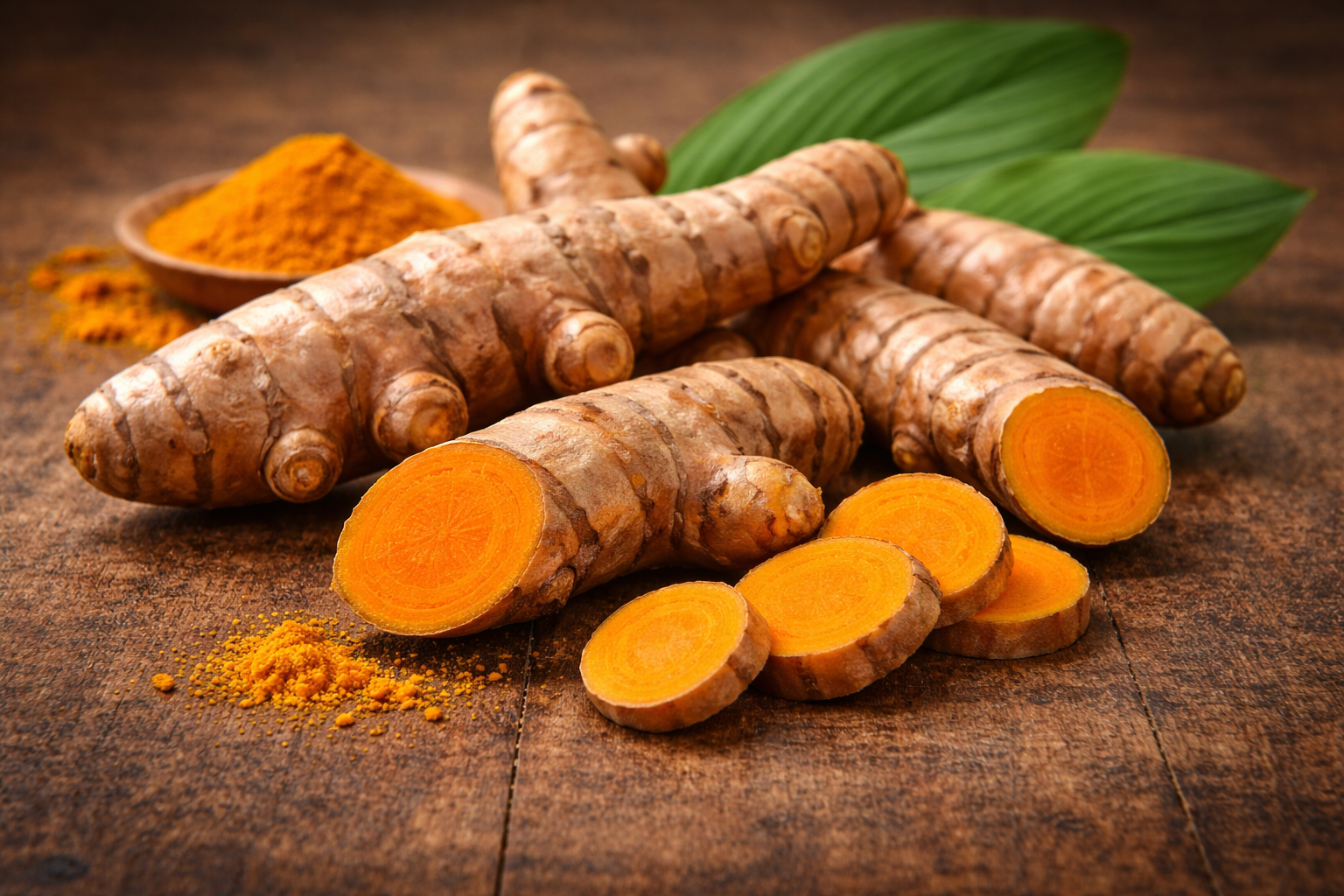
Freshly dug turmeric rhizomes — the depth of orange inside the flesh is a rough visual cue for curcumin concentration, though a lab report is the only way to confirm it.
Curcumin gets most of the attention, but graders also look at moisture content, total ash (an indicator of foreign matter and soil residue), and volatile oil (which drives aroma). A turmeric can be high in curcumin and still be a poor buy if it's damp, dusty, or stale. We've broken down all four in the next section.
The Four Numbers Behind Every Quality Claim
These are the four parameters spice labs and export inspectors actually test for. Treat them as a checklist the next time a seller hands you a Certificate of Analysis (COA) — a genuine one will state all four, not just curcumin.
Figures are commonly cited industry benchmarks, not universal legal limits — always confirm against the batch-specific COA rather than a general spec sheet.
Best Turmeric-Growing Regions in India, Ranked by Curcumin
Here's how seven of India's best-known turmeric-growing regions compare on documented curcumin content, from the figures most consistently reported across GI filings, agricultural research, and export trade sources. Bars are scaled against 12% — the upper end of Lakadong's recorded range and the highest documented for any Indian turmeric.
A closer look at each region below explains why the numbers land where they do.
Grown at 800–1,200 m elevation across dozens of villages in the Jaintia Hills, Lakadong is the only Indian turmeric consistently verified at 7–12% curcumin. Genuine supply is limited, since only turmeric grown within the registered GI boundary can legally carry the name.
Known in the export trade as the "Alleppey Finger," this variety is prized for its intensely deep orange colour and high oleoresin yield. Reported curcumin content varies fairly widely by source and harvest, commonly cited between roughly 3.5% and 5.5%.
Cultivated organically by tribal farming families across Kandhamal's forested hills, this GI-tagged turmeric is documented at 3.2–4.2% curcumin, with unusually high oleoresin and volatile oil that give it a distinctly strong aroma.
Often called Maharashtra's turmeric hub, Sangli handles a large share of the state's turmeric trade. GI-tagged since 2018, it's known for a deep orange colour and is widely used in traditional and Ayurvedic preparations.
One of India's largest turmeric trading centres by volume, Erode's GI-tagged variety is valued for its bright yellow colour and dependable, high-volume supply rather than exceptional curcumin content.
Home to one of Asia's largest turmeric trading markets, Nizamabad supplies enormous volumes to India's domestic spice and food-processing industry, though it does not currently hold an official GI tag.
India's Officially GI-Tagged Turmeric Varieties
A Geographical Indication (GI) tag is issued under India's Geographical Indications of Goods (Registration and Protection) Act, 1999. It legally reserves a name for produce grown in one specific district — the same principle that protects "Champagne" or "Darjeeling Tea." India currently recognises six turmeric varieties this way. If a seller's turmeric doesn't match one of these six, the regional name on the label isn't legally protected, whatever the packaging implies.
"Meghalaya turmeric," "Kerala turmeric," or "organic Indian turmeric" printed on a label is not the same as a GI certificate. Ask any seller invoking a regional name to produce the actual GI registration reference alongside a current batch COA — a legitimate supplier will do this without hesitation.
Curcumin vs Colour vs Aroma vs Everyday Fit
Ranking by curcumin alone flattens real differences between varieties. This comparison plots three well-known turmerics across four practical dimensions — the shape of each "web" tells you what that variety is actually optimised for.
Ratings are directional (0–100 scale) based on typical trade characteristics for each variety, not a single certified index — useful for comparing shape, not for citing an exact score.
See Where Lakadong Fits Your Sourcing Needs
GI-registered · Lab-tested 7–12% curcumin · APEDA registered · Full export documentation · Samples available on request
How to Spot Genuine, Unadulterated Turmeric
Even the best turmeric variety is worthless to you if the jar in front of you isn't genuine. Adulteration — most commonly with metanil yellow dye, chalk powder, or starch fillers — is the single biggest risk in the Indian turmeric market, especially with loose or unbranded powder. A few simple checks catch most of it.
- Deep, warm orange-yellow colour without an unnatural neon tint
- Distinct earthy, slightly peppery aroma when the jar is opened
- Slight natural graininess to the powder, not a chalky, ultra-fine texture
- Settles gently in a glass of water with mild colouring, no instant bright stain
- Stains skin a warm yellow on a wet-rub test, fading gradually rather than washing off instantly
- Seller can show a GI certificate reference and a batch-specific lab report
- FSSAI licence number printed on the pack
- Unnaturally bright, almost fluorescent yellow colour
- Little to no aroma, or a musty, stale smell
- Powder colours water instantly and intensely on contact
- Very smooth, uniform texture with no natural grain at all
- No batch number, harvest date, or lab report offered
- Vague origin claims like "Himalayan" or "Northeast India" with no district named
- Regional name used with no matching GI certificate reference
The water-glass and wet-rub checks above will catch obvious dye adulteration, but they can't measure actual curcumin percentage or confirm complete purity. For any bulk or repeat purchase, the only reliable confirmation is a Certificate of Analysis from an NABL-accredited laboratory, tied to the specific batch you're buying — not a generic spec sheet reused across shipments.
Culinary vs Export vs Medicinal-Grade Turmeric
Within any region, turmeric is also sorted into grades depending on end use. Here's how the three broad grades typically compare across the qualities that matter most.
| Quality | Commodity / Culinary Grade | Export Grade | Medicinal / Nutraceutical Grade |
|---|---|---|---|
| Curcumin Potency | ★★☆☆☆ | ★★★☆☆ | ★★★★★ |
| Colour Depth | ★★★☆☆ | ★★★★★ | ★★★★☆ |
| Aroma Strength | ★★★☆☆ | ★★★★☆ | ★★★★☆ |
| Everyday Cooking Fit | ★★★★★ | ★★★★☆ | ★★★☆☆ |
Ratings reflect typical, directional differences between grades rather than any single certified scale.
Which Turmeric Is Best for Your Purpose?
- Erode, Sangli and Nizamabad-type commodity turmeric handles daily dals, curries and tempering well
- Balanced flavour and colour without an overpowering bitter or medicinal edge
- Widely available in local markets and typically what's found in packaged blended turmeric
- Good shelf stability for regular home-kitchen turnover
- Lakadong and Kandhamal-type turmeric offer the highest documented curcumin for extraction-based use
- Preferred by nutraceutical and Ayurvedic formulators who need a verified minimum curcumin percentage
- Should be backed by a NABL-accredited lab report confirming batch-level potency
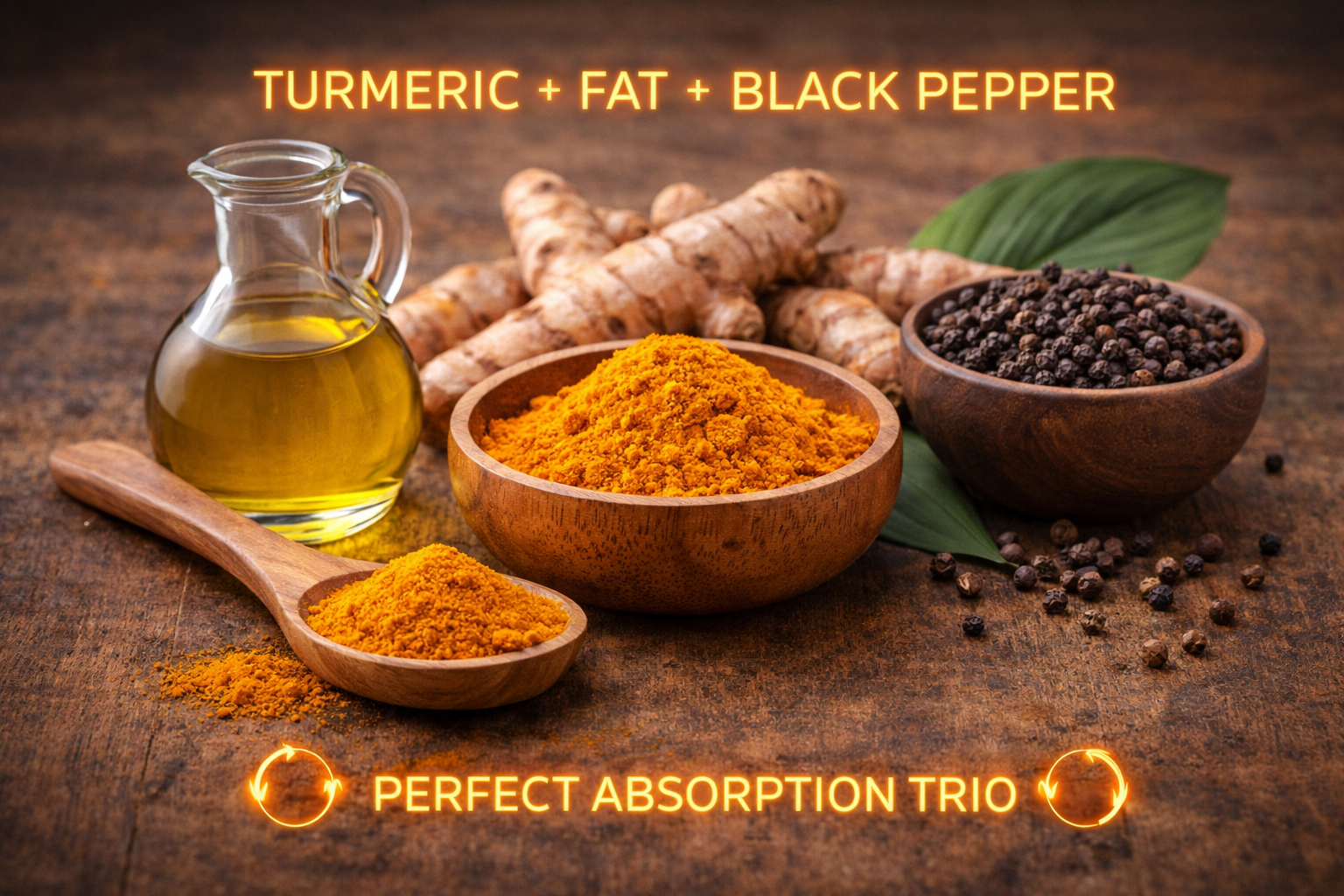
- Best absorbed when paired with black pepper (piperine) or a source of fat
High-altitude, high-rainfall terrain like this is where India's highest-curcumin turmeric varieties are typically grown.
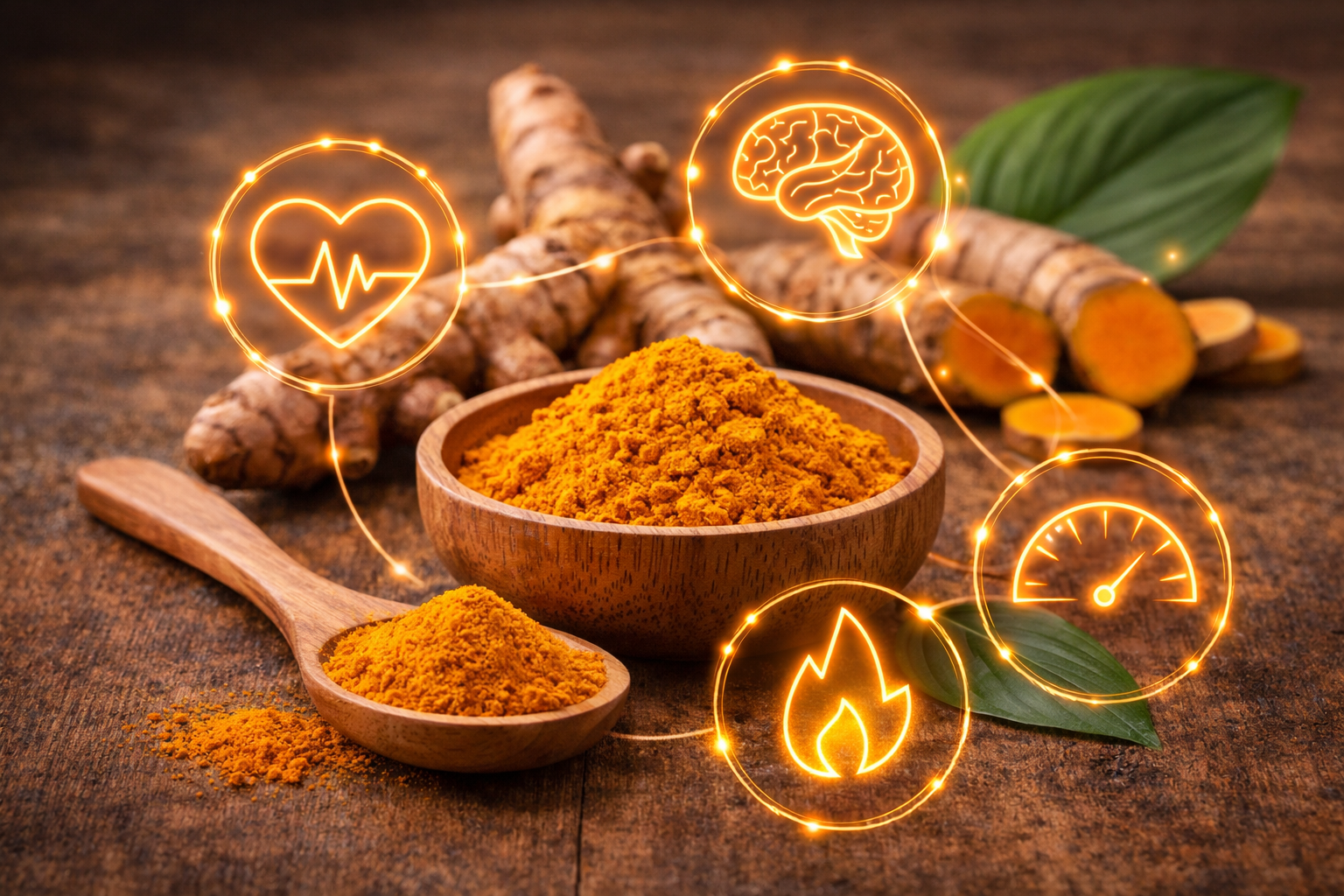
A visibly deeper, more saturated orange is one rough sign of higher curcumin — though a lab report is the only real confirmation.
FAQs — Best Turmeric in India
By curcumin content, Lakadong Turmeric from Meghalaya's Jaintia Hills is generally regarded as the best in India, verified between 7% and 12% against the 2–5% typical of most other GI-tagged regional varieties. That said, "best" depends on what you're using it for — a variety optimised for maximum curcumin isn't automatically the best choice for everyday cooking, where balanced flavour and colour matter more than raw potency.
Meghalaya holds this position through its Lakadong variety, grown across the Jaintia Hills at 800–1,200 metres elevation. Odisha's Kandhamal Haldi and Kerala's Alleppey turmeric follow, typically reported in the 3–5.5% curcumin range, with most of the remaining GI-tagged and commercial varieties clustering between 2% and 4%.
On curcumin content alone, yes — Lakadong's documented range sits well above both. But Alleppey is prized specifically for its deep colour and oleoresin yield, and Erode is valued for consistent, high-volume supply for everyday cooking. If your priority is potency for wellness or extraction use, Lakadong ranks first. If your priority is colour for food processing or dependable everyday culinary supply, Alleppey or Erode may serve you better.
Start with documentation: a genuine regional variety should come with a GI certificate reference and a batch-specific Certificate of Analysis. At home, a water-glass test and a wet-rub skin test can flag obvious synthetic dye adulteration — genuine turmeric colours water gently and stains skin a fading warm yellow, while dyed fakes often colour instantly and wash off. These home checks are a useful first filter, but only an NABL-accredited lab report confirms actual curcumin percentage and purity.
Not universally. Higher curcumin is unambiguously better for nutraceutical, Ayurvedic, or extraction-based use, where potency is the entire point. For everyday cooking, though, very high-curcumin turmeric can carry a stronger, more bitter edge that isn't always what a recipe calls for — which is why commodity-grade turmeric from regions like Erode or Sangli remains the default choice in most Indian kitchens rather than a failure of quality.
No. A GI tag certifies geographic origin and traditional growing method — it does not guarantee a specific curcumin percentage. India's six GI-tagged turmerics (Lakadong, Erode, Sangli, Kandhamal Haldi, Waigaon and Vasmat Haldi) span a wide curcumin range, from around 2% to as high as 12% for Lakadong. Always check the batch COA rather than assuming a GI tag alone signals high potency.
For everyday cooking, commodity-grade turmeric from Erode, Sangli or Nizamabad offers balanced flavour, reliable supply and good value for regular kitchen use. For supplements, extracts or Ayurvedic formulations, high-curcumin varieties like Lakadong or Kandhamal Haldi are the better choice, since their potency is verified batch-by-batch and better suited to formulations that specify a minimum curcumin percentage.
So, What Is the Best Turmeric in India?
If the question is purely "which turmeric grown in India has the highest verified curcumin content," the answer is Lakadong Turmeric from Meghalaya's Jaintia Hills, and it isn't particularly close — its 7–12% range sits well above every other GI-tagged variety in the country. If the question is broader — "which turmeric should I actually buy" — the honest answer depends on what you need it for, and this guide has tried to separate the two rather than collapse them into one marketing claim.
For wellness use, supplements, or any application where curcumin percentage is the whole point, Lakadong and Kandhamal Haldi lead the field. For everyday cooking, Erode, Sangli and Nizamabad turmeric remain dependable, well-established choices that most Indian households already trust. Whichever you choose, the checklist below stays the same.
- 🏅Check for a real GI reference first — only six turmeric varieties in India currently hold one.
- 🔬Ask for a batch-specific COA — a generic spec sheet reused across shipments isn't proof of anything.
- 🧪Run the simple purity checks — colour, aroma, texture and a water-glass test catch most obvious adulteration.
- 🎯Match the grade to the purpose — maximum curcumin for wellness use, balanced flavour for daily cooking.
- 📋Confirm FSSAI and, for exporters, APEDA and IEC registration — publicly verifiable signs of a legitimate operation.
Lakadong Gold is a direct farm exporter of GI-registered Lakadong Turmeric from the Jaintia Hills — the variety this guide ranks first by curcumin content. Every batch ships with a NABL-accredited COA, GI certificate reference, and full export documentation. Samples are available on request for buyers evaluating quality before committing to a full order.