What Actually Makes a Turmeric Extract Supplier the Best Option for You?
Type "best turmeric extracts supplier" into a search bar and the results read like a popularity contest — long lists, confident superlatives, very little a buyer could actually verify. In practice, procurement teams and formulators judge a supplier on a narrower, checkable set of factors: how the extract is standardized, how it's extracted, what documentation backs every batch, whether the certifications match the target market, and whether the supplier can hold that specification steady over repeat orders rather than just a single strong sample.
None of those factors work in isolation. A supplier offering a 95% curcuminoid extract means very little if the batch can't be traced back to a named extraction facility, and a facility with every certificate on the wall still isn't the right fit if it can't scale to your order volume or match your packaging requirements. The best turmeric extracts supplier, in other words, is the one whose paperwork and process match what your product actually needs — not the one with the loudest homepage.
This guide walks through the grades of turmeric extract on the market, how the extraction method itself shapes purity and consistency, which certifications carry real weight with regulators and retailers, and the checklist worth running before any supplier gets a purchase order.
Instead of asking who the best turmeric extracts supplier in the world is, ask a specific supplier three things: can you show me a batch-specific Certificate of Analysis, can you explain exactly how this extract was processed, and can you match that same specification on my next order six months from now? A supplier that answers all three clearly is worth shortlisting, regardless of how their marketing reads.
Curcuminoid Concentration, By Extract Grade
Curcuminoid percentage is the number every spec sheet leads with, and it's also the number most often misread. It only means something once you know which grade you're actually comparing — a standardized 95% curcuminoid extract and a curcumin oleoresin serve very different formulations, even though both are technically "turmeric extract."
Typical Curcuminoid Content, By Extract Grade
Approximate curcuminoid concentration on a dry-weight basis for the extract forms most commonly requested by bulk buyers. Always confirm the actual figure against that shipment's own Certificate of Analysis.
The Extract Formats a Serious Supplier Should Offer
Not every buyer needs the same thing from a "turmeric extract." A capsule manufacturer, a beverage brand and a cosmetics formulator are usually asking for three different products that all happen to share the same base ingredient.
Concentrated to a fixed curcuminoid percentage — typically 95%, sometimes 85% — and the default choice for supplement capsules, tablets and pharmaceutical intermediates.
A thicker, resin-based extract prized for colour intensity and flavour carry, commonly used in food colouring, sauces and processed food applications.
Formulated with carriers such as phospholipids or micelles to improve solubility and absorption, popular in beverages, drink powders and functional foods.
Steam-distilled turmeric oil, used alone or blended into oleoresin for cosmetics, aromatherapy and topical formulations.
Why the Extraction Method Matters as Much as the Percentage
Two extracts can carry an identical curcuminoid percentage on the label and still behave very differently once they're in a formulation — because how the curcumin was pulled out of the rhizome affects residual solvents, colour stability and shelf life.
Extraction Methods at a Glance
A quick comparison of the extraction routes most bulk suppliers use, and what to ask about each one.
Ethanol / Solvent Extraction
Supercritical CO₂ Extraction
Water-Based / Micellar Processing
Extract Quality Is Decided Before Extraction Ever Begins
It's easy to focus entirely on the extraction facility and forget that no process can standardize curcuminoid content that was never in the rhizome to begin with. A 95% extract pulled from a low-curcumin bulk rhizome takes far more raw material, and far more processing, to reach spec than one pulled from a naturally high-curcumin cultivar.
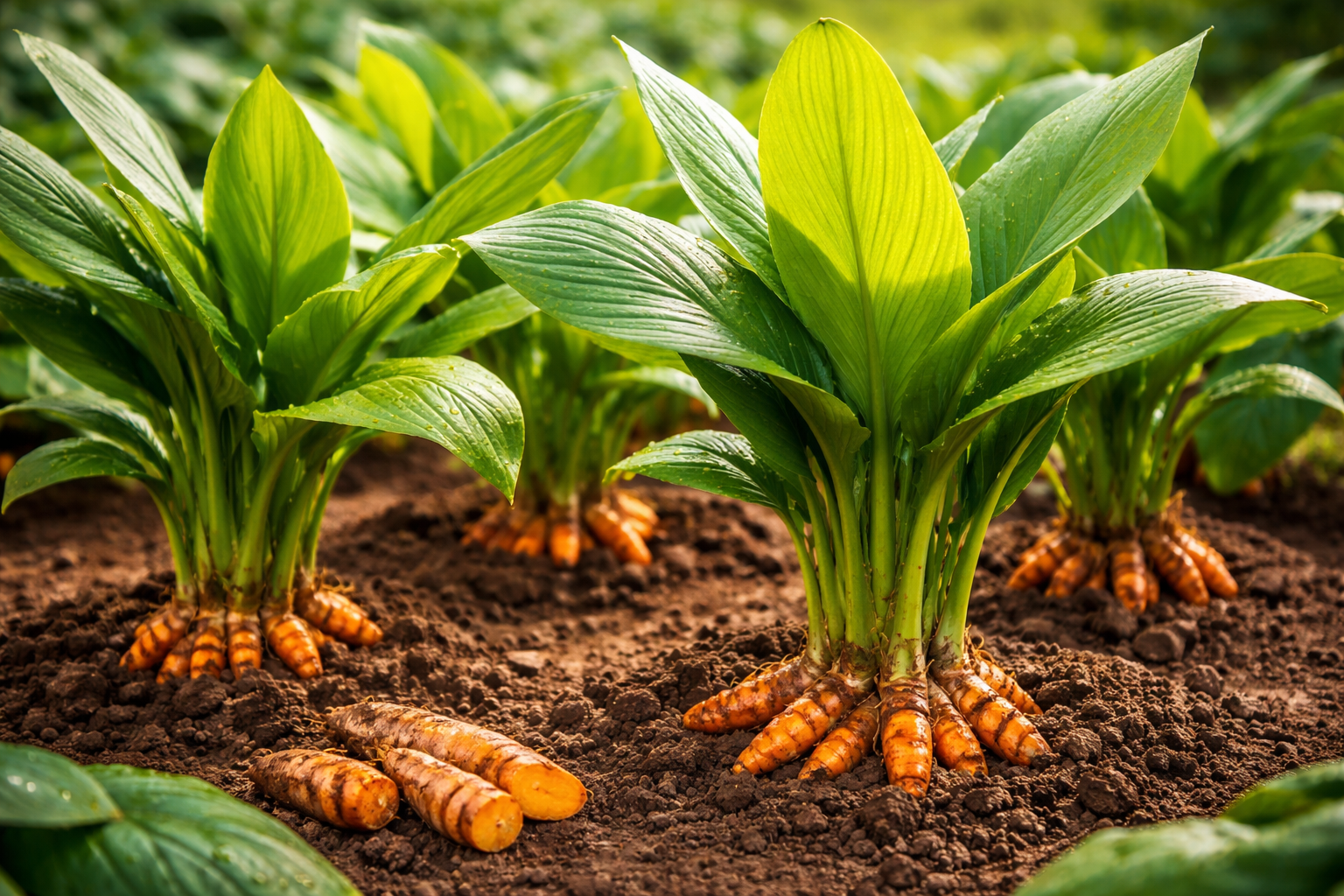
This is where sourcing becomes a genuine differentiator rather than a marketing line. Working directly with growing regions known for elevated natural curcumin — such as the GI-tagged lakadong turmeric grown in Meghalaya's Jaintia Hills — gives an extraction facility a real head start on both yield and consistency, long before a single batch reaches a solvent tank or a CO₂ chamber.
Feedstock matters. Rhizomes grown in naturally high-curcumin regions need less processing to reach a 95% standardized extract.
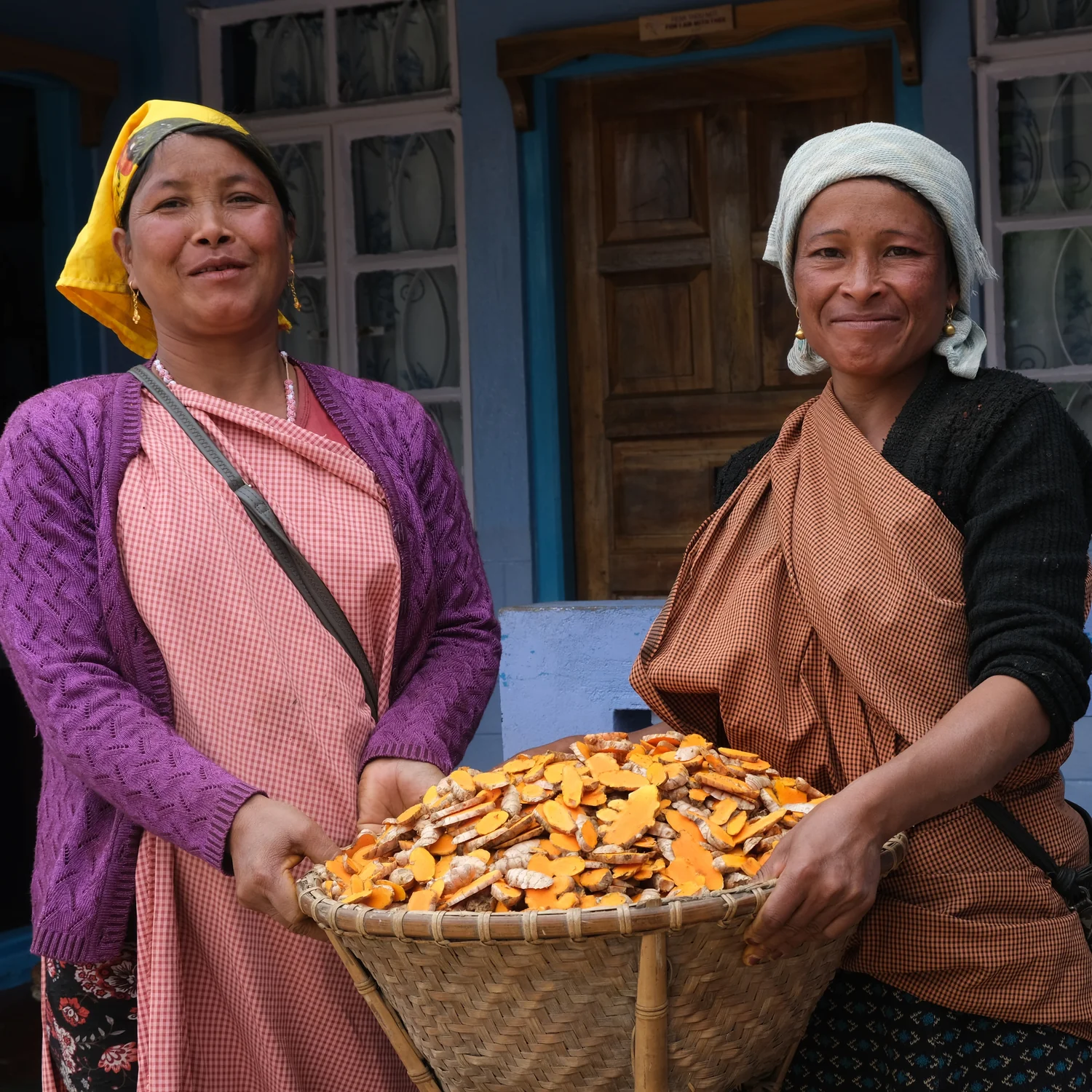
Grading and cleaning the rhizome before extraction affects both yield and the consistency of every batch that follows.
How a Bulk Turmeric Extract Order Actually Moves
Buyers rarely see what happens between a purchase order and a drum landing at their facility. Here's the sequence a properly documented order should follow, and where a serious supplier should be able to hand over paperwork at each stage.
The Turmeric Extract Supply Chain, Step by Step
Five checkpoints worth asking about before you place a bulk order.
Want to See a Real Certificate of Analysis Before You Order?
We're happy to share a current specification sheet and batch COA for our standardized curcuminoid extracts — no obligation, just the documentation a serious buyer should see first.
The Certifications & Reports Worth Demanding
A curcuminoid percentage on a marketing page is a claim. A signed report from an accredited lab is proof. The difference matters more with extracts than with whole spice, because concentrated ingredients are far easier to under-standardize or cut without it being visible to the eye.
- A batch-specific Certificate of Analysis covering curcuminoid %, moisture, ash and solvent residue
- Clear documentation of the extraction method used for that specific lot
- GMP and ISO 22000 or HACCP certification for the manufacturing facility
- Heavy-metal, pesticide-residue and microbial testing reports on request
- A consistent specification across repeat orders, not just the first sample
- Willingness to support a Drug Master File or equivalent for regulated markets
- Testing described only as "in-house," with no independent lab report offered
- Vague sourcing claims with no traceability to a named facility or region
- No certificate accompanying the sample sent for evaluation
- Reluctance to disclose the extraction method or solvents used
- Specifications that shift between the sample batch and the bulk order
- No export documentation or regulatory support for your target market
- 🔬Start with the Certificate of Analysis — the one document that actually proves curcuminoid, moisture and solvent-residue figures for that batch.
- 🧪Ask which extraction method was used — and request confirmation of residual solvent testing if it involved solvents.
- 🏭Confirm the manufacturing certifications — GMP and ISO 22000/HACCP are the baseline for most nutraceutical and food-grade buyers.
- 📋Request documentation for your target market — DMF, Halal, Kosher or Organic certification, depending on where the finished product will sell.
- 🔁Order a second sample before scaling up — consistency across two separate batches tells you more than one strong result ever will.
Industries That Depend on a Reliable Turmeric Extract Supplier
The demands placed on a turmeric extract supplier change significantly depending on which industry is buying — which is part of why one supplier being "the best" rarely applies across every use case.
Capsules, tablets and functional powders built around standardized 95% or 85% curcuminoid extract, typically the most documentation-heavy buyers in the category.
Requires the tightest specification control and validated extraction processes, often with additional impurity and heavy-metal thresholds plus DMF support.
Relies more heavily on oleoresin and water-dispersible forms for colour intensity, flavour carry and solubility in liquid products.
Uses extract and essential oil forms for colour, antioxidant claims and topical formulations, usually alongside cosmetic-grade documentation.
A Buyer's Checklist for Vetting Any Turmeric Extract Supplier
Whether you're sourcing a single trial drum or setting up a recurring bulk contract, this is roughly the order experienced procurement teams work through.
Get Our Latest Extract Specification Sheet
Want to see exactly what a properly documented, lab-verified turmeric extract looks like before you commit to an order? We're happy to share one.
FAQs — Best Turmeric Extracts Supplier
Look for a supplier that can name the exact extraction method used, provide a batch-specific Certificate of Analysis covering curcuminoid, moisture and solvent-residue figures, hold relevant certifications such as GMP and ISO 22000, and demonstrate consistent specifications across repeat orders rather than just a single sample.
Turmeric powder is the whole ground rhizome, typically containing around 2% to 5% curcuminoids by weight. Turmeric extract is processed and standardized to concentrate curcuminoids to a specific percentage, commonly 85% or 95%, making it far more potent per gram than raw powder.
A standardized 95% curcuminoid extract is generally regarded as the reference grade for nutraceutical and pharmaceutical-grade applications. Lower grades such as 85% extracts or 30–40% oleoresin are also legitimate, high-quality products, just suited to different formulations rather than being inferior versions of the same thing.
Supercritical CO₂ extraction is often preferred for solvent-sensitive formulations because it leaves minimal to no solvent residue. Ethanol or solvent-based extraction remains widely used and scalable, but buyers should always request residual solvent testing results regardless of which method a supplier uses.
At minimum, look for GMP-certified manufacturing and ISO 22000 or HACCP food-safety management. Depending on your target market, Halal, Kosher, USDA Organic or EU Organic certification may also matter, and pharmaceutical buyers should ask about Drug Master File or equivalent regulatory support.
Many established turmeric extract suppliers offer private label and OEM packaging, but capability varies significantly from one supplier to another. Buyers should confirm minimum order quantities, available packaging formats and lead times directly rather than assuming every supplier offers the same options.
Request a batch-specific Certificate of Analysis from an accredited or independent lab, ask the supplier to explain exactly which extraction method produced that batch, and confirm their certifications directly rather than relying on marketing claims alone. A second, independently tested sample before scaling up is also a reliable way to confirm consistency.
So, Who Is the Best Turmeric Extracts Supplier for Your Order?
Honestly answered, there isn't a single supplier that deserves that title across every industry and every application. The best turmeric extracts supplier for a pharmaceutical buyer needing DMF support looks different from the best one for a beverage brand needing a water-dispersible complex. What stays constant is the standard: a supplier who can name the extraction method, hand over a batch-specific COA, and hold that same specification steady on the tenth order, not just the first.
If you're comparing suppliers, run the checklist in this guide against each one before you commit to a purchase order — grade, extraction method, certification, and consistency, in that order.
We supply standardized curcuminoid extracts, oleoresin and water-dispersible curcumin complexes processed from GI-tagged lakadong turmeric grown in Meghalaya's Jaintia Hills, with GMP and ISO 22000 certified processing, batch-specific lab reports, and private label packaging available on request. Reach out through the contact section above for sample requests, specification sheets or bulk enquiries.